An Irish bouzouki brings a Greek instrument’s name into a different playing tradition
Listen for the Irish bouzouki’s paired strings and accompaniment role, and discover why its tuning and construction cannot be reduced to one fixed recipe.


Listen for the Irish bouzouki’s paired strings and accompaniment role, and discover why its tuning and construction cannot be reduced to one fixed recipe.

An appoggiatura creates a brief melodic lean before resolution. Use a short listening exercise to hear its emphasis without relying on jargon alone.

Alberti bass breaks a chord into a low-high-middle-high pattern. Learn to hear the accompaniment separately from the melody and try a short listening exercise.

Three-against-two rhythm fits three evenly spaced notes and two evenly spaced notes into the same span. Try a six-part counting exercise to hear both layers.

A concert hall changes what reaches your ears after each note. Listen for reverberation, clarity and the effect of position without confusing them with loudness.

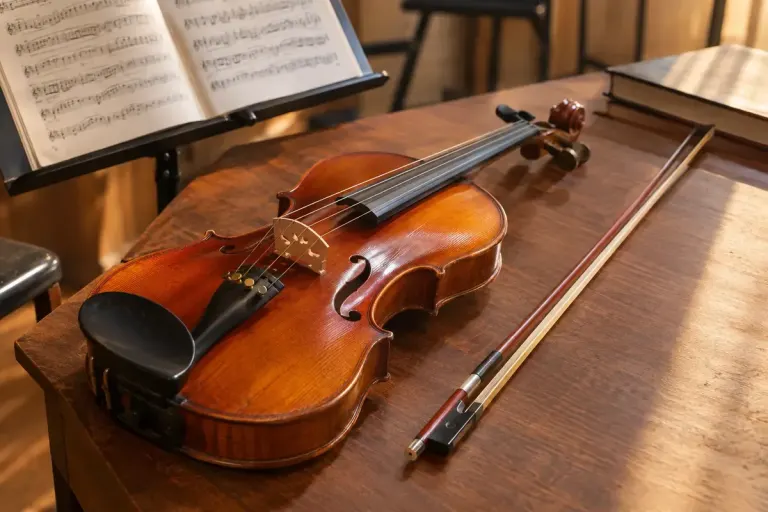
Col legno uses the wood of a string player’s bow. Hear the difference between its struck and drawn forms, then follow what that change does to the music.

Hocket breaks a musical line into interlocking fragments. Try a simple two-person rhythm exercise, then listen for the spaces between the notes.

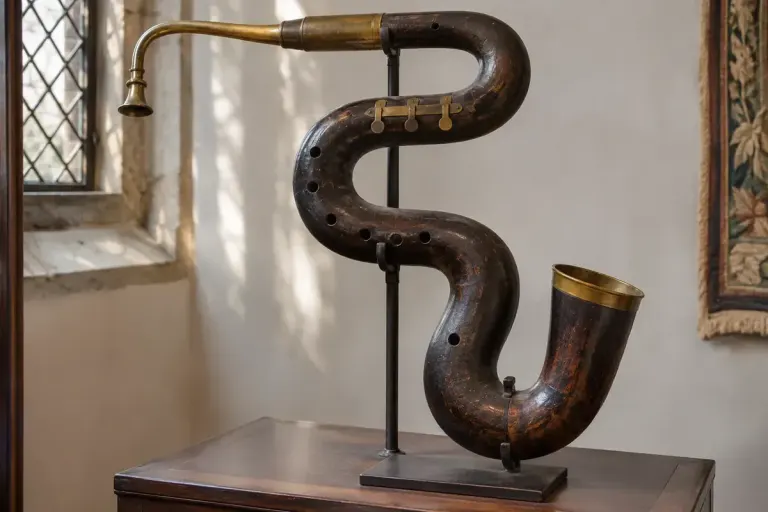
The serpent’s wooden body and finger holes can be misleading. Its lip-vibrated mouthpiece explains why instrument families are not simply material labels.

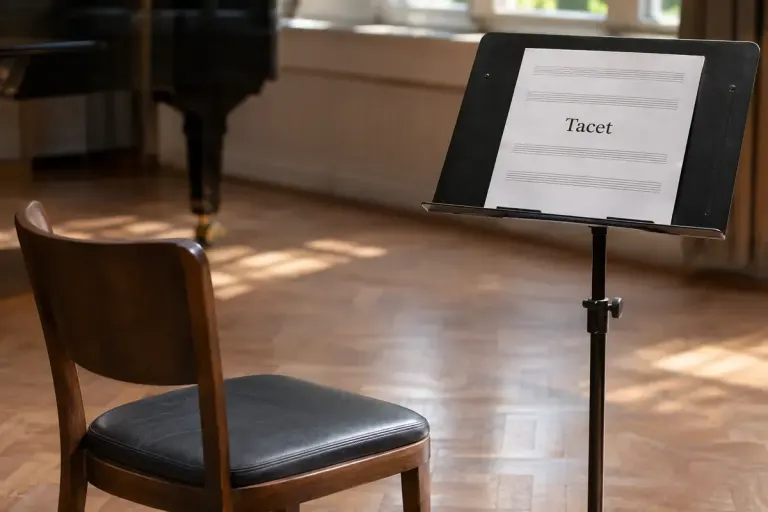
Tacet tells a player to remain silent for a movement or extended section. Learn how the instruction changes rehearsal preparation and attentive listening.