
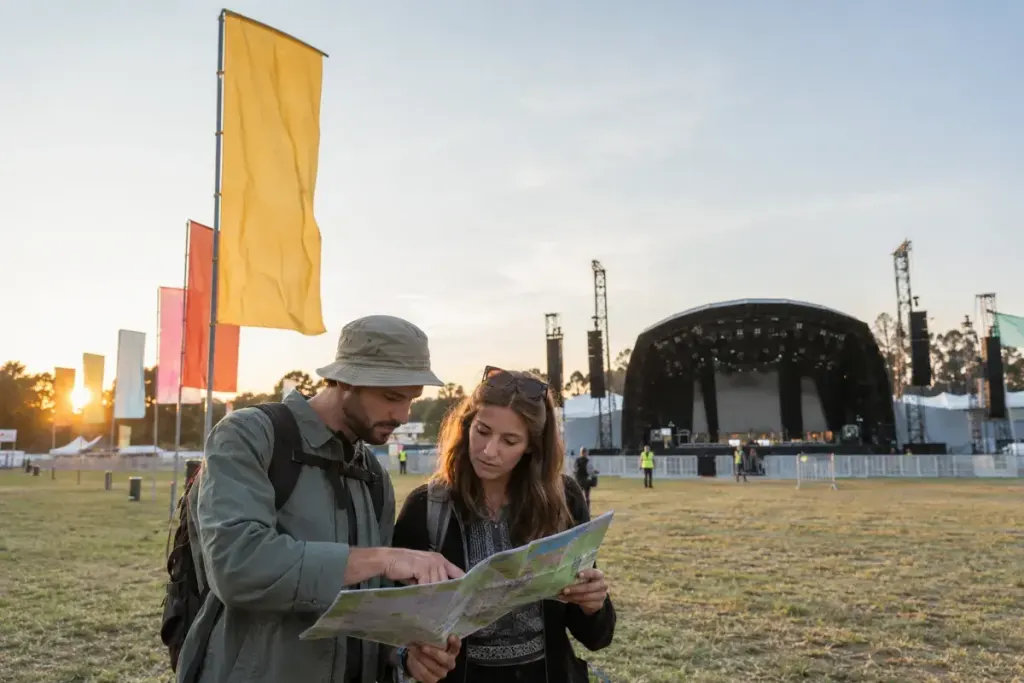
Meet by the main stage sounds specific until several thousand people make the same decision. One friend waits beside a screen, another stands near the sound desk and a third sends a message that arrives after everyone has moved.
A useful festival meeting plan is small enough to remember and precise enough to work without a live chat. Make it while the group is calm, before the first set changes your priorities.
Choose a landmark you can describe
Use the organiser’s current map and agree on a clearly identified place that is accessible to everyone in your group. Avoid blocking an entrance, emergency route or busy crossing. If possible, visit the point together after arrival so the name on the map connects to a real view.
Official event information is the right starting point for facilities and help locations. For example, Glastonbury’s information pages describe its own site facilities. Each festival has a different layout, and details should be checked for the edition you are attending.
Add a time window and a next step
A place without a time creates an indefinite wait. Agree when to meet, how long the group will wait and what happens afterwards. Use actual clock times instead of “after the second song” or “when it gets dark”. Leave enough time for walking, queues and individual access needs.
An illustrative agreement might be: meet at the chosen information point at 18:00; if somebody is late, remain there until 18:20; then follow the already agreed next plan. Those numbers are examples, not recommended timings for every venue. The essential part is that everyone understands the same sequence.
Decide what is shared and what is optional
Nobody needs to attend every set together. Mark the performances that are genuine group priorities and leave other periods flexible. Agree which changes need a message and which do not. That reduces the urge to negotiate every movement over an unreliable connection.
Carry essential contact details somewhere you can access if your own phone fails, and follow the venue’s rules for batteries and permitted items. Save the relevant map where it can be viewed offline, while remembering that on-site signs and staff instructions can reflect newer information.
Keep a missed meeting separate from an emergency
A late friend may simply be in a queue, but a credible safety concern deserves help from venue staff or the appropriate emergency service. Do not make the plan depend on inexperienced group members searching restricted or unsafe areas. Identify the organiser’s welfare and assistance arrangements beforehand.
At the end of the day, use a separate departure plan. Transport stops, pickup areas and closing times may differ from your daytime meeting point. A short conversation before the music starts can remove a surprising amount of uncertainty when everyone is tired and the crowd is moving.