
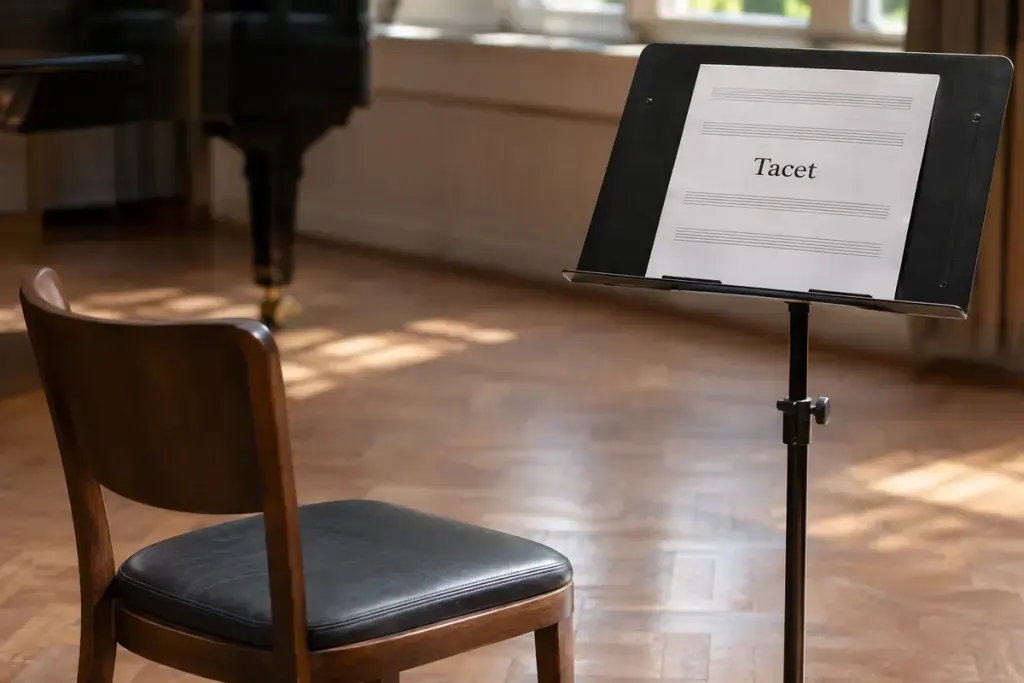
A page in an instrumental part may contain almost no notes and one short instruction: tacet. The player has not received an incomplete part. The silence is part of the arrangement.
Merriam-Webster defines the musical direction as an instruction for an instrument not to play during a movement or long section. The practical detail is the scope: read the heading and surrounding directions so you know what the silence covers.
Silence still has a place in the rehearsal
If a movement is marked tacet, check which movement comes next in your part. Have the correct page ready and know how the conductor or ensemble will move between them. A silent movement is not an invitation to put the music away and discover the next entrance late.
In a rehearsal, a conductor may restart close to the end of the section where you do not play. Listen for the announced movement, rehearsal mark or bar number before assuming the restart belongs to your active passage. If the part’s layout is unclear, ask while there is time to resolve it.
Imagine a chamber programme with three short movements. One player sits out the middle movement, then returns immediately for the finale. The useful preparation includes finding the next opening, arranging the page turn quietly and understanding whether there is a pause. None of that requires inventing notes to fill the silence.
Listen to what changes without the instrument
For an audience member, a silent player can reveal something about the texture. Does the remaining ensemble sound lighter, more exposed or more focused on one register? You do not need to infer that the player was forgotten or that their instrument is unimportant.
As a practice exercise, follow a score or programme while listening to one passage in which an instrument is absent. Note the change in sound, then notice its return. Describe what you actually hear before attaching a dramatic story to it.
Tacet is a compact reminder that participation in music includes waiting, following and listening. The next entrance often works better because the player has remained part of the performance throughout the silence.