
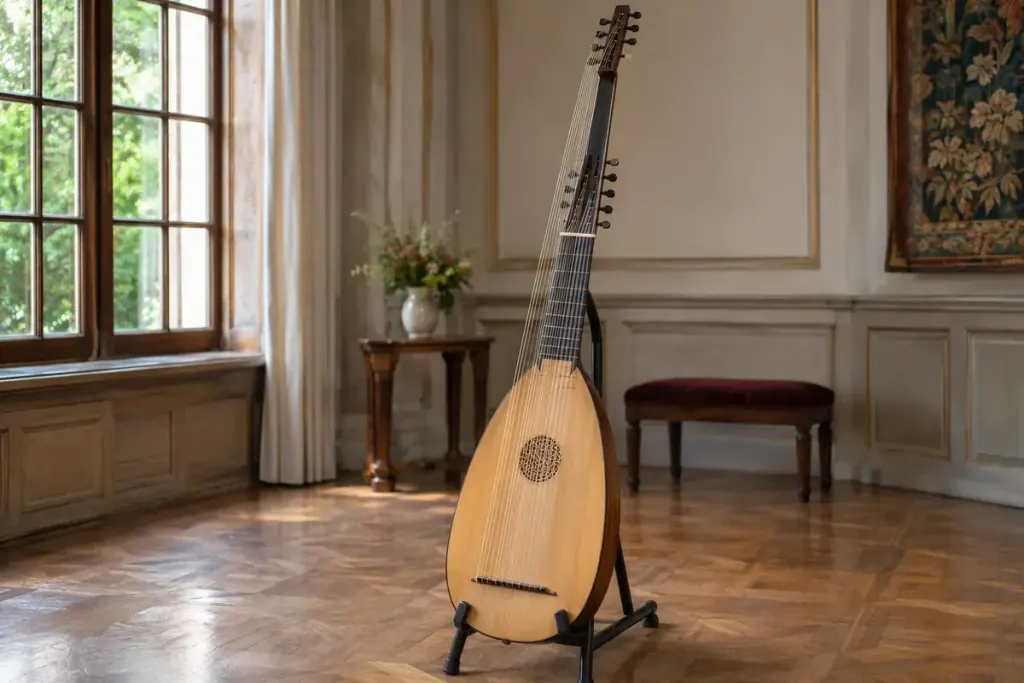
Among the instruments on a small concert stage, a theorbo is difficult to overlook. Its neck extends far above the player’s hand, carrying strings that do not all travel over the same fretted surface. The unusual silhouette has an acoustic purpose.
The Lute Society of America’s introduction to the theorbo describes two pegboxes: one above the fingerboard and another at the end of the extension. The longer bass strings support a clear, sustained low sound. Instruments can differ in stringing, so one example should not become a specification for every theorbo.
Follow two groups of strings
Look at which strings pass over the fingerboard and which extend to the more distant tuning head. The longer bass strings are generally played open rather than stopped along that extended neck. This helps explain why the player’s left hand does not chase every low note up the instrument’s height.
In a performance video, watch a short passage first with your attention on the right hand. Then replay it while following the left. You may notice low supporting notes continuing while the fretted part changes above them.
Listen inside the ensemble
A theorbo can support voices and other instruments as part of a continuo group. Instead of trying to hear it as a solo melody throughout, listen for the beginning of a bass note and the texture of the chord that follows.
Choose a passage where the ensemble becomes quieter. A dense recording can hide a plucked instrument’s detail, and a microphone balance is not the same as the experience in the room.
Use the programme’s exact name
Long-necked members of the lute family can look similar in a quick photograph. Read the performer’s instrument credit before assigning a label. If the programme identifies a particular historical model or modern copy, keep that information with your listening note.
A useful note might describe the low-note attack, the pace at which it fades and how it supports the singer. That brings the instrument into the music itself, beyond the first surprise of its remarkable shape.