
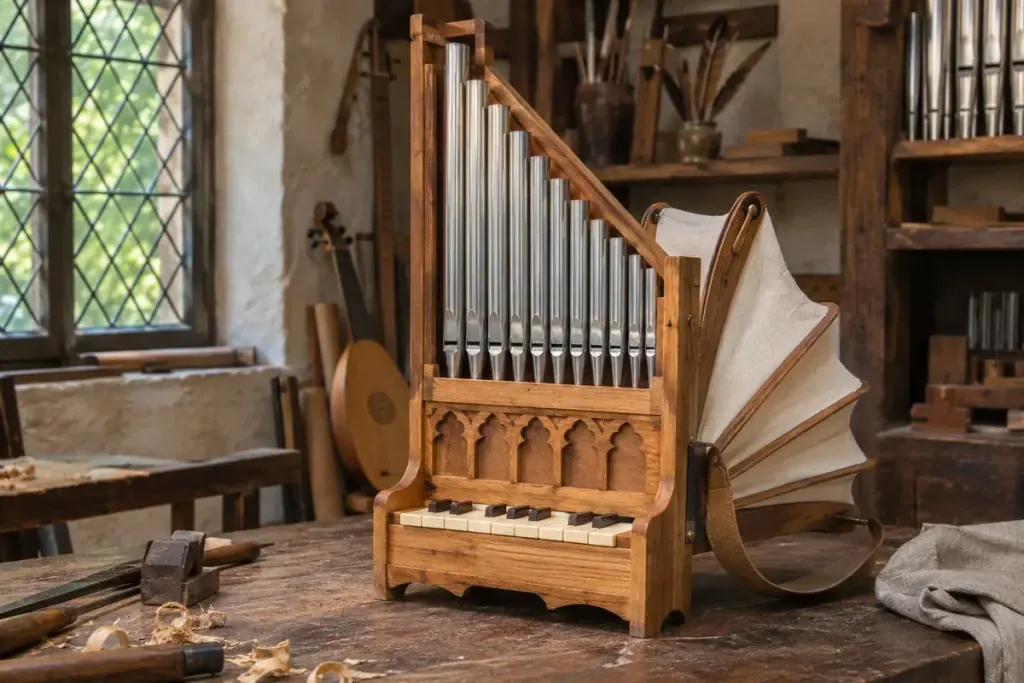
A small row of pipes, a compact keyboard and a moving bellows can produce a surprisingly expressive sound. A portative organ brings the supply of air close to the player’s hands, making an element hidden in many larger organs visible during performance.
The Metropolitan Museum of Art’s account of Renaissance organs explains that portative instruments could be played by one person operating the bellows with one hand and the keyboard with the other. Other arrangements could involve a second person providing the air.
Follow the air as well as the melody
The pipes need an air supply to speak. Watching the bellows alongside the keyboard can therefore add a second layer to listening. Notice how the player coordinates a musical phrase with the movement that sustains it.
This is an observation exercise, not a claim that every audible change comes from the bellows. Fingering, pipe construction, room acoustics and the recording all contribute to what you hear.
Read the instrument description
A modern instrument may be a reconstruction informed by historical images or surviving evidence. Check the programme or museum label for the maker, date and basis of the design. “Medieval-style” is a broad description and should not be treated as proof of an exact surviving original.
Also distinguish the instrument being played from a larger organ shown elsewhere in the venue. Size, keyboard arrangement and air supply can differ substantially even when both use pipes.
Try a focused listening note
During one short passage, follow the beginning and ending of each phrase. Then listen again while watching the player’s hands, if a video or live view allows it. Record what changed in your attention rather than declaring a technical cause you cannot verify.
A useful note might say that a sustained phrase drew your attention to the bellows movement, or that a quick passage made the keyboard hand easier to follow. These observations make a later conversation with a performer more specific.
Historical instruments become more approachable when you connect visible action with sound. The portative organ offers that opportunity in a compact form: the player is not only choosing notes but working with the air that allows them to be heard.