
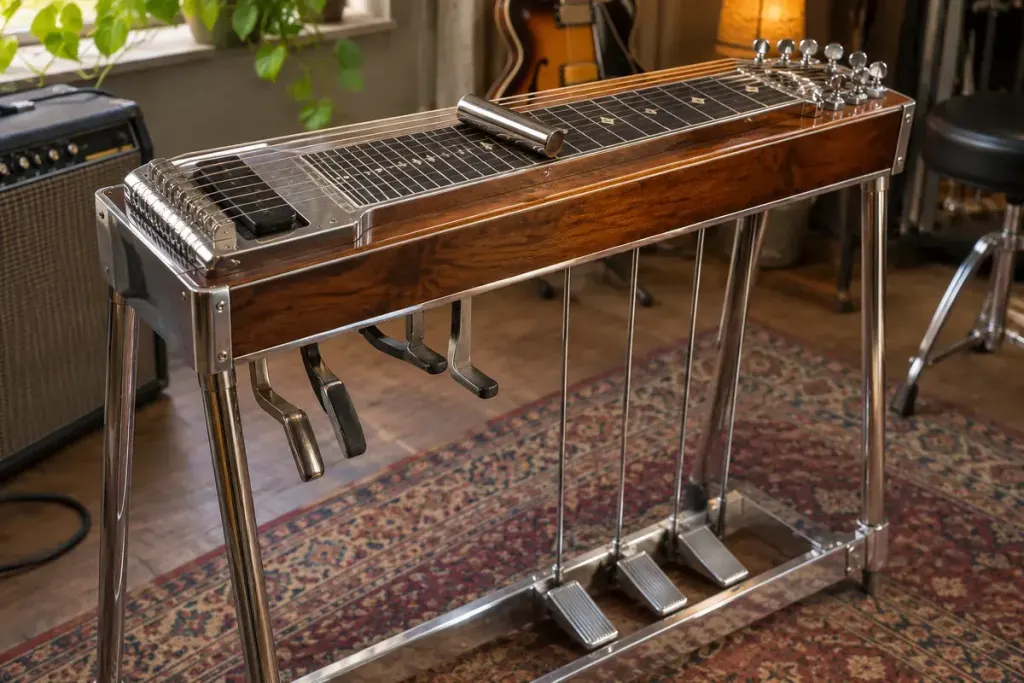
A chord seems to bloom into another chord while part of it stays still. In a pedal steel performance, that movement can come from more than sliding a bar along the strings. Foot pedals and knee levers can change selected string pitches within the player’s chosen setup.
Smithsonian Folkways’ Sacred Steel notes describe the pedal steel’s system of pedals and knee-operated levers. The notes also place pedal and non-pedal instruments within a particular musical tradition. They are a useful reminder that a steel guitar is not defined by one genre alone.
Listen inside the chord
Choose a clear performance passage and listen for three things: the initial attack, the sustained sound and the pitch movement after the attack. Does every note seem to move together, or does one voice move against others? You do not need to identify the exact mechanical setup to notice the difference.
Watch a performance video if the player and instrument are visible. The bar, picking hand, feet and knees can all be involved. Camera framing may hide part of the action, so avoid assigning every bend to a particular pedal from sound alone.
The setup is part of the instrument
Pedal and lever arrangements vary. Manufacturer Emmons lists multiple configurations for one model, illustrating why the number of controls should not be assumed from the instrument’s general appearance. The musical result depends on tuning, assignments and playing choices as well as the hardware.
For a listening note, describe what you hear before reaching for a technical label: “upper note rises while the lower harmony holds,” or “the whole phrase glides into the next position.” Those observations are useful even when you cannot transcribe the passage.
Then return to the full arrangement. Notice whether the steel answers a singer, sustains harmony or takes the melodic lead. Its distinctive bends become more interesting when heard as part of a conversation with the other instruments.