
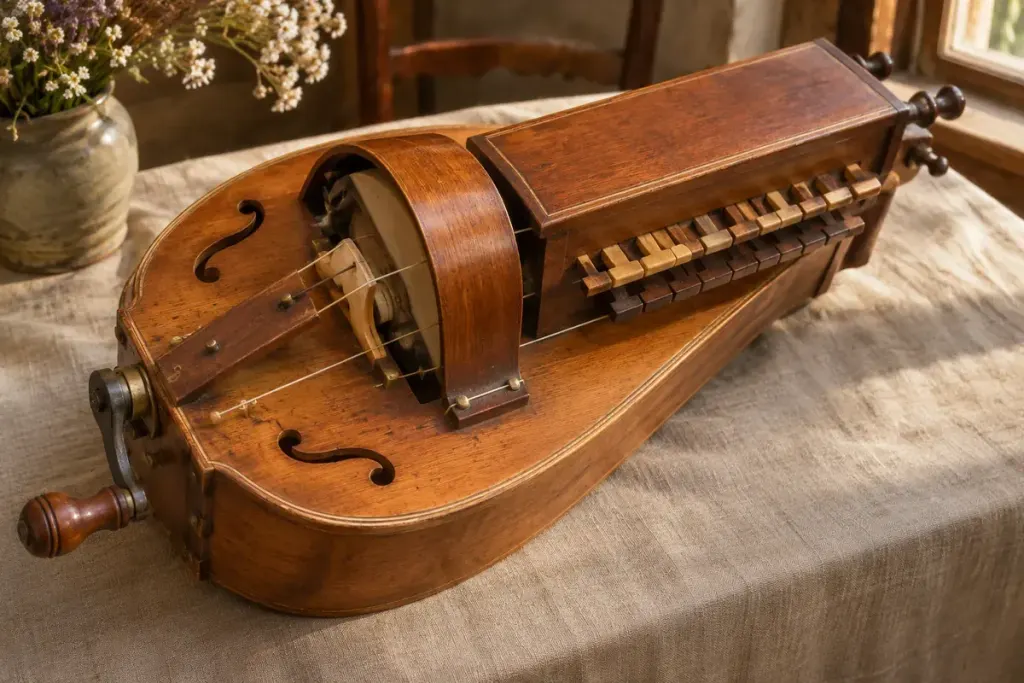
A musician turns a handle with one hand and works a row of keys with the other. From a distance, a hurdy-gurdy can look like a small mechanical curiosity. Watching those two movements makes its sound much easier to understand.
The turning wheel supplies the friction that sounds the strings; the keyboard allows the player to change notes. The Metropolitan Museum of Art’s description of a French hurdy-gurdy identifies the combination of cranking and pressing keys, and classifies the instrument as a bowed keyboard chordophone. A rotating surface takes the place of the familiar back-and-forth bow movement.
Listen once, then watch the hands
Choose a clearly filmed solo performance with an instrument credit. Listen to a short passage without studying the picture first. Write down what you hear in everyday terms: a continuous texture, a changing tune, a rough edge or a repeated rhythmic pulse.
Replay that passage while watching the crank. Then replay it again while watching the keys. Which change in the music coincides with a visible movement? Which part seems to continue underneath? Treat this as an observation exercise, not a test with one compulsory description.
A close recording can reveal details that disappear in a full band. Conversely, hearing the instrument inside an ensemble shows how its sustained sound can sit beside plucked, blown or struck instruments.
Avoid judging every instrument by one example
Historical objects, modern builds, amplification and playing styles can produce different impressions. Note the performer and recording when saving a favourite example. A name alone is not enough to identify the setup you heard.
If a festival offers a demonstration, a useful question is simple: which part of this instrument creates the sound that caught your ear? Point to the musical moment rather than guessing from the shape. Seeing a player connect movement and sound can turn an unfamiliar instrument into something you can recognise on the next recording.