
A flanged guitar or drum passage can seem to sweep forwards and backwards through a hollow, metallic space. That movement comes from the relationship between signals, rather than from the musician repeatedly changing the notes.
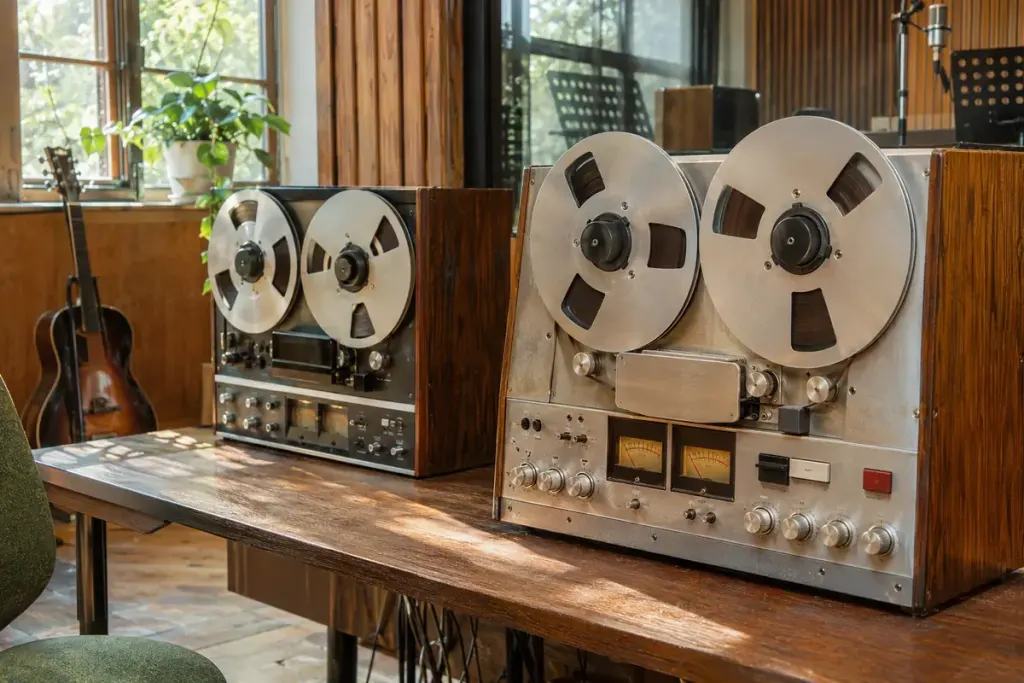
In the tape method, versions of a recording play from separate machines and are mixed while their timing shifts relative to one another. Harald Bode’s historical account, History of Electronic Sound Modification, discusses the use of tape machines for this effect. Small changes in delay alter which frequencies reinforce or cancel when the signals combine.
A listening exercise with one short phrase
Choose a clean recording you are allowed to process, preferably a phrase that repeats. First listen without an effect. Then compare a subtle flanger setting with a stronger sweep at the same comfortable playback level.
Ask three questions: does the apparent colour move while the note stays the same, does the effect become more obvious on sustained sound, and does the dry version make the rhythm easier to follow? Write a sentence about each comparison. Describing what changes is more useful than deciding immediately that one version sounds more professional.
A modern plug-in can model this relationship without two physical tape decks. Avid’s Reel Tape Flanger documentation, for example, describes an emulation involving fixed and variable delays. That manual documents a particular product version, not every control used by all flangers.
Keep the musical purpose in view
An effect that makes a solo passage interesting can obscure a busy arrangement. Try the processed phrase in the full mix before deciding how much movement it needs. If the effect is intended to mark a transition, compare that section with the bars immediately before and after it.
Save the unprocessed recording and note the settings used for the comparison. You can then revisit the decision without trying to reconstruct a fleeting sound from memory. The aim is a deliberate listening choice, not an obligation to make every track resemble an old tape experiment.