
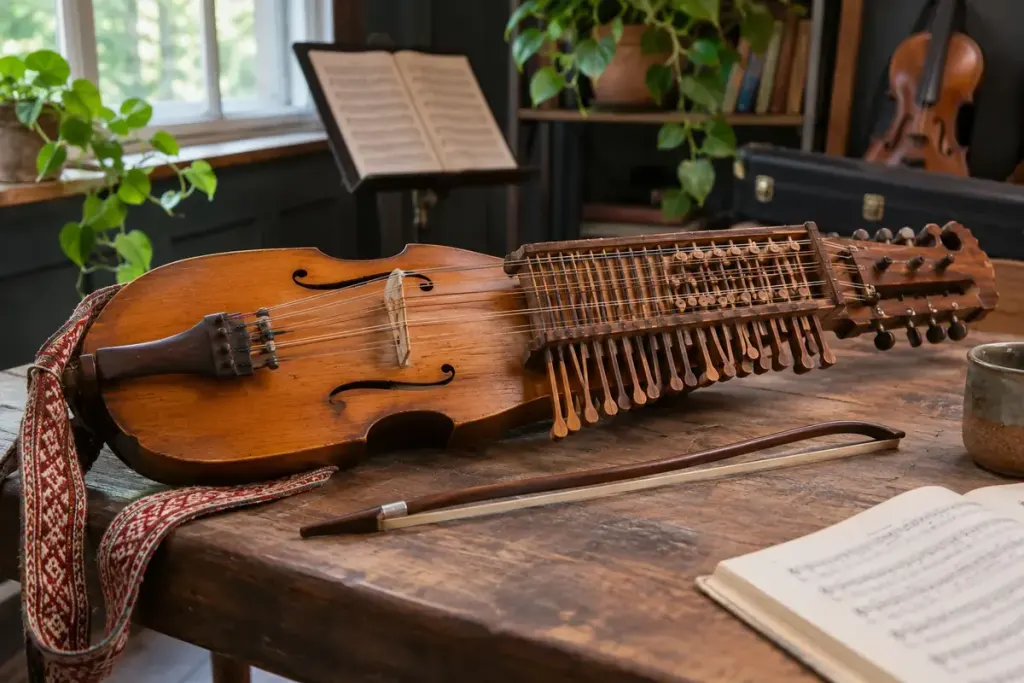
At first glance, a nyckelharpa can look like a fiddle that has acquired a row of wooden machinery. Watch the player for a few moments and the arrangement becomes clearer: one hand bows the strings while the other works keys. The combination produces a distinctive meeting of sustained tone and articulated melody.
UNESCO’s account of the nyckelharpa network describes a living playing and instrument-making tradition with roots in Sweden. The keys act through mechanisms that stop the melody strings, while sympathetic strings contribute resonance. Instruments from different periods and makers need not share an identical configuration.
Listen beyond the melody line
In a quiet solo passage, notice what remains after a note changes. Can you hear a surrounding ring as well as the directly bowed sound? Then listen to a faster phrase. The melody may move briskly while the instrument retains a resonant background. Room acoustics, microphones and the arrangement will affect how clearly you hear that distinction.
At a live event, choose a position where you can see the player’s hands without obstructing others. Watching a short repeated phrase can help connect the key movement to the sound. You do not need to identify every tuning or construction detail to appreciate how the performance works.
Let the instrument’s own history matter
The Metropolitan Museum of Art’s nyckelharpa collection record offers a useful visual point of comparison. A museum object is a particular instrument, not a diagram of every modern example. Compare its body and key arrangement with what you see on stage, and leave room for differences.
If a performer discusses their instrument after the set, asking how they chose its setup can open a better conversation than guessing its age from the finish. The most revealing introduction may be a tune played slowly enough for you to hear the resonating strings answer the bow.