
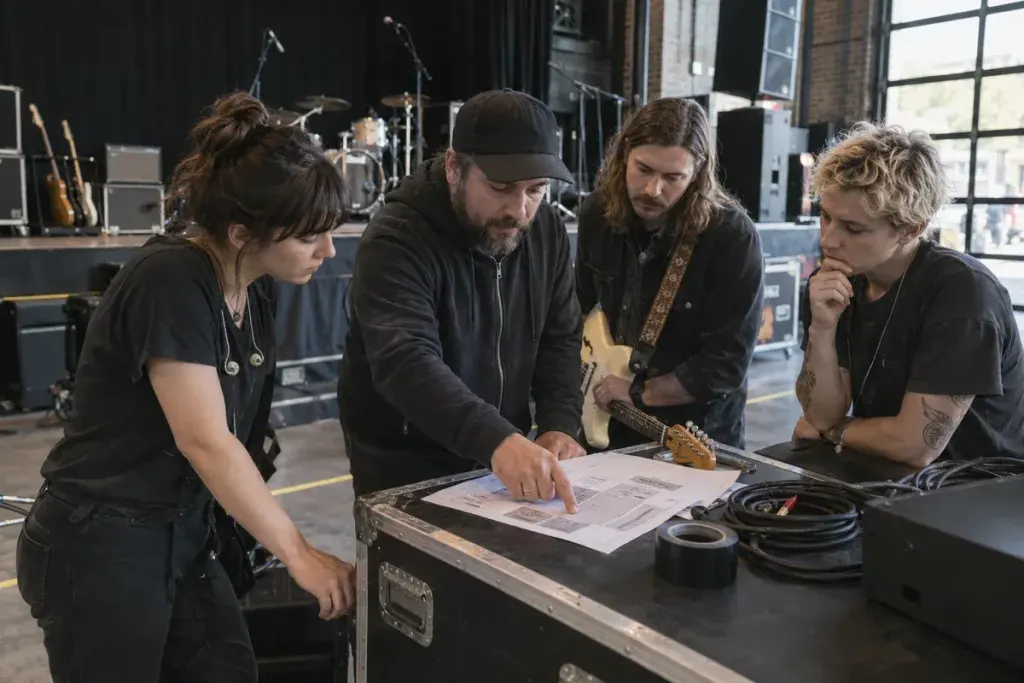
“We are a four-piece band” does not tell a sound engineer how many signals will reach the desk. One musician might sing and play a stereo keyboard while another brings an amplifier that needs a microphone. A stage plot makes those assumptions visible before load-in.
Draw the stage as seen from above and label the audience edge. Place each performer, instrument and relevant amplifier clearly. A simple box with a name is more useful than an attractive drawing that leaves the position uncertain.
Connect the picture to the input list
Beside the plot, list each signal separately: lead vocal, backing vocal, keyboard left and right, for example. Use consistent names on both documents. Specify what the band brings and what it is requesting from the venue, including any direct boxes or microphone stands.
A dedicated tool such as Stage Plot Designer can put a plot and input list together. The software is optional; the important part is an accurate document that the receiving engineer can understand and discuss.
Do not assume that drawing equipment means it has been agreed. Send the document in advance and ask the venue to confirm practical constraints. A small stage may require a different arrangement, and the available monitor system may not match the band’s usual rehearsal setup.
Keep requests useful and realistic
Describe essential monitor needs in plain terms, such as which singer needs a clear vocal reference. Avoid pretending that a written request fixes a mix before anyone hears the room. Soundcheck remains a conversation between performers and the engineer.
- Add the band name, date and a contact person.
- Show the audience edge and performer positions.
- List every required audio input once.
- Distinguish supplied equipment from requested equipment.
- Remove old versions when the line-up changes.
Before sending, have each band member check their part. A forgotten backing vocal or a last-minute change from mono to stereo can consume time that should be spent listening. Bring an accessible copy on the day and tell the engineer immediately if something has changed.
The plot does not need to impress anyone with production vocabulary. It needs to reduce avoidable questions so the soundcheck can focus on the performance, the room and what the musicians need to hear.