
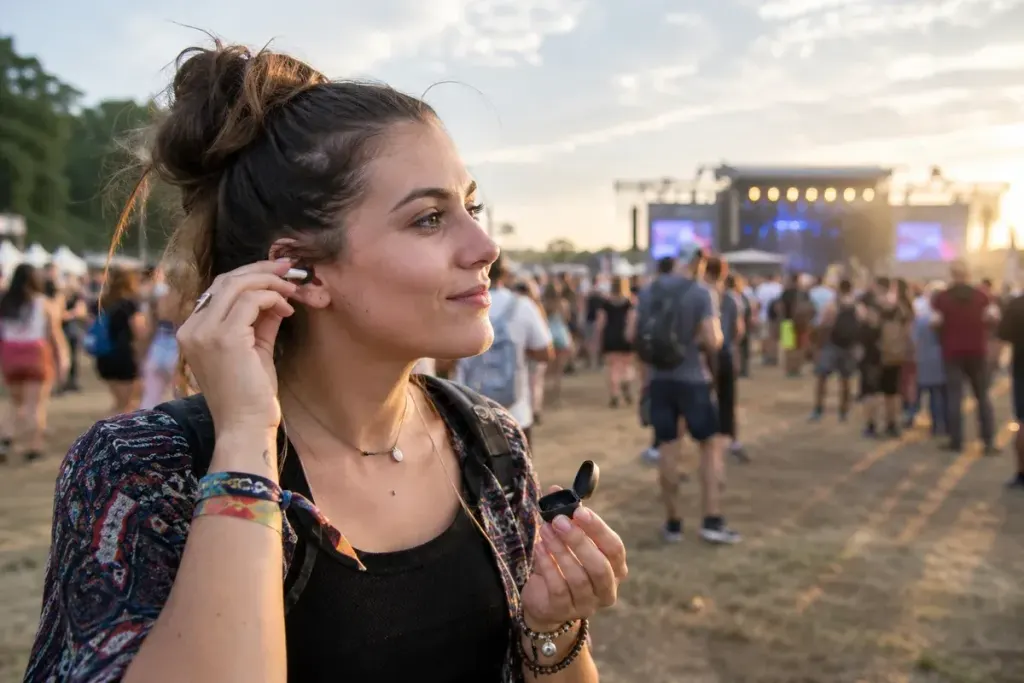
The ringing becomes noticeable only when the room is quiet after the show. It is a familiar story, but familiarity does not make it a useful souvenir. Hearing protection deserves a place beside your ticket and transport plan.
Loudness and exposure time both matter. There is no single spot in every venue or one pair of earplugs that makes unlimited exposure harmless.
Prepare before you reach the queue
Choose suitable hearing protection and learn to fit it according to the manufacturer’s instructions. Music-oriented earplugs can be a practical option, but correct fit matters. Bring a clean storage case and a spare option if appropriate.
The World Health Organization’s safe-listening resource recommends practical measures including protection and breaks. Its venue and event standard announcement also makes clear that organisers have a role in managing sound exposure.
Choose your position with your ears in mind
Being directly beside a speaker is not necessary to enjoy a performance. Move farther away when the sound feels excessive and use designated quieter areas where available. A crowded venue can make moving slow, so identify an exit route before the set begins.
Agree a meeting point with friends. That makes taking a break less of a social negotiation and avoids feeling obliged to remain in one loud location because nobody knows where to regroup.
Give breaks a place in the evening
Look at the running order and identify a time to step away from amplified sound. A break should actually be quieter; standing next to another loud stage does not serve the same purpose.
You can still be spontaneous about the music while being deliberate about exposure. Carrying earplugs but leaving them in a pocket for the loudest set is a planning failure that is easy to avoid.
Take a change in hearing seriously
If ringing, muffled hearing or discomfort occurs, leave the loud environment. Persistent symptoms deserve assessment by a qualified health professional, and a sudden hearing change warrants urgent medical advice. Do not treat a return to apparent normality as proof that the exposure was harmless.
The practical aim is not to make a festival feel clinical. It is to remove preventable friction: protection already packed, a quieter place already identified and friends already aware that breaks are part of the night. That leaves more attention for the performance itself.