
Rehearsal Notes
A guitar capo changes the sounding pitch without changing the chord shape
Understand what a guitar capo changes, distinguish chord shapes from sounding chords and communicate the key clearly when playing with others.

For the music and everything around it.
Understand what a guitar capo changes, distinguish chord shapes from sounding chords and communicate the key clearly when playing with others.

Understand hidden audio before track one on some CDs, and why a streaming track list or ordinary playback start may not reveal the same material.

Plan playback between live sets with the venue, including volume, handover cues and a fallback if the playback device fails.
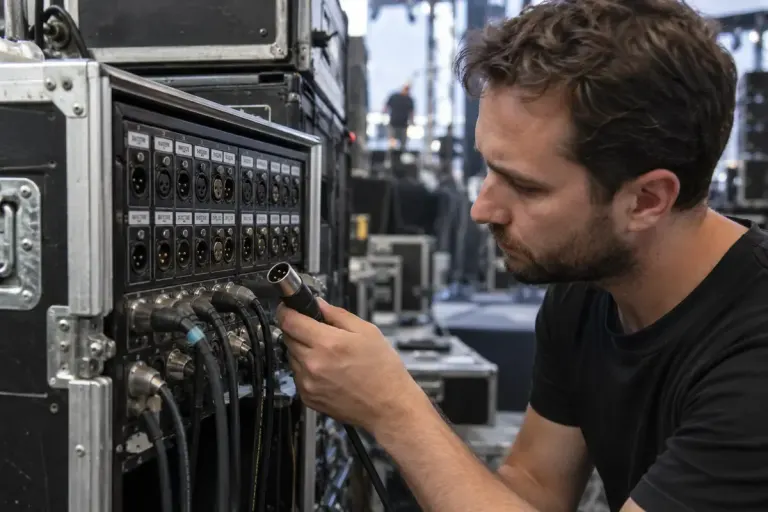
Identify mic and line levels from equipment specifications rather than the XLR connector, then plan a sound-check that avoids preventable input mismatches.
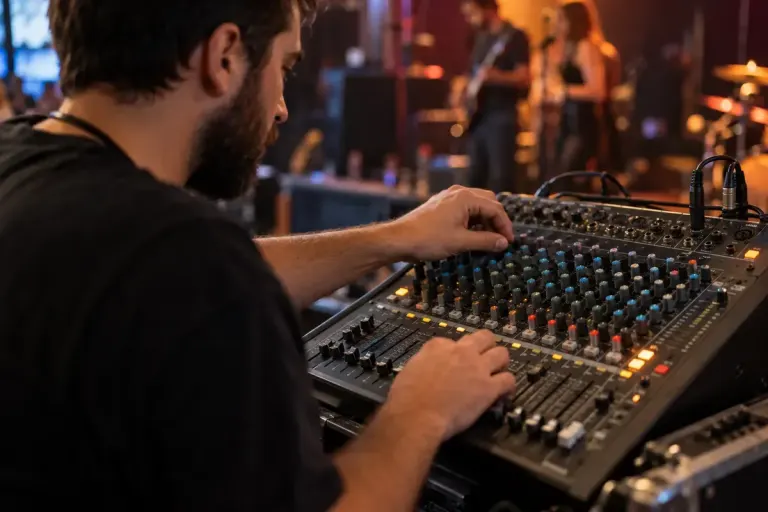
Set input gain with the signal path in mind, then use the channel fader to balance the live mix without trying to repair upstream clipping downstream.

Recognise microphone feedback as a repeating sound loop and work with the sound engineer on placement and gain before the audience arrives.
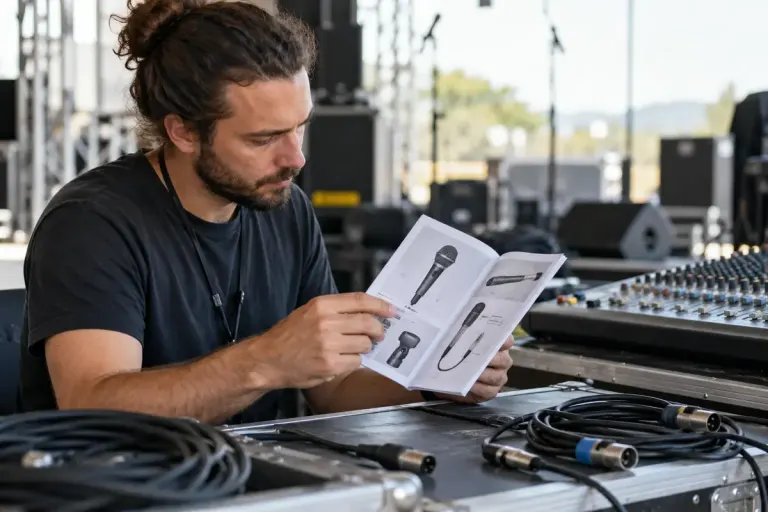
Phantom power supplies compatible microphone electronics; it is not an extra loudness setting. Check the microphone, cable and interface before switching it on.
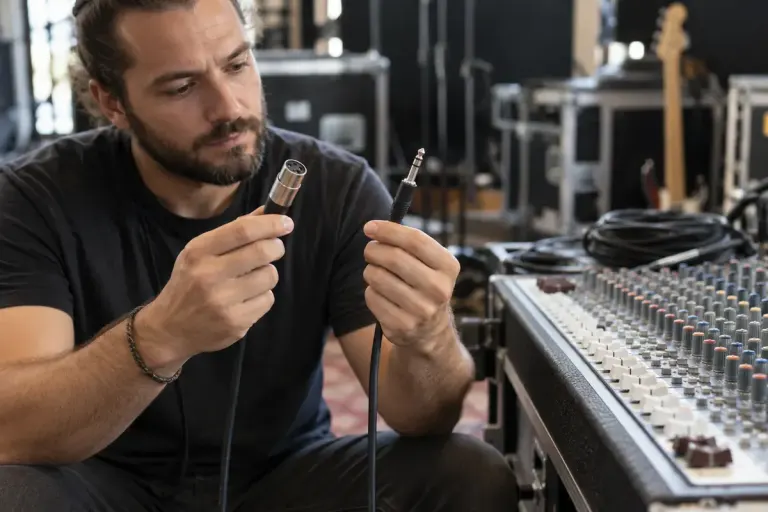
A balanced audio connection depends on compatible equipment and wiring. A familiar connector shape alone does not tell you what signal it carries.

Check how a stereo mix sums to mono before release, listening for disappearing elements rather than assuming wider always means better.