
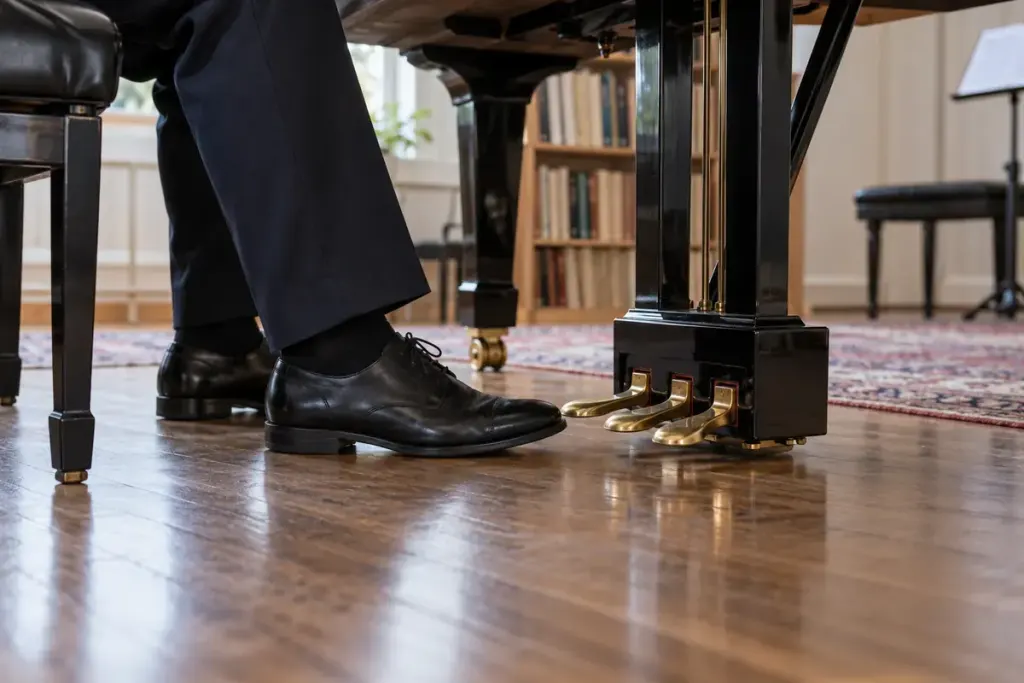
A pianist holds a low chord, releases the keys and plays short notes above it. The lower sound continues while the new notes remain distinct. On an instrument equipped with the appropriate mechanism, the sostenuto pedal can make that contrast possible.
It is worth checking the instrument before experimenting. The middle pedal does not have the same function on every piano, and digital instruments may allow pedal assignments to change.
Find the function in the manual
The Yamaha P-515 owner’s manual describes its sostenuto pedal: press it while holding a note or chord, and those selected notes continue after the keys are released; notes played subsequently are not sustained by that pedal. The manual also documents assignable functions, which is why the current setup matters.
This differs from using the damper pedal to sustain later notes as they are played. The musical interest is selective continuation: one layer can remain sounding while another moves more cleanly.
Listen to a simple contrast
On a piano whose manual confirms sostenuto operation, choose a comfortable note or small chord. Hold the keys, engage the pedal as instructed, then release the keys. Listen to what remains. Play a few separate notes elsewhere on the keyboard without using the damper pedal.
This is an exploratory listening exercise, not a prescribed fingering or a passage from a composition. Keep the volume comfortable and the movement relaxed. If the result differs from what you expect, check the pedal assignment and timing before pressing harder or assuming the instrument is faulty.
Repeat once without sostenuto. The comparison helps you hear which sound was being retained. A naturally decaying piano tone will not become an indefinitely constant sound simply because its damper is held away.
When listening to a performance, avoid identifying the pedal from sound alone with complete confidence. Fingering, resonance, the instrument and other pedalling choices can contribute to what you hear.
Knowing this function nevertheless adds a useful question to listening: is the player allowing one group of notes to continue while another remains detached? That small distinction can reveal another layer in a seemingly simple piano texture.