
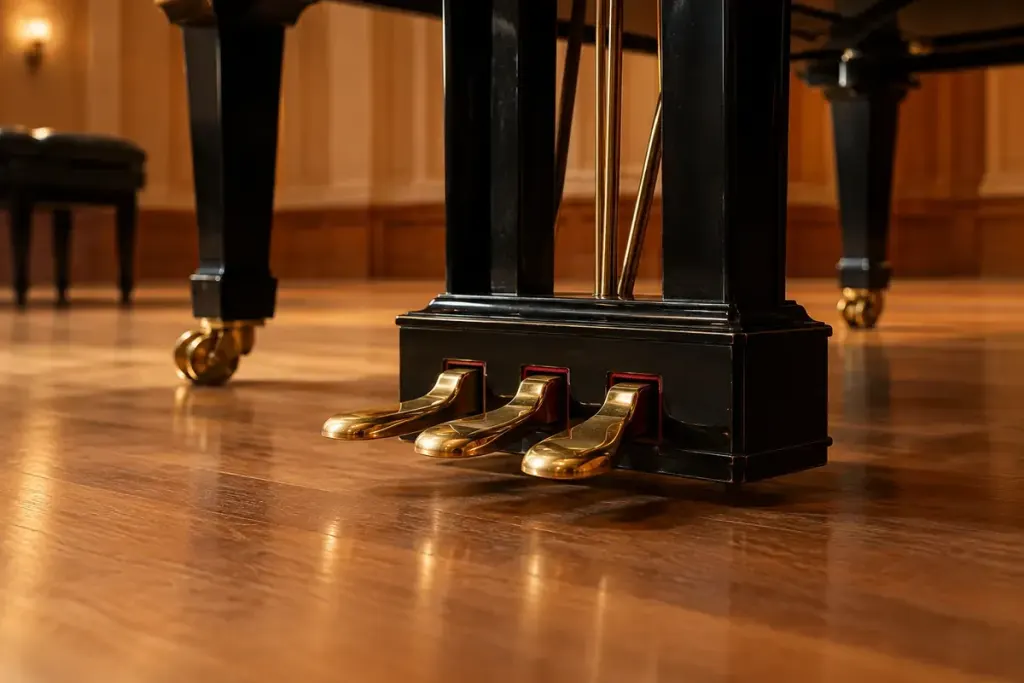
The left and right pedals of a piano can both change the sound, but they do different jobs. Holding the sustain pedal lets notes continue through the damper system. The soft pedal changes how the action produces the sound.
Yamaha’s comparison of grand and upright pianos explains an important distinction: a grand’s left pedal shifts the action, while an upright’s soft-pedal mechanism moves the hammers closer to the strings. The instruments therefore need not respond identically.
Listen with one variable at a time
At an instrument you are permitted to use, play a short, simple phrase without either pedal. Repeat it with the soft pedal, keeping the touch as similar as possible. Then compare a separate repetition using sustain.
Listen for attack and tonal colour as well as loudness. The left pedal is not merely a convenient volume switch that replaces control of the fingers. A teacher can help distinguish what the pedal changes from what the player’s touch changes.
Read the instrument as well as the score
Digital pianos may implement pedal effects differently depending on the model and settings. Some middle pedals also have a practice or other specialised function. Check the instrument’s manual rather than assigning all three pedals the same roles across every piano.
In a performance, notice whether a softer passage remains clear and shaped rather than simply becoming distant. The pedal can be part of an expressive choice alongside articulation, timing and touch.
If a score asks for una corda, discuss its intended effect with a teacher in the context of the instrument being played. Historical terminology and modern mechanisms do not always line up as a literal count of strings.
The useful listening question is not just “Did it get quieter?” but “What changed in the beginning and character of each note?”