
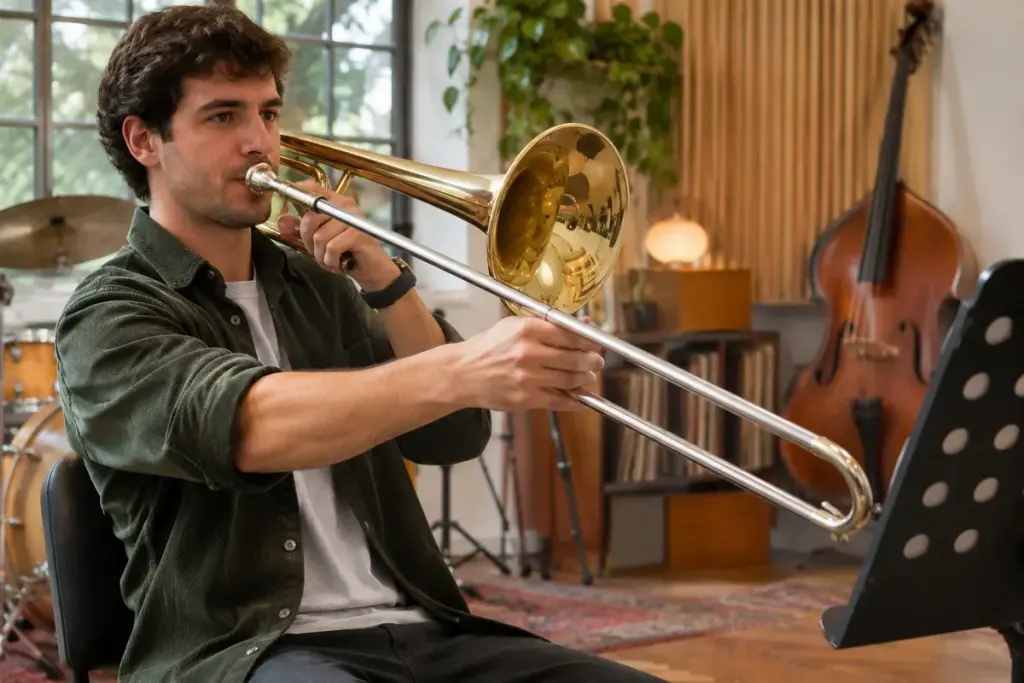
A trombone slide has no frets that click into place. A position chart gives useful landmarks, but the player still listens and makes small adjustments. That flexibility is part of the instrument’s character and part of learning to play in tune.
Yamaha’s instrument guide explains that slide movement changes tubing length, while the way the player blows also helps determine the note. One slide position can therefore serve more than one pitch within the instrument’s harmonic series.
Use landmarks as a starting reference
For a beginner, a teacher can help establish comfortable physical references for the positions. Those references should support listening rather than replace it. The instrument, register and musical context can all affect the precise placement needed.
Avoid stretching awkwardly to imitate a photograph of someone else’s arm. Ask about an appropriate instrument and technique if reach is a problem. Comfort and control are more useful than forcing a visual match.
A short listening exercise
Choose one comfortable note with a teacher’s guidance. Play it at a steady, moderate dynamic, then compare it with a reference pitch. Make a small slide adjustment and listen to the result. Repeat without staring continuously at a tuner, using the display to check what you heard.
Next, compare the same note within a simple phrase. A note that seemed settled in isolation may expose a different issue when approached from another position. Record a short passage if that helps you hear the transition afterward.
Attachments change the map
An F attachment changes the effective tubing arrangement and the available position relationships. Yamaha’s guide to tenor-bass and bass trombones illustrates why attachment use needs its own position information. Do not transfer a straight-tenor chart without checking what the valve does.
Keep a practice note about the particular note or transition that needs attention. “Third position is wrong” is too broad to be useful. “This note settles when I listen before moving on” gives the next practice session a clearer purpose. The slide provides the freedom; a trained ear gives that freedom direction.