
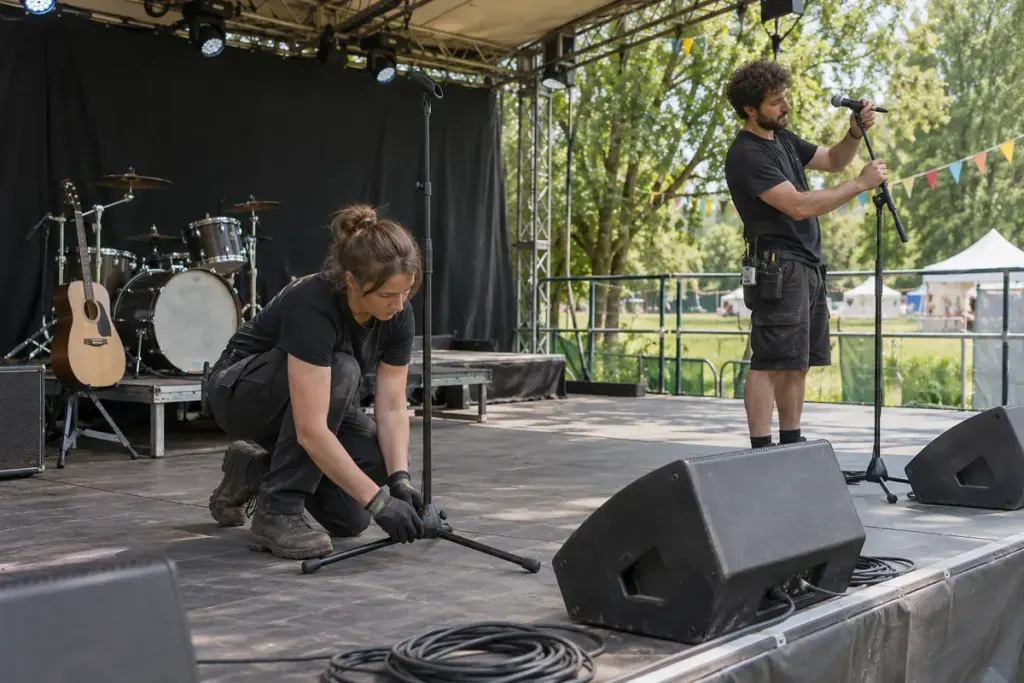
The previous band leaves, the next drum kit appears, and the audience sees a brief pause. Behind that pause, stage and sound crews are changing a working system under time pressure. Moving instruments is only one part of a festival changeover.
Clear advance information makes that short interval more manageable.
Send a stage plot that matches the actual show
Yamaha’s touring guidance stresses communicating with engineers and supplying a stage plot and input list. Those documents should agree with the musicians and equipment that will actually arrive.
If a keyboard player has been added or an output arrangement has changed, update the information. A beautifully formatted but outdated plot creates more work than a plain accurate one.
Separate placement from signal readiness
A microphone can be in the right place while its signal is routed incorrectly. Shure’s festival-mixing advice from Bryony October highlights systematic checks and communication during a changeover, including the need to verify routing rather than trusting a saved desk file blindly.
For an illustrative handover, identify what the first song needs immediately: its opening vocal, instrument or playback cue. Communicate that priority to the responsible crew without skipping the checks required for the rest of the show.
Agree who says the stage is ready
- Who directs equipment movement?
- Which backline items are shared, and which are replaced?
- Who confirms input and monitor checks?
- Who gives the final start instruction?
Keep access routes clear and follow the venue’s crew instructions. Musicians should not make unannounced changes to power, rigging or patching to save a minute.
When time is short, concise communication beats several people solving the same problem in different ways. After the show, record any mismatch between the submitted information and the actual setup. Fixing that document before the next festival can save more time than trying to move faster during the next changeover.