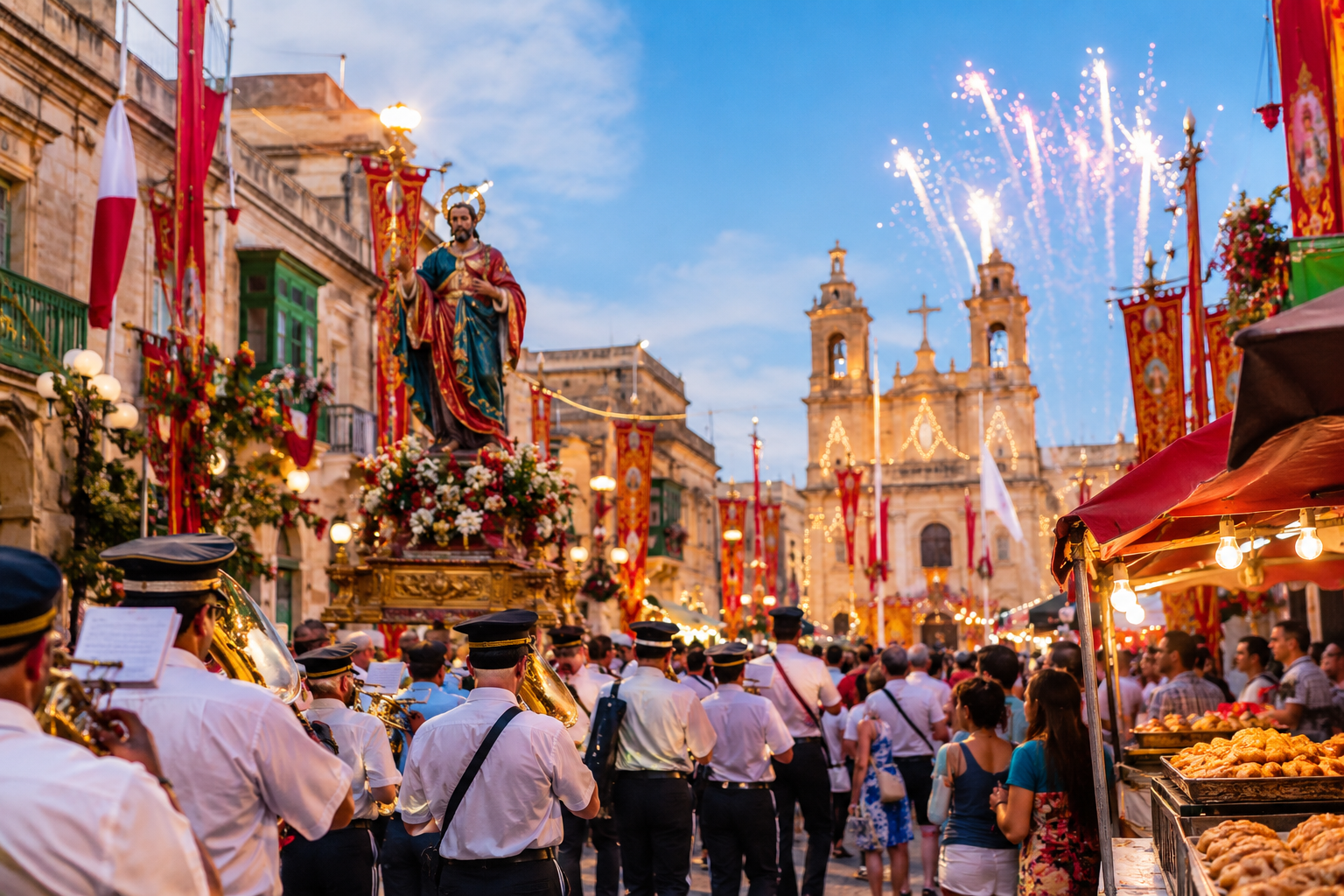
Valletta, Sliema, St. Julian’s, or Gozo? Where Should You Actually Stay in Malta?
Sundown Malta >> Malta Travel Guide>> Valletta, Sliema, St. Julian’s, or Gozo? Where Should You Actually Stay in Malta?
Valletta, Sliema, St. Julian’s, or Gozo? Where Should You Actually Stay in Malta?
Malta looks tiny on a map.
So when you start planning a trip, choosing a hotel seems easy.
Find something with good reviews.
Make sure it’s reasonably close to the coast.
Book it.
Done.
Then you start researching.
One person tells you to stay in Valletta.
Someone else says Sliema is much more convenient.
Another traveler insists St. Julian’s is better if you want restaurants and nightlife.
Then somebody posts photos from Gozo and suddenly you’re wondering whether staying on Malta’s main island is a mistake altogether.
The confusing part is that none of them necessarily has to be wrong.
Because figuring out where to stay in Malta isn’t really about finding one universally “best” location.
It’s about choosing the part of Malta that fits the trip you actually want.
A historic city break feels different from a beach holiday.
A nightlife weekend needs a different base from a quiet couples’ trip.
And a traveler planning to explore extensively may value transport connections more than someone who simply wants to walk outside every morning and find restaurants nearby.
So before booking a room, choose your base first.
The hotel comes second.
Why Your Base Matters Even in a Small Country
Malta’s compact size can create the impression that location barely matters.
After all, you’re not choosing between opposite ends of a huge country.
But travel time isn’t determined by distance alone.
Road traffic, bus routes, transfers, walking conditions, ferry connections, and the location of the places you want to visit all influence how convenient a base feels.
A few kilometers on a map can make a meaningful difference to your daily routine.
That is why two travelers can spend the same number of days in Malta and come home describing completely different experiences.
One may remember historic streets and evening walks through Valletta.
Another remembers cafés, waterfront promenades, and ferries from Sliema.
Another remembers nightlife around St. Julian’s.
Another spends mornings looking across quieter landscapes in Gozo.
Same destination.
Different Malta.
Valletta: Best for History, Atmosphere, and a City-Break Feeling
If the image in your head involves:
honey-colored buildings,
historic streets,
balconies,
churches,
fortifications,
museums,
harbor views,
and evenings spent wandering through an atmospheric old city,
Valletta is the obvious place to investigate first.
Malta’s capital gives you one of the country’s strongest concentrations of historical character.
Why Stay in Valletta?
The biggest advantage is simple:
you are already somewhere worth exploring.
You don’t need to begin every morning by traveling to your first attraction.
Step outside and the city itself becomes part of the day.
That matters more than people sometimes realize.
When you stay somewhere beautiful, even the periods between scheduled activities become part of the trip.
Going for coffee isn’t just going for coffee.
Walking back after dinner isn’t just transportation.
You continue experiencing the destination.
Valletta Is Particularly Good for First-Time Visitors Who Prioritize Culture
If your Malta list is dominated by:
architecture,
history,
museums,
churches,
photography,
restaurants,
and harbor scenery,
Valletta can make a lot of sense.
It’s also useful as a transport hub for exploring elsewhere.
But Valletta Isn’t Malta’s Classic Beach Base
This is the trade-off.
If your dream holiday is:
wake up,
walk five minutes,
spread out a towel,
swim,
return to the hotel,
repeat,
Valletta probably isn’t the first area you should choose solely for beach access.
Malta has coastal swimming spots in many places, but “coast” and “sandy beach” are not interchangeable.
That distinction becomes very important when choosing accommodation.
Sliema: Best for Convenience and an Easy Everyday Base
Sliema often makes sense for travelers who don’t necessarily need to sleep inside the most historic environment but want a practical location with plenty around them.
Think:
waterfront walks,
restaurants,
cafés,
shops,
accommodation choices,
and useful connections.
Sliema Feels More Modern Than Valletta
That’s neither a compliment nor criticism.
It’s simply a different experience.
If Valletta gives you a strong sense of historic Malta every time you leave your accommodation, Sliema can feel more like a busy contemporary coastal base.
Why Do So Many Visitors Choose Sliema?
Convenience.
That’s the word.
You can have plenty of everyday services nearby while remaining well positioned for sightseeing.
For travelers who like returning from a full day and still having lots of choices for dinner or a casual walk, that can be extremely useful.
The Waterfront Is Part of the Appeal
Sliema’s promenade makes the area attractive to travelers who enjoy having somewhere easy to walk without needing a detailed plan.
Morning?
Walk.
Sunset?
Walk.
Finished dinner but don’t want to go back to the room?
Walk again.
A good promenade quietly improves a vacation.
Valletta vs Sliema: Which One Should You Choose?
This is one of the most useful comparisons for first-time visitors.
Choose Valletta if you prioritize:
historic atmosphere,
architecture,
culture,
and the feeling of staying inside a destination rather than merely using it as a base.
Choose Sliema if you prioritize:
convenience,
waterfront living,
restaurants,
shopping,
and an easy base for moving around.
A Simple Test
Imagine it’s 8 p.m.
You’ve finished sightseeing.
What sounds better?
Walking through atmospheric historic streets?
Valletta.
Or having a long waterfront promenade with lots of modern conveniences around?
Sliema.
Neither answer is wrong.
Your answer tells you something about your travel style.
St. Julian’s: Best for Restaurants, Energy, and Nightlife
Now suppose your ideal trip doesn’t end after dinner.
You want:
bars,
late nights,
busy restaurants,
social energy,
and plenty happening around your accommodation.
St. Julian’s becomes much more interesting.
This Is Malta With the Volume Turned Up
Certain parts of St. Julian’s are associated with a livelier atmosphere, particularly around the nightlife areas.
For younger travelers, groups of friends, or anyone deliberately planning evenings out, that can be a major advantage.
You Don’t Need to Commute Home After Going Out
That is underrated.
If nightlife is genuinely one of your trip priorities, staying near it can make much more sense than repeatedly traveling across the area late at night.
But “Near the Nightlife” Can Also Mean “Near the Noise”
Here’s the other side.
The exact thing that makes a location convenient at midnight may make it annoying when you’re trying to sleep.
So don’t just look at:
St. Julian’s
on the booking page.
Look at the specific street and immediate surroundings.
A few blocks can matter.
Sliema or St. Julian’s?
These two areas are frequently considered together because they’re relatively close and both provide lots of tourist infrastructure.
But the feel isn’t identical.
Choose Sliema If You Want More Balance
Restaurants.
Waterfront.
Convenience.
Activity.
But nightlife doesn’t necessarily need to define the trip.
Choose St. Julian’s If Evening Entertainment Is a Major Priority
Especially if you want to be close to bars, clubs, and late-night activity.
The important question isn’t:
“Which area is better?”
It’s:
How late do you want your neighborhood to stay awake?
Paceville: Great for Some Travelers, Completely Wrong for Others
This deserves its own mention.
Paceville is strongly associated with nightlife.
If you are specifically traveling for:
clubs,
bars,
parties,
and a high-energy social environment,
being nearby may be exactly what you want.
If you’re planning:
a quiet anniversary,
early morning sightseeing,
peaceful evenings,
or a relaxing family trip,
you may reach a very different conclusion.
Don’t Book Based on Price Alone
A surprisingly good hotel deal is not always a bargain if its location fundamentally conflicts with your trip.
Always check the immediate neighborhood.
Mellieħa: Best for Travelers Prioritizing Sandy Beaches
Now let’s move away from the dense urban areas around Valletta and the harbor.
If beaches are the main event, northern Malta becomes more interesting.
Mellieħa is a popular option for travelers who want better access to some of Malta’s best-known sandy beach areas.
This Is a Different Type of Malta Holiday
Your day may revolve more around:
swimming,
sun,
coastal scenery,
and slower mornings
than museums and city streets.
The Trade-Off Is Location
Being closer to beaches generally means being farther from some of the major urban sightseeing areas.
That’s fine if you understand the trade.
It becomes frustrating only when you expect both experiences to be equally convenient.
Don’t Confuse “Sea View” With “Beachfront”
This rule can save you from a disappointing booking.
Malta is an island.
There is coastline everywhere.
That does not mean every coastal hotel sits beside a sandy beach.
Malta Has Rocky Coastlines and Swimming Areas Too
For many travelers, these are fantastic.
Some even prefer them.
But if your mental image specifically requires sand, verify what is actually near the accommodation.
“300 meters from the sea” is not the same sentence as:
“300 meters from a sandy beach.”
Gozo: Best for a Slower, Quieter Malta Experience
Then there is Gozo.
Technically, you’re still in the Maltese archipelago.
Experientially, however, staying on Gozo can make the trip feel very different.
Gozo is often appealing to travelers looking for:
a slower pace,
villages,
countryside,
coastal scenery,
diving,
quiet evenings,
and a less urban atmosphere.
Gozo Is Not Simply “Another Neighborhood”
This is important.
Choosing Gozo as your primary base changes the logistics of visiting attractions on Malta’s main island.
You need to account for inter-island travel.
So Why Stay There?
Because repeatedly visiting Gozo as a day trip isn’t the same as waking up there.
Day-trippers eventually leave.
Evening arrives.
The pace changes.
You experience a different side of the island.
Should You Stay on Gozo for Your Entire First Malta Trip?
That depends heavily on your priorities.
If your main interests are:
Valletta,
Mdina,
the Three Cities,
museums,
and exploring the main island extensively,
staying entirely on Gozo may add unnecessary travel.
But if you’re deliberately seeking a quieter island holiday?
Gozo can be the destination rather than the side trip.
The Best Solution May Be Splitting Your Stay
This is an underrated strategy.
Suppose you have enough time.
Instead of forcing one location to do everything, you could divide the trip.
For example:
several nights on Malta’s main island,
then several nights on Gozo.
Why This Works
You reduce repeated backtracking.
Urban sightseeing happens while you’re based somewhere convenient for it.
Then the pace changes.
You move to Gozo.
Now the second part of the holiday feels almost like another trip.
The Downside?
Moving hotels consumes time.
Packing.
Checking out.
Transport.
Checking in.
For a short visit, one base may still be better.
Mdina: Beautiful, Atmospheric, but a Different Kind of Base
Almost every Malta visitor encounters images of Mdina.
Narrow historic streets.
Stone walls.
Quiet passages.
A dramatic old-city atmosphere.
It’s incredibly appealing.
Staying There Can Be Special
Particularly once day visitors leave and the atmosphere becomes quieter.
But Mdina isn’t necessarily the most practical all-purpose base for every first-time traveler.
Think Experience Before Convenience
If you choose Mdina, you may be choosing the character of the stay itself.
That can be wonderful.
Just understand that you’re making a different trade-off than someone choosing Sliema for transportation and everyday convenience.
Rabat Can Be Worth Considering Too
Immediately around Mdina, Rabat offers another experience with historical character and a more lived-in feel.
For travelers who prefer:
local atmosphere,
history,
and a less resort-like environment,
this part of Malta can be interesting.
Again, however, your daily itinerary matters.
The Three Cities: For Travelers Who Want History Without Sleeping in Valletta
Across the Grand Harbour from Valletta are the historic Three Cities:
Vittoriosa,
Senglea,
and Cospicua.
These areas can appeal to travelers who want:
historic architecture,
harbor atmosphere,
quieter evenings,
and something slightly removed from the busiest tourist bases.
This Can Be a Great Compromise
You’re still deeply connected to Malta’s historical character without necessarily sleeping in Valletta itself.
For photographers and travelers who enjoy atmospheric streets, this area deserves attention.
Where Should You Stay in Malta Without a Car?
This is where accommodation choice becomes particularly important.
If you aren’t renting a car, prioritize access to:
useful bus routes,
ferries where relevant,
walkable restaurants,
and the attractions you expect to visit most often.
Valletta Is Strong for Sightseeing Connections
As the capital and a major transport point, it can work well for travelers relying on public transport.
Sliema Is Also Convenient
Particularly because you have lots of services nearby and useful connections to other areas.
Don’t Automatically Assume You Need a Rental Car
Plenty of visitors experience Malta without one.
But your itinerary needs to match your transport strategy.
Should You Rent a Car in Malta?
A car can increase flexibility, particularly if you’re exploring places that require multiple transport connections.
But driving also introduces:
parking,
traffic,
navigation,
and the responsibility of driving on the left.
If You’re Staying in a Dense Urban Area, Ask Whether You’ll Actually Use It
Renting a car that spends most of the trip parked isn’t particularly useful.
If You’re Exploring Extensively, the Calculation Changes
Especially when you want control over departure times and access to more scattered locations.
Malta Drives on the Left
For travelers coming from countries where traffic keeps right, this requires adjustment.
The steering wheel position of a rental vehicle and transmission choice can add another layer of unfamiliarity.
Don’t Make Your First Five Minutes of Vacation an Advanced Driving Examination
If you’re uncomfortable, consider other transport.
There’s no prize for making the trip harder.
Where Should Couples Stay in Malta?
There isn’t one answer because couples don’t all want romantic trips in the same way.
Valletta
Great if romance means:
beautiful architecture,
wine and dinner,
evening walks,
historic atmosphere.
Gozo
Great if romance means:
quiet,
slower days,
scenery,
privacy,
and escaping urban activity.
Mellieħa
Good if your ideal couple’s trip revolves around:
beaches,
swimming,
and relaxation.
Sliema
Useful for couples who want convenience and lots of restaurants while still exploring widely.
The best romantic location is the one matching what both of you actually enjoy.
Where Should Families Stay?
Families often prioritize different things:
room size,
easy meals,
swimming,
transport,
noise levels,
and how much walking is involved.
Beach-Oriented Families May Prefer Northern Areas
Especially if swimming is central to the trip.
Sightseeing Families May Prefer a More Connected Base
The right answer depends strongly on children’s ages and how aggressively you plan each day.
A toddler changes travel strategy.
So does a teenager.
Where Should Solo Travelers Stay?
Solo travelers often benefit from locations where they can easily:
walk,
eat,
join tours,
use public transport,
and find activity without extensive planning.
Valletta, Sliema, and St. Julian’s can each work, but for different personalities.
Want Culture?
Valletta.
Want Practical Convenience?
Sliema.
Want More Nightlife and Social Energy?
St. Julian’s.
That’s a much more useful framework than declaring one universally best.
Where Should You Stay for Nightlife?
St. Julian’s, particularly around the livelier entertainment areas, deserves strong consideration.
But here’s a useful strategy:
Stay Close Enough, Not Necessarily Inside It
If you want nightlife but also value sleep, choose accommodation within convenient reach rather than directly above the action.
This can give you the best of both worlds.
Where Should You Stay for Beaches?
If sandy beaches are the priority, look toward areas with convenient access to the beaches you actually intend to use, including northern Malta.
Mellieħa is one of the obvious bases to research.
But Map the Exact Beach
Don’t book because a listing says:
“close to Malta’s beautiful beaches.”
Which beach?
How close?
Walking?
Bus?
Car?
Down a steep road?
These details matter.
Where Should You Stay for History?
Valletta should be high on the list.
But don’t stop there.
Mdina, Rabat, and the Three Cities provide completely different historical atmospheres.
History Doesn’t Exist in One Neighborhood
Malta’s historical layers are spread across the islands.
Your base simply determines which part becomes your everyday environment.
Where Should You Stay for a Short Weekend?
When the trip is very short, convenience becomes more important.
You don’t want to spend a significant percentage of a three-day trip moving between accommodation.
Pick One Base
Preferably somewhere aligned with your highest-priority activities.
For many first-time city-break travelers, that could mean Valletta or the surrounding harbor areas.
Save the Multi-Hotel Adventure for a Longer Trip
Every hotel change has a hidden cost in time.
Where Should You Stay for a Week?
Now you have more flexibility.
A week allows you to consider:
one convenient central base,
or a split stay.
Example Travel Logic
First half:
history, cities, sightseeing.
Second half:
beaches or Gozo.
This can create variety without turning the holiday into constant packing.
Where Should You Stay for Two Weeks?
At this point, splitting your stay becomes much more attractive.
You have enough time to experience different environments without sacrificing a huge percentage of the trip to moving.
Malta Can Become Several Holidays
Historic city.
Coastal base.
Gozo.
Beach days.
That’s where the country’s compact size becomes an advantage.
Don’t Choose Accommodation From the Hotel Photo Alone
This mistake happens everywhere.
Beautiful pool.
Perfect room.
Amazing breakfast.
You book.
Then discover the location makes every activity inconvenient.
Open the Map Before Paying
Check:
nearest useful bus stop,
walking routes,
restaurants,
supermarkets,
ferry access,
beaches,
and your priority attractions.
Zoom In
“Malta” is not a sufficiently precise hotel location.
Neither is:
“near Valletta.”
How near?
That’s the question.
Read Reviews for Location, Not Just Cleanliness
Guest reviews can reveal practical information that promotional descriptions won’t emphasize.
Look for repeated comments about:
noise,
steep walks,
transport,
construction,
nightlife,
traffic,
and nearby amenities.
One Complaint Doesn’t Prove Anything
But patterns matter.
If 25 guests mention street noise?
That’s information.
Check Recent Reviews
Neighborhoods change.
Construction appears.
Restaurants close.
Bus arrangements change.
Hotels renovate.
A Five-Year-Old Review May Describe a Different Experience
Prioritize recent patterns when evaluating practical conditions.
Look at the Room Type, Not Just the Hotel
You find a gorgeous property.
Photos show:
balcony,
harbor view,
large windows.
Book the cheapest room.
Arrive.
Window faces a wall.
Same Hotel, Different Experience
Always verify exactly what the room category includes.
Words like:
“sea view,”
“partial sea view,”
“city view,”
and “interior room”
are not decorative vocabulary.
Sea View Can Be Worth It in Malta
This is subjective.
But Malta’s coastal landscapes mean accommodation views can genuinely become part of the experience.
Especially Around Sunset
A balcony overlooking the water can turn the hour before dinner into an activity by itself.
For a site called Sundown Malta, that’s exactly the kind of travel experience worth building content around.
But Don’t Pay for a View You’ll Never See
If you’re leaving at 7 a.m. and returning at midnight every day, an expensive balcony may be wasted.
Spend According to How You Travel
Hotel-centered vacation?
Upgrade.
Nonstop explorer?
Location may matter more than luxury.
Air Conditioning Deserves Attention in Warmer Months
Don’t assume every accommodation operates exactly as you expect.
Check:
whether air conditioning is available,
whether it’s included,
and recent guest comments about effectiveness.
Sleep Quality Matters
A cheap room stops feeling cheap after three terrible nights.
Also Check Elevators
Historic buildings are beautiful.
Historic buildings also existed before travelers carried 23-kilogram suitcases upstairs.
Mobility Matters
If stairs are difficult for you, verify access rather than assuming.
This is particularly important in older properties.
Malta Isn’t Flat Everywhere
A map may show:
hotel,
restaurant,
500 meters.
Easy.
Except the route involves:
steps,
slopes,
and a suitcase that has suddenly developed its own personality.
Walking Distance Needs Context
Use map terrain, street imagery where available, and guest reviews.
“Ten-minute walk” can mean very different things.
Should You Stay Near the Airport?
Usually only if airport convenience is genuinely important.
For example:
very early departure,
late arrival,
or a short overnight connection.
Otherwise, Don’t Build an Entire Malta Trip Around the Airport
Stay where you want to spend your waking hours.
Not where your plane spends twenty minutes.
What About All-Inclusive Resorts?
They can work well for travelers whose priority is:
relaxation,
pools,
food convenience,
and spending substantial time at the property.
But Malta Rewards Exploration
If your itinerary includes full days away from the resort, calculate whether you’re actually benefiting from paying for meals and facilities you won’t use.
Apartment or Hotel?
Apartments can be excellent for:
longer stays,
families,
groups,
laundry,
and self-catering.
Hotels can provide:
reception,
housekeeping,
breakfast,
luggage storage,
and additional services.
Neither Is Automatically Better
Ask what friction you want removed.
Cooking breakfast every morning might feel liberating.
Or it might feel suspiciously like being at home.
How Much Should Location Influence Your Budget?
A lot.
Sometimes paying slightly more for a better location reduces:
transport costs,
travel time,
and daily inconvenience.
Cheapest Room Doesn’t Always Mean Cheapest Trip
Suppose Hotel A costs less but requires additional transport twice every day.
Hotel B costs more but lets you walk.
Now compare the whole trip, not just the room rate.
Time has value too.
Don’t Try to Find the Perfect Area
This is where travelers get stuck.
They read:
18 blogs,
43 hotel reviews,
11 forum threads,
and seven “ULTIMATE MALTA GUIDE” videos.
Now every location has a flaw.
Of course it does.
There Is No Base That Gives You Everything
Valletta isn’t a sandy beach resort.
Mellieħa isn’t Valletta.
Gozo isn’t the main island.
St. Julian’s isn’t quiet countryside.
Sliema isn’t a medieval city.
That’s the point.
Choose Your Most Important Two Priorities
Ask:
What do I care about most?
Maybe:
history + restaurants.
Beach + relaxation.
Nightlife + convenience.
Quiet + scenery.
Transport + sightseeing.
Once You Know That, the Choice Gets Easier
You don’t need the best place in Malta.
You need the best place for your version of Malta.
Quick Malta Accommodation Decision Guide
If you want history and atmosphere, start with Valletta.
If you want convenience, restaurants, and waterfront access, consider Sliema.
If you want nightlife and a livelier evening scene, look at St. Julian’s.
If you want easy access to sandy beaches, research Mellieħa and northern Malta.
If you want quiet landscapes and a slower island experience, consider Gozo.
If you want historic atmosphere with a quieter character, explore Mdina, Rabat, and the Three Cities.
That’s not a ranking.
It’s a matching system.
FAQ
Where is the best area to stay in Malta for first-time visitors?
There is no single best area for everyone. Valletta works particularly well for travelers prioritizing history and culture, while Sliema can be attractive for visitors who value convenience, restaurants, waterfront walks, and transport connections.
Is it better to stay in Valletta or Sliema?
Choose Valletta for stronger historic atmosphere and cultural sightseeing. Choose Sliema for a more modern waterfront base with convenient everyday amenities. Your itinerary should determine which is better.
Should I stay in Sliema or St. Julian’s?
Sliema generally suits travelers seeking a balanced base with restaurants and waterfront activity. St. Julian’s is worth considering if nightlife and evening entertainment are bigger priorities.
Where should I stay in Malta for nightlife?
St. Julian’s is one of the main areas to consider, particularly if you want easy access to Malta’s busier nightlife zones. Check the exact accommodation location if noise is a concern.
Where should I stay in Malta for beaches?
Travelers prioritizing sandy beaches should investigate northern areas such as Mellieħa and choose accommodation based on proximity to the specific beaches they plan to visit.
Is Gozo better than Malta?
Neither is universally better. Malta’s main island offers easier access to many major urban and historical attractions, while Gozo generally offers a slower and less urban experience. Some travelers split their trip between both.
Can I stay in Malta without renting a car?
Yes. Many travelers rely on public transportation, ferries, taxis, and walking. Choosing a well-connected accommodation base becomes particularly important if you aren’t driving.
Is Valletta good for beaches?
Valletta is better known as a historic and cultural city base than as a traditional sandy-beach resort. Travelers primarily seeking beach days may prefer another part of Malta.
Is Malta good for a split stay?
It can be, particularly for longer trips. Combining a main-island base with several nights on Gozo or a beach-oriented area can provide contrasting experiences without requiring constant day trips.
How many areas should I stay in during one Malta trip?
For a short trip, one base is usually simpler. For a week or longer, two bases can make sense if they serve clearly different purposes. Avoid moving simply for the sake of moving.
Conclusion
Choosing where to stay in Malta becomes much easier once you stop asking:
“Which area is the best?”
There isn’t one.
Instead, ask what you want Malta to feel like when you open the door every morning.
Want history surrounding you?
Look toward Valletta.
Want a practical waterfront base?
Sliema deserves attention.
Want the evening to continue long after dinner?
St. Julian’s may fit better.
Want sand and swimming to dominate the itinerary?
Look north.
Want everything to slow down?
Gozo is waiting.
The islands may be compact, but your accommodation still shapes the rhythm of the trip.
Because location determines more than how long it takes to reach an attraction.
It determines where you get coffee.
Where you walk after dinner.
What you see from the balcony.
What your neighborhood sounds like at midnight.
And, appropriately for SundownMalta.com, where you’ll be standing when the sky starts changing color at the end of the day.
Choose that experience first.
Then book the room.
Related Post

Pertama Kali ke Malta, Sebaiknya Menginap di Mana? Valletta, Sliema, atau St. Julian’s Punya Suasana yang Beda
Sudah memutuskan liburan ke Malta. Buka peta. Lalu mulai cari hotel. Masalah baru muncul. Valletta?…