Valletta Travel Guide: Exploring Malta’s Historic Streets
Sundown Malta >> Malta Travel Guide>>Destinations>>Travel Tips>> Valletta Travel Guide: Exploring Malta’s Historic Streets
Valletta Travel Guide: Exploring Malta’s Historic Streets
Valletta Travel Guide: Exploring Malta’s Historic Streets
Valletta may be one of Europe’s smallest capital cities, but its compact size hides an extraordinary concentration of history, architecture, food, and local character. Built on a rocky peninsula and surrounded by the Mediterranean Sea, the city rewards travelers who slow down and explore beyond its most photographed landmarks.
Walking is the best way to experience Valletta. Its narrow lanes, steep staircases, enclosed wooden balconies, and honey-colored limestone buildings reveal something different at every turn. With a little local knowledge, you can avoid the busiest routes and discover the quieter side of Malta’s historic capital.
Begin Your Walk at the City Gate
Most visits begin at Valletta City Gate, the main entrance connecting the capital with the area around the Triton Fountain. Rather than rushing directly toward the central attractions, pause to observe how the modern gate blends with the city’s massive defensive walls.
Republic Street begins just beyond the entrance. It is Valletta’s principal pedestrian route and one of its busiest streets. Shops, cafés, government buildings, churches, and cultural venues line the way, making it a useful point of orientation for first-time visitors.
A practical Valletta travel guide should always recommend using Republic Street as a reference rather than treating it as the entire experience. The streets running parallel to it often contain the quieter courtyards, workshops, and neighborhood cafés that give Valletta its authentic personality.
Understand Valletta’s Grid Before Exploring
Valletta was planned as a fortified city in the 16th century, which explains its relatively organized street layout. Long roads run along the peninsula, while cross streets descend toward Marsamxett Harbour on one side and the Grand Harbour on the other.
This grid makes the city easy to navigate, although the steep slopes can be surprising. Comfortable shoes are essential because polished stone steps may become slippery, particularly after rain or during humid weather.
The arrangement of the historic streets of Malta was also designed to encourage airflow from the sea. When summer temperatures rise, the breeze moving through Valletta’s narrow corridors offers welcome relief.
Let the Sea Guide Your Direction
If you lose your sense of direction, continue downhill. You will eventually approach one of the waterfronts or the fortifications at the end of the peninsula. From there, it is easy to identify your location and return toward the center.
Locals rarely rely on a rigid sightseeing route. They use familiar churches, squares, cafés, and harbor views as visual markers. Following the same approach makes the city feel less like a museum and more like a living neighborhood.
Step Away From Republic Street
Republic Street is worth seeing, but many of Valletta’s most atmospheric corners sit only one or two blocks away. Old Bakery Street, Merchants Street, Strait Street, and St. Christopher Street each offer a different perspective on the capital.
Old Bakery Street is known for its handsome façades, traditional balconies, and quieter residential sections. Merchants Street becomes lively during market activity, while its covered arcades and surrounding lanes preserve traces of Valletta’s commercial past.
Anyone hoping to explore Malta like a local should wander without trying to photograph every building. Look at carved doorways, religious niches, brass knockers, and the colorful timber balconies known locally as gallariji. These small architectural details tell the city’s story just as clearly as its major monuments.
Discover the Character of Strait Street
Strait Street is one of Valletta’s narrowest and most storied lanes. It was once closely associated with sailors, musicians, bars, and nightlife. Today, restored buildings, intimate restaurants, and creative venues occupy many of its former establishments.
Visit during the morning for a peaceful walk or return in the evening when the street becomes more animated. Its tight proportions, stone steps, and weathered signs create an atmosphere unlike the broader ceremonial avenues nearby.
Visit Valletta’s Squares at a Slower Pace
Valletta contains several public squares where daily life unfolds between historic buildings. St. George’s Square is among the most prominent, while smaller spaces provide a calmer setting for coffee or a short rest.
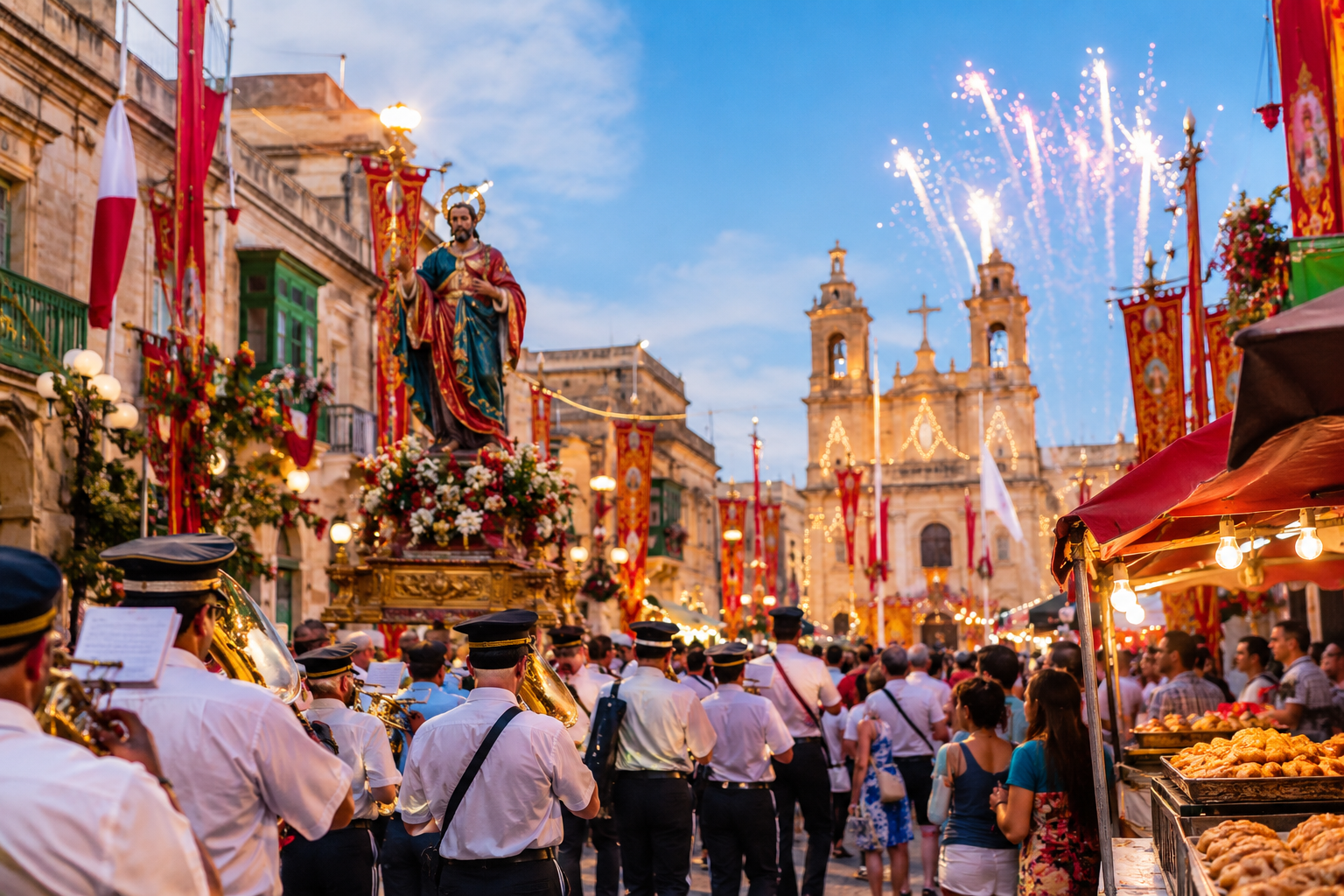
Instead of merely crossing these squares, spend a few minutes observing them. Office workers pass through during the day, residents stop for conversation, and musicians occasionally perform near the busier pedestrian routes.
Following a local guide to Valletta means allowing room for these unscheduled pauses. The city is compact enough that sitting down for twenty minutes will not prevent you from seeing its principal sights.
Experience the Grand Harbour View
The Upper Barrakka Gardens offer one of Valletta’s most famous panoramas. From the terrace, visitors can see the Grand Harbour, the fortified Three Cities, and the historic shipyards beyond.
The gardens are particularly attractive early in the morning, before large groups arrive. Late afternoon also brings softer light across the limestone fortifications, although the terrace is usually busier.
After enjoying the main viewpoint, continue toward the quieter Lower Barrakka Gardens. This part of the city receives fewer visitors and provides a more relaxed perspective over the harbor entrance and surrounding memorials.
Walking between the two gardens is an excellent way to experience Valletta’s historic neighborhoods. The route passes sloping streets, traditional homes, small businesses, and corners where laundry still hangs above centuries-old stone walls.
Eat and Drink With Local Rhythm
Valletta has restaurants for every budget, but local-style exploration does not require an elaborate meal. A warm pastizz filled with ricotta or peas makes a convenient snack while walking. Maltese bread sandwiches, seasonal pastries, and simple plates inspired by Mediterranean ingredients are also widely available.
Move away from the busiest terraces when choosing a café. Smaller establishments on side streets often provide a calmer atmosphere and a clearer view of everyday city life.
Coffee culture in Valletta is relaxed. Ordering a drink and taking time to watch the street is part of the experience. During warmer months, seek a shaded table rather than choosing a place solely for its view.
An authentic Malta local travel experience is shaped as much by these ordinary moments as by famous attractions. A conversation at a counter or a quiet lunch in an old townhouse can become one of the most memorable parts of the day.
Choose the Best Time to Walk
Early morning is ideal for photographing empty streets and appreciating architectural details. Delivery vehicles and commuters may still be present, but the atmosphere is much calmer than it becomes later.
Midday can be hot, especially in summer. Use this period to visit an indoor attraction, enjoy lunch, or rest in a shaded garden. The limestone streets reflect sunlight strongly, so water, sunscreen, and a hat are useful.
Evening transforms the city again. Building façades glow beneath warm streetlights, restaurant tables spread into pedestrian lanes, and the sound of conversation replaces the daytime rush. A walking tour through Valletta near sunset reveals a softer and more intimate side of the capital.
Respect the City as a Living Community
Although Valletta is a major visitor destination, it remains home to residents, workers, students, shopkeepers, and religious communities. Many beautiful façades are private homes rather than attractions.
Avoid blocking narrow entrances, photographing residents without permission, or speaking loudly in quiet residential lanes. Dress respectfully when entering churches and observe any restrictions on photography.
Supporting independent cafés, traditional shops, local artisans, and small cultural venues also helps preserve the character that makes Valletta distinctive. Responsible exploration creates a better experience for both visitors and the people who live there.
Find Your Own Route Through Valletta
The best way to navigate Valletta is to combine a loose plan with a willingness to wander. Begin with a few recognizable landmarks, but leave enough time to follow an interesting staircase, investigate a quiet square, or stop when a harbor view appears unexpectedly between the buildings.
Valletta does not need to be conquered through a rushed checklist. Its true charm lives in the spaces between the major sights: shaded balconies, worn stone steps, neighborhood bakeries, hidden courtyards, and glimpses of blue water at the end of a street.
By moving slowly and paying attention to these details, you will discover a capital that feels intimate despite its monumental history. That is the real secret to navigating Valletta like a local.
Related Post

7 Tempat Sunset Terbaik di Malta yang Wajib Dikunjungi Menjelang Sore
Malta punya dua wajah. Yang pertama terlihat ketika: matahari tinggi. Laut berwarna biru terang. Bangunan…