
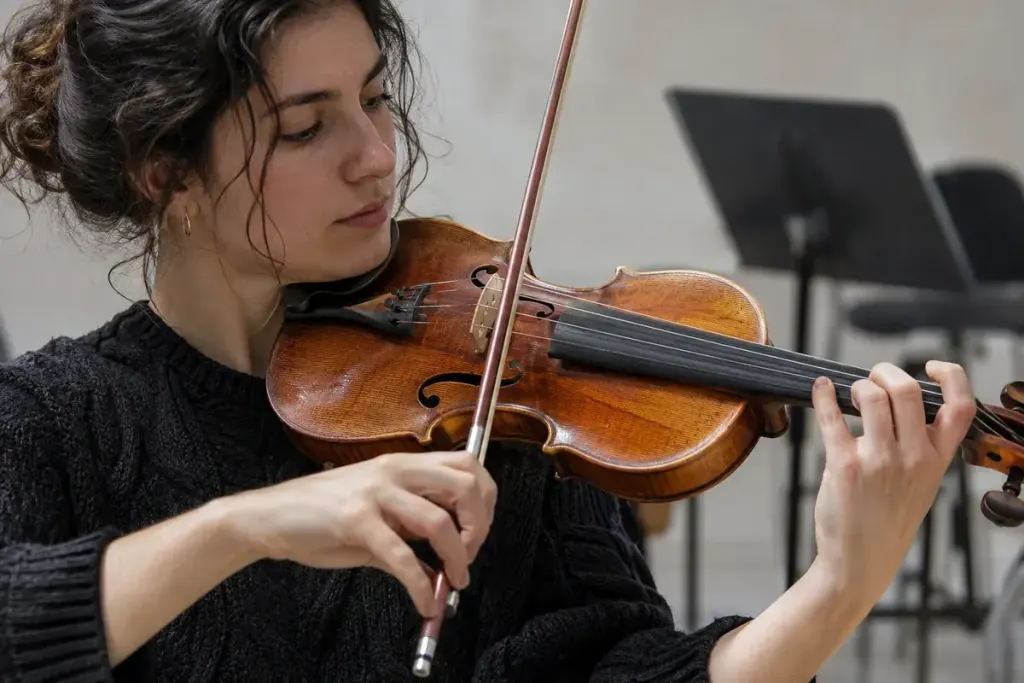
A violin phrase can keep the same notes yet become glassy, tense or unusually bright. One possible reason is sul ponticello: a bowing instruction that moves the contact point towards the bridge. The change concerns the character of the sound, not simply how loudly the player performs.
The Vienna Symphonic Library’s violin reference describes the instrument’s playing techniques and tonal possibilities. Near-bridge bowing can bring upper partials into sharper prominence. Its exact effect depends on the instrument, string, contact point and how the player coordinates bow speed and pressure.
Listen for a change of surface
For a listening exercise, find a performance or demonstration that identifies the technique, then compare a short phrase with an ordinary bowed version. Keep playback volume comfortable and similar. Ask whether the new sound feels more metallic, thinner, rougher or more concentrated around its higher components.
Those words describe impressions rather than fixed measurements. Two performers can produce different shades of sul ponticello, and a recording microphone or room can alter what reaches your headphones. Avoid deciding that every bright violin sound proves the bow was near the bridge.
Now follow the musical context. Does the colour appear beneath an otherwise calm melody? Does it spread through the string section, or remain in one exposed instrument? A timbral change can organise a passage even when the harmony barely moves.
Read the instruction in relation to its neighbours
Sul tasto points towards the fingerboard and provides a useful contrasting idea, but neither label describes every variable in the player’s action. Dynamics, articulation, bow speed and the composer’s additional wording still matter. A return to ordinary bowing can be a noticeable event of its own.
If you play a bowed instrument, explore the technique with a teacher rather than forcing more pressure to imitate a recording. The useful question is how to coordinate a controlled change of contact point on your instrument, not how to make the harshest possible noise.
For concert listeners, no specialist vocabulary is required to notice the effect. Start by hearing when a sustained sound changes texture, then use the programme, score or a reliable demonstration to investigate why. The term becomes useful when it sharpens something you can already hear.