You Found the Perfect Beach in Malta, So Why Does It Feel Completely Different Two Hours Later?
Sundown Malta >> Travel Tips>> You Found the Perfect Beach in Malta, So Why Does It Feel Completely Different Two Hours Later?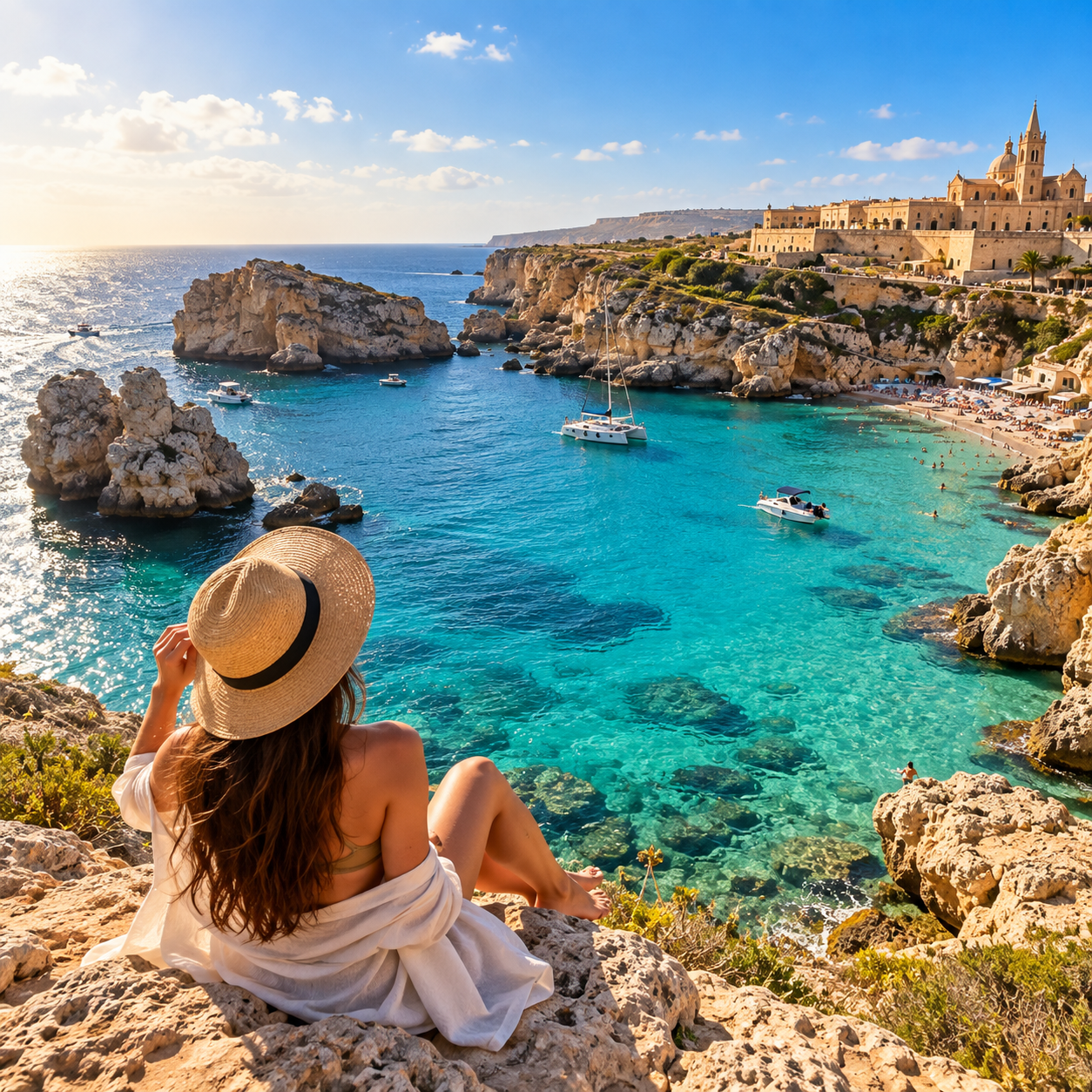
You Found the Perfect Beach in Malta, So Why Does It Feel Completely Different Two Hours Later?
At 10 a.m., the water looks perfect.
Clear.
Calm.
Almost impossibly blue.
There are only a few towels on the sand.
You find a good spot close to the water, leave your bag, and go for a swim.
When you return around noon, something has changed.
The quiet beach is filling up.
Boats are arriving offshore.
More people are walking down the path.
The sun is stronger.
The patch of shade you found earlier has disappeared.
By mid-afternoon, the place barely resembles the beach you arrived at.
This is one of the easiest things to underestimate when planning a beach day in Malta.
Choosing the right beach matters.
But choosing the best time to visit Malta beaches can matter almost as much.
The same bay can feel peaceful in the morning, energetic in the afternoon, and completely different again around sunset.
Instead of treating a beach as one fixed experience, it helps to think about how the location changes throughout the day.
A Beach Is Not the Same Place All Day
Travel photos freeze destinations.
Real places move.
The sun changes position.
Wind increases or decreases.
Boats arrive.
Families appear.
Day-trippers come and go.
Restaurants become busier.
Shadows move across the rocks.
The color of the water changes with the light.
Even your own energy changes.
A beach that feels perfect for swimming early in the day may be better for people-watching later.
A rocky coastline that feels harsh under midday sun may become spectacular shortly before sunset.
Timing changes the experience without changing the destination.
Early Morning Belongs to a Different Malta
There is something unusually peaceful about reaching the coast before the day becomes busy.
The temperature can feel more comfortable.
The light is softer.
The sea may appear calmer.
Popular swimming areas have not yet accumulated the movement and noise that arrive later.
You can hear small things.
Water moving against rock.
Boats in the distance.
Footsteps along the promenade.
A café preparing for the day.
For travelers who prefer quiet surroundings, arriving early can completely change how a popular coastal destination feels.
You are not necessarily discovering a secret beach.
You are discovering a different version of a familiar one.
Popular Beaches Reward People Who Arrive Before the Crowd
Some travelers search endlessly for hidden places because they assume popular beaches are automatically unpleasant.
That is not always true.
A famous beach may be famous because it is genuinely beautiful.
The challenge is often timing.
Arrive during the busiest part of the day and the experience can revolve around finding space.
Arrive earlier and the same beach can feel significantly more relaxed.
This is especially useful if your priority is swimming rather than spending the entire day sunbathing.
Swim.
Explore.
Enjoy the water.
Then decide whether to stay when the beach becomes busier or move somewhere else.
Do Not Build Your Entire Day Around One Beach
A common travel plan looks like this:
Go to beach.
Stay there until evening.
That works if you genuinely enjoy spending seven hours in one place.
But Malta’s relatively compact geography makes another approach possible.
Treat the coast as part of the day rather than necessarily the entire day.
Morning swim.
Lunch somewhere nearby.
Short exploration.
Another coastal stop.
Sunset from a different location.
This creates variety and reduces the pressure to find one “perfect” beach capable of satisfying every mood.
Sandy Beaches and Rocky Swimming Spots Create Different Experiences
Not every great swimming location needs a wide stretch of sand.
Malta’s coastline includes rocky areas where the attraction is direct access to clear water rather than a traditional beach setup.
These places can feel very different.
There may be less space for lying down.
Access to the sea may involve steps, ladders, or rocks.
Water shoes can be useful in some locations.
The experience becomes more about swimming and the surrounding landscape.
Sandy beaches are often easier for travelers who want to spend several hours relaxing onshore.
Neither is inherently better.
They serve different types of beach day.
Choose the Coast According to What You Actually Want to Do
People often ask:
“What is the best beach in Malta?”
A better question might be:
“What do I want from the beach today?”
Swimming?
Snorkeling?
Sunbathing?
Photography?
A family-friendly environment?
A quiet morning?
A lively afternoon?
A sunset?
Easy food access?
A dramatic landscape?
Once the purpose is clear, choosing a location becomes easier.
The most famous beach is not automatically the best choice for every day of your trip.
Midday Can Be Beautiful and Unforgiving
The Mediterranean light can make the water look extraordinary around the middle of the day.
Bright sunlight penetrates the clear sea.
Turquoise colors become more vivid.
It is exactly the kind of scene travelers imagine before arriving.
But midday also brings stronger heat and sun exposure.
That changes the practical side of the experience.
Shade becomes more valuable.
Water becomes more important.
Walking long distances along exposed coastline can become tiring.
The ideal photograph and the ideal comfort level do not always occur at the same time.
Plan accordingly.
Shade Is a Resource, Not a Guarantee
Travelers sometimes arrive expecting trees, umbrellas, or structures that provide easy shade.
That should not always be assumed.
Some coastal locations are exposed.
Others have limited natural shade.
And even when shade exists, its position changes throughout the day.
A comfortable morning spot can become fully exposed later.
If you intend to stay for several hours, think about sun protection before arriving rather than after the heat becomes uncomfortable.
The best beach day is rarely the one where you spend the afternoon trying to recover from the morning.
The Water Can Look Different Depending on the Sun
Clear Mediterranean water does not have one permanent color.
Light transforms it.
When sunlight reaches the water at different angles, shallow areas can appear turquoise, aquamarine, deep blue, or almost transparent.
Cloud cover changes the scene again.
This explains why your photographs may look completely different from someone else’s even at the same location.
They may have visited at another hour.
Or another season.
Or under different weather.
The place did not necessarily change.
The light did.
Wind Can Matter More Than Temperature
A warm sunny day does not automatically mean every coastline will feel equally comfortable.
Wind changes the experience.
It can affect the surface of the water.
Swimming conditions.
Boat movement.
How warm you feel after leaving the sea.
How enjoyable it is to sit on an exposed rocky shoreline.
Before committing to a particular coastal area, paying attention to local weather and wind conditions can be more useful than checking temperature alone.
A beautiful beach on the wrong day may be less enjoyable than a less famous location with more suitable conditions.
Never Treat Rough Water as Part of the Adventure
Clear water can look inviting even when conditions are not ideal.
Do not let beautiful scenery override basic judgment.
Observe the sea.
Pay attention to local warnings and conditions.
Use designated access points when available.
Be cautious around slippery rocks.
Do not assume that because other people are swimming, every area is safe for your ability level.
Travel memories are better when they do not involve unnecessary rescue situations.
Boats Change the Rhythm of Certain Coastal Areas
Some swimming destinations receive visitors by boat.
That means the atmosphere can change dramatically as excursions arrive.
A relatively quiet morning can become busy within a short period.
Later, as boats begin leaving, the mood may shift again.
This creates useful opportunities.
If a destination is known for day trips, consider how arrival patterns might affect your experience.
Sometimes staying later than the main excursion crowd creates a surprisingly peaceful final part of the day.
Blue Lagoon Requires a Different Mindset
Comino’s Blue Lagoon is one of the most recognizable coastal landscapes associated with Malta.
Its appeal is obvious.
Bright water.
Rocky Mediterranean surroundings.
A dramatic contrast between shallow turquoise areas and deeper blue sea.
But famous beauty attracts visitors.
Approaching a place like this expecting complete solitude can create unnecessary disappointment.
Instead, decide what matters most.
If your priority is experiencing the water with fewer people around, timing becomes particularly important.
If your priority is simply seeing the lagoon, swimming, and enjoying the atmosphere, accept that you are visiting one of the country’s best-known attractions.
A destination does not become worthless simply because other travelers also want to see it.
Do Not Spend the Entire Visit Looking for an Empty Photograph
This is an easy travel trap.
You arrive somewhere beautiful.
Instead of experiencing it, you begin searching for an angle without people.
Wait.
Move.
Wait again.
Someone walks into the frame.
Another boat arrives.
Frustration builds.
Eventually, the trip becomes a photography logistics problem.
Take the photograph.
Then put the phone away for a while.
Swim.
Sit.
Look around.
A beach does not need to appear deserted to be worth remembering.
Golden Bay Can Serve a Different Kind of Beach Day
A broad sandy beach creates a different rhythm from a small rocky cove.
There is more reason to stay.
Swim.
Return to the sand.
Read.
Talk.
Eat.
Go back into the water.
Wait for the light to change.
This kind of location works particularly well when the beach itself is the day’s main activity.
But even then, arriving earlier can make choosing a comfortable spot easier.
Later, the atmosphere becomes part of the experience.
Mellieħa Makes Sense for Travelers Who Want Space
Different travelers value different things.
Some want dramatic cliffs.
Others want easy water access and enough space to settle down.
Larger sandy areas can work well for a more traditional beach day, particularly for people who do not want to balance bags on a narrow section of rock.
This is why ranking beaches from “best” to “worst” is often less useful than matching them to a travel style.
The best coastline is the one that works for what you want to do that day.
Small Coves Feel Intimate but Have Limited Capacity
A small cove can look magical when nearly empty.
Add enough people and the experience changes quickly.
There simply is not much physical space.
That makes timing particularly important.
A large beach can absorb more visitors.
A small inlet cannot.
If a tiny cove is high on your list, prioritize it earlier rather than assuming you can casually arrive during peak afternoon hours and find the same atmosphere you saw in photographs.
Rocky Coastlines Can Be Better for Short Visits
Not every coastal stop needs a towel, umbrella, cooler, and full beach setup.
Sometimes you only want an hour.
Walk down.
Swim.
Dry off.
Continue exploring.
Rocky swimming locations can be excellent for this kind of flexible itinerary.
They allow the sea to become part of a broader day rather than the only activity.
This style works particularly well for travelers who become restless after several hours on a beach.
Pack According to the Coast, Not According to Instagram
The essential beach bag is not the same for everyone.
But practical items often matter more than aesthetic ones.
Water.
Sun protection.
Towel.
Comfortable footwear.
A small bag for wet clothing.
Snacks if facilities are limited.
Water shoes when appropriate.
A cover-up or light clothing for moving between the beach and other places.
And enough battery if your phone is handling navigation, transport, photographs, and communication.
You do not need to carry your entire hotel room.
But a little preparation prevents small inconveniences from controlling the day.
Footwear Can Decide Whether Coastal Exploring Is Enjoyable
A beautiful rocky path looks easy in photographs.
Then you attempt it in slippery sandals.
Suddenly the scenery becomes less interesting.
If your plan involves exploring beyond a sandy beach, bring footwear suitable for walking.
You can always change into something lighter later.
This is particularly useful if you intend to combine swimming with viewpoints, coastal paths, or nearby villages.
Malta encourages spontaneous detours.
Your shoes should not prevent them.
Leave Room for an Unplanned Swim
One of the pleasures of island travel is discovering water when swimming was not originally part of the plan.
You visit a town.
Walk toward the coast.
The sea looks irresistible.
If practical, carrying lightweight swimwear or a small towel can make spontaneous stops easier.
Not every swim needs to be a scheduled beach day.
Sometimes thirty minutes in the water becomes the part of the day you remember most.
Lunch Can Reset the Entire Day
By early afternoon, a beach day can start feeling repetitive.
Heat increases.
Energy drops.
Everyone becomes hungry.
Instead of forcing yourself to remain in the same place because “this is beach day,” leave.
Find lunch.
Sit somewhere shaded.
Drink something cold.
Take a break from the sun.
Then decide what you want next.
Return to the same beach.
Visit another one.
Explore a village.
Rest.
Go somewhere for sunset.
Breaking the day into sections often makes each section more enjoyable.
Sunset Should Not Always Be Watched From the Same Beach
A swimming beach and a sunset viewpoint serve different purposes.
The beach that was perfect at noon may not have the most interesting evening orientation.
If sunset matters to you, think about where the sun will actually be.
Western-facing coastal areas naturally become attractive as evening approaches.
Cliffs, elevated viewpoints, harbors, and promenades can provide a completely different ending to the day.
You do not have to remain beside the towel you placed down eight hours earlier.
Move.
Malta’s coastline rewards movement.
The Hour Before Sunset Can Be Better Than Sunset Itself
People often arrive five minutes before the sun disappears.
They photograph the horizon.
Then leave.
But the transformation begins earlier.
Harsh afternoon light softens.
Buildings become warmer.
Rock starts glowing.
The sea changes color.
Long shadows appear.
The temperature becomes more comfortable.
The hour before sunset can be one of the most pleasant periods for simply walking along the coast.
Do not treat sunset as a thirty-second event.
Give it time.
Stay a Little After the Sun Disappears
Sunset does not necessarily end when the sun crosses the horizon.
The sky can continue changing.
Blue becomes deeper.
Warm tones remain near the horizon.
Lights begin appearing along towns and harbors.
The transition from day to evening creates a completely different atmosphere.
This is particularly beautiful in locations where historic architecture meets the sea.
Instead of immediately turning around with everyone else, wait.
The second version of the evening may be better than the first.
Summer and Shoulder Season Create Different Beach Experiences
The best time to visit Malta beaches is not determined only by the hour.
Season matters too.
Peak summer brings the classic Mediterranean beach atmosphere.
Long days.
Strong sun.
Warm weather.
Busy coastal areas.
A lively travel environment.
Shoulder periods can feel different.
The coastline may be less crowded.
Walking can become more comfortable.
The entire trip can involve more exploration rather than constantly escaping the heat.
But sea and weather conditions vary.
Choose the season according to the type of trip you want rather than assuming there is one universally perfect month.
A Cloudy Day Is Not Automatically a Wasted Beach Day
Travel plans often become emotionally dependent on blue skies.
Clouds appear.
Disappointment begins.
But coastal landscapes can become surprisingly dramatic under different weather.
The sea turns darker.
Rock formations become more prominent.
Photographs gain texture.
Walking becomes more comfortable.
You may not get the bright turquoise image you imagined.
You can still have an excellent coastal day.
Adapt the activity.
Maybe spend less time sunbathing and more time exploring.
Do Not Chase Every Famous Beach in One Day
It is tempting.
The map looks manageable.
You create a list.
Beach one.
Beach two.
Beach three.
Beach four.
By evening, most of the day has been spent moving between beaches instead of enjoying them.
Seeing more locations does not automatically create a better trip.
Choose fewer.
Stay long enough to understand each place.
Let yourself swim without checking the time every ten minutes.
Travel becomes exhausting when every beautiful place immediately turns into transportation to the next beautiful place.
Public Transport and Driving Create Different Beach Strategies
Your transport method changes what kind of beach day makes sense.
With a car, moving between coastal locations may provide more flexibility, although parking and busy periods can still affect plans.
With public transport, repeatedly changing beaches may consume more time than expected.
In that case, choosing one primary coastal area and exploring nearby locations can be more relaxing.
The best itinerary is not the one with the most pins on the map.
It is the one that works with the way you are actually traveling.
Give Yourself Permission to Return Somewhere
Travelers sometimes avoid revisiting a location because they feel obligated to constantly see something new.
But if you loved a particular beach in the morning, imagine seeing it near sunset.
The same place can provide a different experience.
Returning is not wasting travel time.
It can create familiarity.
You begin noticing details missed during the first visit.
The café nearby.
A quieter swimming entrance.
The way the rocks change color.
Where locals sit.
How the atmosphere shifts.
Sometimes the second visit creates a stronger memory than the first.
The Best Beach Day Does Not Need Perfect Conditions
Maybe the water is slightly colder than expected.
Maybe clouds appear.
Maybe the beach is busier.
Maybe the bus takes longer.
Maybe the famous café is closed.
Travel rarely follows the ideal version we imagined beforehand.
The ability to adjust matters.
If one beach feels too crowded, move.
If it becomes too hot, stop for lunch.
If the wind makes swimming unpleasant, explore the coast instead.
If the sunset disappears behind clouds, enjoy the evening.
A flexible itinerary survives imperfect conditions.
A rigid itinerary fights them.
Let Malta Change Your Schedule Occasionally
It is useful to plan.
Know where you want to go.
Understand transportation.
Check conditions.
Carry what you need.
But leave some empty space.
Perhaps you intended to spend one hour at the coast and stay three.
Maybe a local café becomes lunch.
Maybe a quiet harbor looks better than the famous beach on your list.
Maybe you find stairs leading to a swimming spot you had never researched.
The most memorable travel experiences are not always the ones that were optimized in advance.
Sometimes they begin when you stop following the schedule.
Conclusion
Choosing a beautiful beach is only half of planning a memorable coastal day in Malta.
Timing changes everything.
A bay that feels peaceful early in the morning can become energetic by afternoon.
Midday light can make the water spectacular while also bringing stronger heat.
Wind can transform swimming conditions.
Small coves can fill quickly.
Popular locations can become calmer when excursion traffic changes.
And a coastline that seemed ordinary during the afternoon can become extraordinary as the sun begins to fall.
That is why understanding the best time to visit Malta beaches is less about finding one perfect hour and more about matching the time of day to the experience you want.
Go early when you want quiet.
Use midday thoughtfully.
Take breaks when the heat becomes tiring.
Move instead of forcing yourself to stay in one location.
Give sunset more than a few minutes.
And occasionally stay after everyone else begins leaving.
Malta’s coast does not offer one version of itself.
It changes throughout the day.
Sometimes the difference between an ordinary beach visit and one of the best memories of the trip is simply arriving two hours earlier—or deciding not to leave quite yet.
Related Post

The Water Looks Incredible—So Why Doesn’t Every Swimming Spot in Malta Have a Beach?
Open a collection of Malta travel photos and the pattern appears quickly. Brilliant blue water.…