Knights Templar in Malta: History, Knights of Malta, and Magnificent Architectural Legacy
Sundown Malta >> Destinations>> Knights Templar in Malta: History, Knights of Malta, and Magnificent Architectural Legacy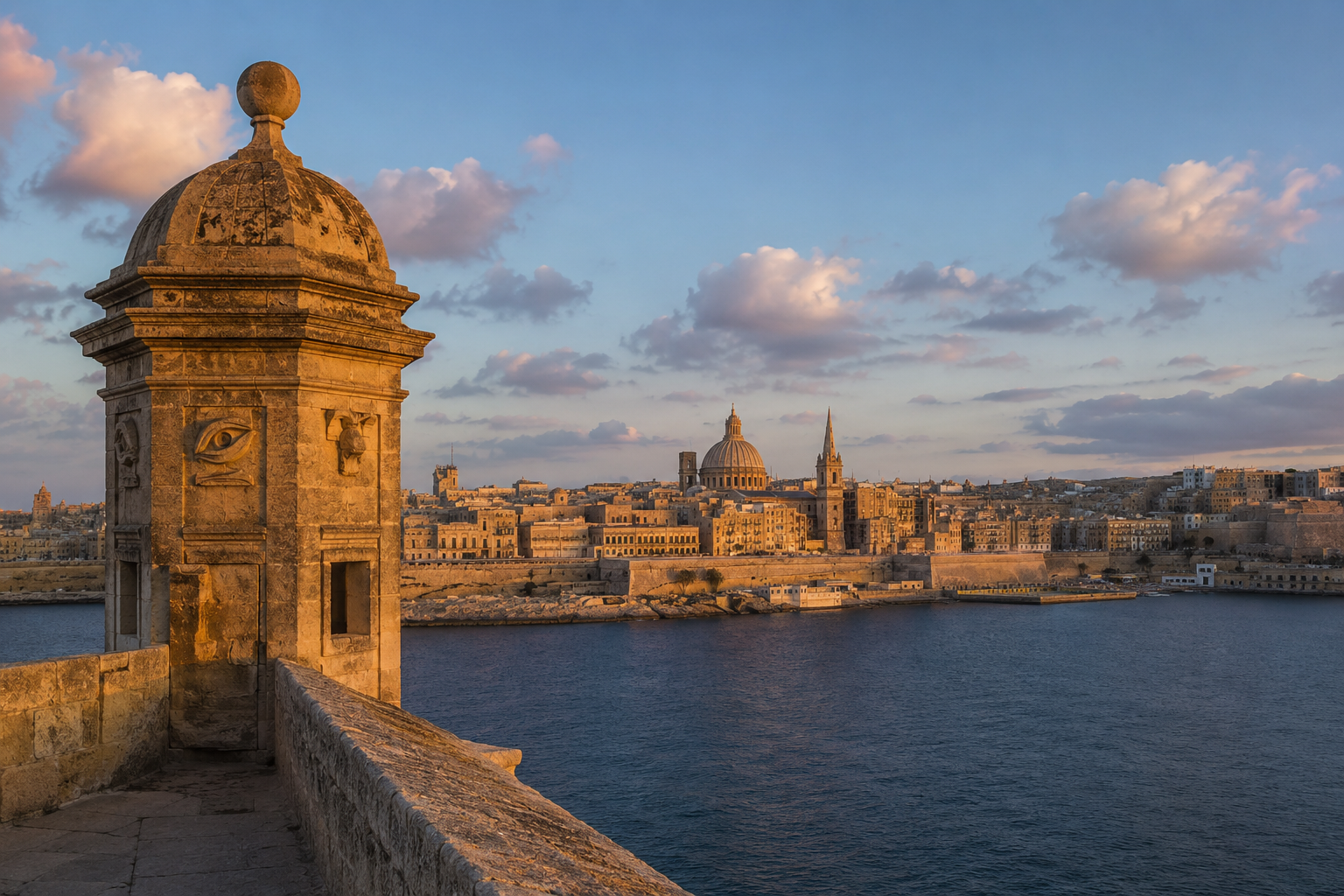
Knights Templar in Malta: History, Knights of Malta, and Magnificent Architectural Legacy
Malta rises from the Mediterranean like a fortress carved from golden stone. Behind its massive bastions, narrow streets, ornate churches, and centuries-old palaces lies a history shaped by warfare, faith, maritime power, and the military religious orders of medieval Europe.
The Knights Templar are often associated with Malta in popular imagination because of the island’s unmistakable crusader-era atmosphere. Historically, however, Malta’s great age of knightly rule belongs primarily to the Knights Hospitaller, officially the Order of St. John, who later became widely known as the Knights of Malta.
Understanding this distinction makes a journey through Malta even more fascinating. Rather than a simple Templar legend, visitors discover an extraordinary landscape where medieval traditions evolved into Renaissance and Baroque architecture of astonishing scale.
Were the Knights Templar Really in Malta?
The Knights Templar emerged in the early 12th century following the First Crusade. Their original mission centered on protecting Christian pilgrims traveling through the Holy Land, although the order eventually developed considerable military, political, and financial influence across medieval Europe.
Malta was not the principal Mediterranean stronghold of the Templars. The order was suppressed in the early 14th century, more than two centuries before the Order of St. John transformed Malta into its famous fortified base.
This distinction is essential when exploring the history of Malta’s knights. The dramatic fortresses and palaces visitors encounter today are overwhelmingly connected with the Hospitallers rather than the Knights Templar.
Nevertheless, both orders emerged from the wider world of the Crusades. Their histories share themes of military discipline, religious devotion, European aristocracy, pilgrimage, and the defense of strategic Mediterranean territories.
That broader historical connection helps explain why Templar imagery remains so easily associated with Malta.
From the Crusader Orders to the Knights of Malta
The Order of St. John began as a religious institution providing care for pilgrims in Jerusalem. Over time, it developed into a powerful military order.
After losing its positions in the Holy Land, the order established itself on Rhodes. Ottoman expansion eventually forced the knights from the island, leaving them in search of another strategic Mediterranean base.
In 1530, Emperor Charles V granted Malta and nearby Gozo to the Order of St. John.
This moment fundamentally changed the island.
The knights understood Malta’s geographic importance immediately. Positioned between Europe and North Africa, the archipelago stood along important Mediterranean maritime routes. Harbors could shelter fleets, while elevated rocky terrain offered excellent defensive possibilities.
The resulting European historical travel experience visible today was shaped by centuries of military planning, religious patronage, and architectural ambition.
Malta was no longer simply an island.
It was becoming a fortress.
Fort St. Angelo: The Stone Guardian of the Grand Harbour
Few buildings communicate the military character of Malta as powerfully as Fort St. Angelo.
Standing above the Grand Harbour at Birgu, the fortress appears almost fused with the rock beneath it. Thick limestone walls descend toward the water while commanding views stretch across one of the Mediterranean’s greatest natural harbors.
When the Order of St. John arrived in Malta, the existing fortification became one of its most important defensive positions.
Its historical significance became especially dramatic during the Great Siege of 1565.
Ottoman forces launched a massive campaign against Malta, hoping to defeat the knights and secure a strategically valuable position in the central Mediterranean. Fort St. Angelo became an essential command center during the struggle.
Imagine approaching the harbor during that turbulent period.
Smoke hangs above the water. Cannon fire echoes against stone walls. Galleys crowd the shoreline while defenders watch from high battlements.
Today, the atmosphere is peaceful, but the architecture still communicates strength.
For travelers interested in Malta’s historic fortresses, Fort St. Angelo provides one of the clearest physical connections with the island’s military past.
Fort St. Elmo: The Fortress That Faced the Siege
At the tip of the Sciberras Peninsula stands another monument inseparable from Malta’s knightly history: Fort St. Elmo.
Its location was strategically crucial because it guarded approaches to both the Grand Harbour and Marsamxett Harbour.
During the Great Siege of 1565, Ottoman forces concentrated enormous pressure on the fort. The defenders resisted fiercely before the position eventually fell.
Their resistance came at terrible human cost, yet it delayed the attackers and became one of the defining episodes of the siege.
Walking around the fort today, visitors encounter broad stone surfaces exposed to Mediterranean sunlight and sea winds. The architecture feels severe rather than decorative.
Every wall appears designed around visibility, artillery, and survival.
This is precisely what makes Malta such a compelling destination for historic architecture enthusiasts. Its monuments are not merely beautiful structures preserved from another century. Their shapes reveal the military problems their builders were attempting to solve.
Valletta: A Fortress City Born After the Great Siege
The survival of the Order of St. John during the Great Siege produced one of Malta’s greatest architectural consequences.
Valletta.
Construction began in 1566, shortly after the siege, under Grand Master Jean Parisot de Valette, whose name the new city would carry.
Rather than allowing the settlement to grow organically, the knights developed Valletta as a planned fortified city.
Its position on the Sciberras Peninsula allowed defenses to dominate the surrounding harbors. Massive bastions protected the city while an organized street network extended through the interior.
The result remains extraordinary.
Honey-colored limestone buildings rise above steep streets descending toward brilliant blue water. Balconies project from elegant façades, church domes break the skyline, and monumental fortifications surround the urban landscape.
At sunset, the stone changes character.
Bright limestone slowly turns amber, then deep gold, while shadows gather beneath balconies and along narrow streets.
For anyone pursuing architectural tourism in Malta, Valletta is not simply another historic European capital. The entire city functions as a monument to the political and military ambitions of the Order of St. John.
St. John’s Co-Cathedral: Austere Outside, Spectacular Within
From the street, St. John’s Co-Cathedral can appear surprisingly restrained.
Its exterior possesses the disciplined geometry expected of a building created for a military religious order.
Then the doors open.
Inside, restraint disappears.
The interior unfolds into an extraordinary display of Baroque decoration. Gilded ornamentation climbs across walls and arches. Elaborate carved surfaces surround chapels connected with different langues, or regional divisions, of the Order of St. John.
Beneath visitors’ feet lies another remarkable feature: an elaborate marble floor composed of richly decorated tombstones commemorating knights and prominent members of the order.
The contrast between exterior and interior is almost theatrical.
Outside stands the disciplined face of a fortress society.
Inside appears the wealth, faith, prestige, and ceremonial identity of an international aristocratic order.
The cathedral therefore reveals something essential about the cultural heritage of Malta: military architecture and artistic magnificence frequently exist side by side.
The Grandmaster’s Palace: Power Behind Stone Walls
The Grandmaster’s Palace occupies an important position in Valletta and represents another dimension of knightly Malta.
Fortresses tell stories of defense.
The palace tells a story of government.
The Grand Masters of the Order of St. John were not merely military commanders. They governed a sophisticated political institution with connections extending across Europe.
Architecture became one way to express that authority.
The palace developed into a ceremonial and administrative center, its halls reflecting the prestige accumulated by the order.
Walking through such spaces offers a striking contrast with Malta’s exposed battlements. Instead of cannon positions and defensive walls, visitors encounter chambers associated with diplomacy, administration, ceremony, and aristocratic life.
This combination helps explain why the architectural legacy of the Knights of Malta feels unusually complete.
Visitors can explore not only where the knights fought, but also where they worshipped, governed, lived, and displayed their status.
The Three Cities: Malta Before Valletta
Across the Grand Harbour from Valletta lie Vittoriosa, Senglea, and Cospicua, collectively known as the Three Cities.
These settlements provide an especially atmospheric perspective on Malta’s history because their story reaches deeply into the period before Valletta became the political center of the island.
Vittoriosa, historically known as Birgu, served as the early headquarters of the Order of St. John after its arrival in Malta.
Its streets remain remarkably evocative.
Narrow lanes curve between limestone façades. Heavy wooden doors open onto quiet passages. Religious details appear unexpectedly on building corners, while glimpses of the harbor emerge between houses.
Unlike monumental Valletta, Birgu can feel intimate.
Here, history seems compressed into alleys and courtyards rather than displayed exclusively through enormous civic buildings.
The waterfront adds another layer. Modern boats now float peacefully where military vessels and merchant ships once moved through waters watched by heavily fortified positions.
Mdina: A Different Face of Medieval Malta
Not every important historic landscape in Malta was created by the Knights of St. John.
Mdina reminds visitors that the island possesses a much longer architectural story.
Situated inland on elevated ground, the ancient fortified city developed centuries before the knights established Valletta.
Entering Mdina feels dramatically different from entering Malta’s harbor fortifications.
The streets become quieter.
Tall stone façades narrow the passageways, creating alternating bands of sunlight and shadow. Heavy doors, aristocratic residences, religious buildings, and defensive walls preserve the atmosphere of a city shaped by successive civilizations.
Its strategic position also makes sense immediately from the bastions.
From the elevated walls, broad areas of Malta become visible. Before modern surveillance, such height provided a tremendous advantage.
Mdina therefore enriches any Malta heritage journey by showing that the island’s history cannot be reduced to a single order or century.
The knights inherited an already ancient landscape—and then added another monumental chapter.
Why Malta Looks Like a Giant Stone Fortress
Geography explains much of Malta’s architecture.
The islands occupy a strategic location in the central Mediterranean. Whoever controlled Malta could influence maritime movement between different parts of the region.
For the Order of St. John, defensive construction was therefore a necessity rather than simply an aesthetic preference.
Bastions became enormous.
Walls became thicker.
Harbor entrances received layers of protection.
Elevated positions were converted into observation and artillery points.
Even the urban form of Valletta reflected defensive thinking.
Yet Malta’s architectural identity cannot be described purely as military. Over generations, the knights commissioned churches, auberges, palaces, hospitals, public buildings, and residences.
Renaissance planning gradually interacted with increasingly elaborate Baroque decoration.
The result was a remarkable architectural paradox: a landscape capable of appearing both intimidating and elegant.
The Templar Myth and Malta’s Real Knightly Legacy
The mysterious reputation of the Knights Templar has encouraged legends throughout Europe.
Secret treasures, hidden chambers, coded symbols, and underground societies frequently appear in modern stories connected with the order. Malta’s stone fortresses and religious architecture provide an irresistible setting for such imagination.
Historical tourism, however, becomes more rewarding when legend and documented history are separated.
The Knights Templar belong to the broader medieval crusading world that also produced other military religious orders. But the monumental knightly landscape visible across Malta is primarily the legacy of the Order of St. John.
Recognizing this does not diminish Malta’s mystery.
It makes the story richer.
The real history contains enormous sieges, international rivalries, naval warfare, aristocratic politics, religious devotion, sophisticated engineering, and some of Europe’s most remarkable fortified architecture.
No invented treasure is necessary.
The island itself is the treasure.
Experiencing Malta as an Open-Air History Museum
Malta rewards travelers who explore slowly.
Begin around the Grand Harbour, where the relationship between geography and military architecture becomes immediately visible. Continue through Valletta’s streets, observing how defensive structures coexist with churches, palaces, balconies, and civic buildings.
Cross toward the Three Cities and the perspective changes again.
Fort St. Angelo dominates the harbor from one direction while Valletta rises dramatically across the water.
Then travel inland toward Mdina.
The sound of the harbor disappears. Stone lanes replace maritime views, revealing another layer of Maltese history.
This variety makes Malta one of the most concentrated destinations for historical exploration in the Mediterranean.
Within relatively short distances, travelers can move between medieval streets, Renaissance fortifications, Baroque interiors, military strongholds, and aristocratic palaces.
A Stone Legacy That Still Defines Malta
The story of knights in Malta is more complex than the familiar legend of the Knights Templar.
The Templars form part of the larger history of medieval military religious orders, but it was the Order of St. John—the Knights Hospitaller and later Knights of Malta—that transformed the islands on an extraordinary architectural scale.
Their legacy survives in fortresses overlooking blue harbors, monumental bastions glowing beneath Mediterranean sunlight, richly decorated churches, palaces, and the carefully planned streets of Valletta.
Centuries have passed since armored knights defended these walls.
The cannons are silent.
The fleets have disappeared.
Yet when evening light spreads across the Grand Harbour and Malta’s limestone fortifications turn gold against the darkening Mediterranean, the island’s knightly past suddenly feels remarkably close.
That enduring atmosphere is what makes Malta an exceptional destination for travelers seeking architecture, dramatic landscapes, and the living layers of European history.
Related Post

Valletta Travel Guide: Exploring Malta’s Historic Streets
Valletta Travel Guide: Exploring Malta's Historic Streets Valletta may be one of Europe’s smallest capital…