
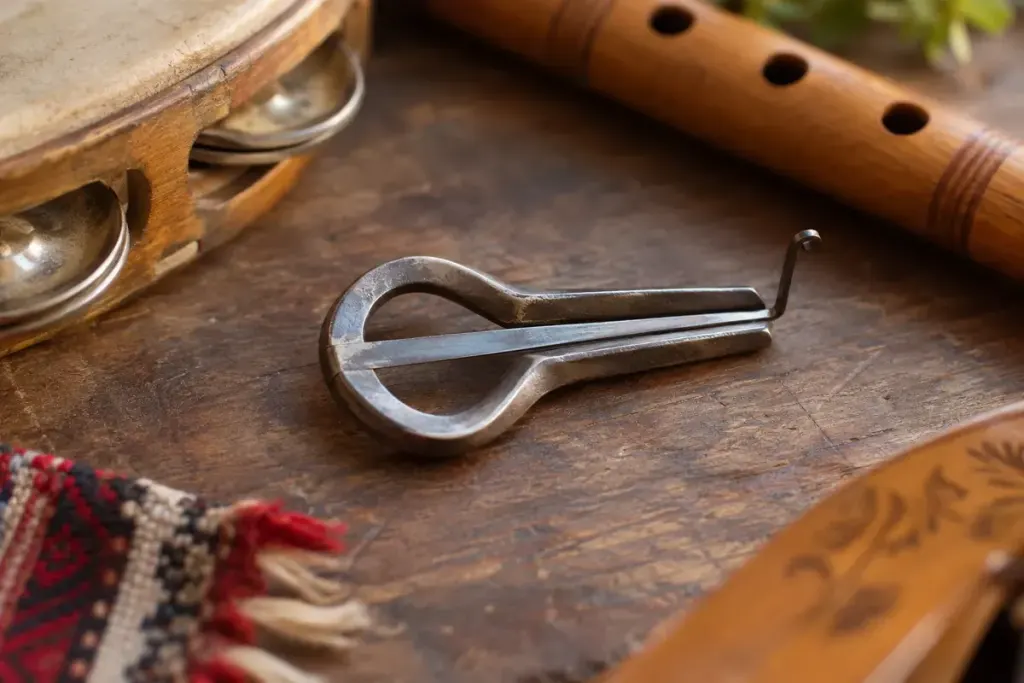
A jaw harp can look too small to produce the shifting, vowel-like sound that comes from it. The instrument supplies a vibrating tongue or lamella, while the player’s mouth helps shape the sound that listeners hear.
The Grinnell College Musical Instrument Collection identifies the mouth cavity as the resonator in its documented example. Smithsonian Folkways’ Jaw Harp Pieces notes explain how changes to the oral cavity emphasise different overtones.
Listen for colour within a continuing sound
In a recording, first attend to the repeated plucked impulse. Then listen for the changing resonance around it. A shift that resembles a vowel can make the sound seem to move melodically even while the underlying vibration retains a continuing pitch relationship.
A useful listening exercise is to replay a short passage twice. On the first pass, tap the rhythm quietly. On the second, follow only the changing tone colour. The two layers may become easier to separate once you stop asking the instrument to behave like a piano.
The small object is only part of the system
The player’s shaping of the mouth and control of breath contribute to the result. Different traditions and instrument designs use different techniques, so a single demonstration should not be treated as a universal method.
If you want to try playing, seek instruction appropriate to the particular instrument. Some forms are held near the teeth or lips, and poor placement can cause an uncomfortable strike. A close-up video without explanation may conceal the clearance and control involved.
For a programme note or a discussion after a concert, identify the instrument and performer using their preferred terminology where available. “Jaw harp” covers a broad family of objects and practices, not one interchangeable cultural tradition.
Its interest lies in the partnership between a simple vibrating element and a changing human resonator. Listening for that partnership reveals more than judging the instrument by the size of the object in the performer’s hand.