
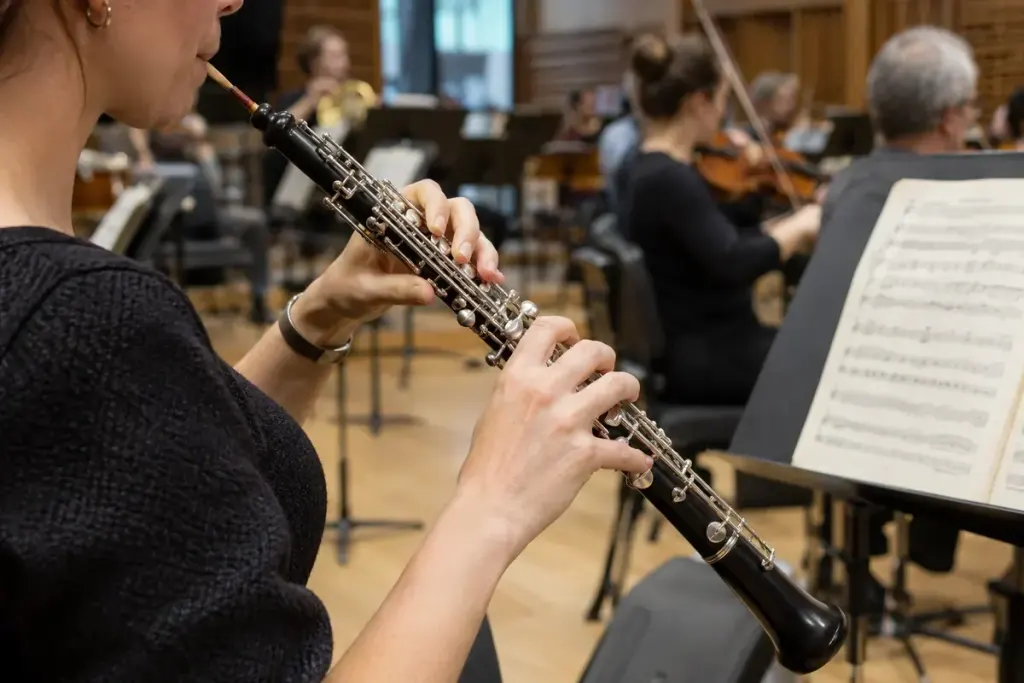
Before the first piece, one clear note rises from the orchestra and the room fills with brief responses. This is not a last-minute rehearsal of the opening melody. The players are establishing a shared pitch reference and checking their instruments against it.
The oboe commonly supplies the A. Yamaha’s instrument guide discusses the practical difficulty of making rapid changes to the oboe’s pitch through its reed and construction, one explanation for the instrument’s role in this convention.
That does not mean an oboe is magically immune to temperature, humidity or the player. Nor does it mean every ensemble in every setting follows precisely the same routine. The chosen reference pitch and the presence of instruments that cannot readily retune can affect the arrangement.
A short listening exercise before the concert
First, locate the initial sustained note. Then listen for how sections respond rather than trying to identify every individual player. You may hear small adjustments and repeated notes as musicians settle together. The sequence can sound untidy while serving a very specific purpose.
Next, notice the difference between that shared reference and the first musical attack. Tuning does not establish the rhythm, phrasing or balance of the piece. Those depend on the preparation and listening that follow.
If you are attending with someone new to orchestral music, explain the ritual before it begins. “They are agreeing a reference note” is a useful introduction. It leaves room to hear the process without turning the moment into a technical lecture.
Keep conversation quiet while the musicians tune. The reference and the players’ responses are part of their working preparation, not background noise provided for the audience to talk over.
On your next visit, compare the routine rather than expecting an exact replay. A different ensemble, programme or venue may organise it differently. Recognising the purpose makes those variations more interesting than simply waiting for the “real” music to start.