
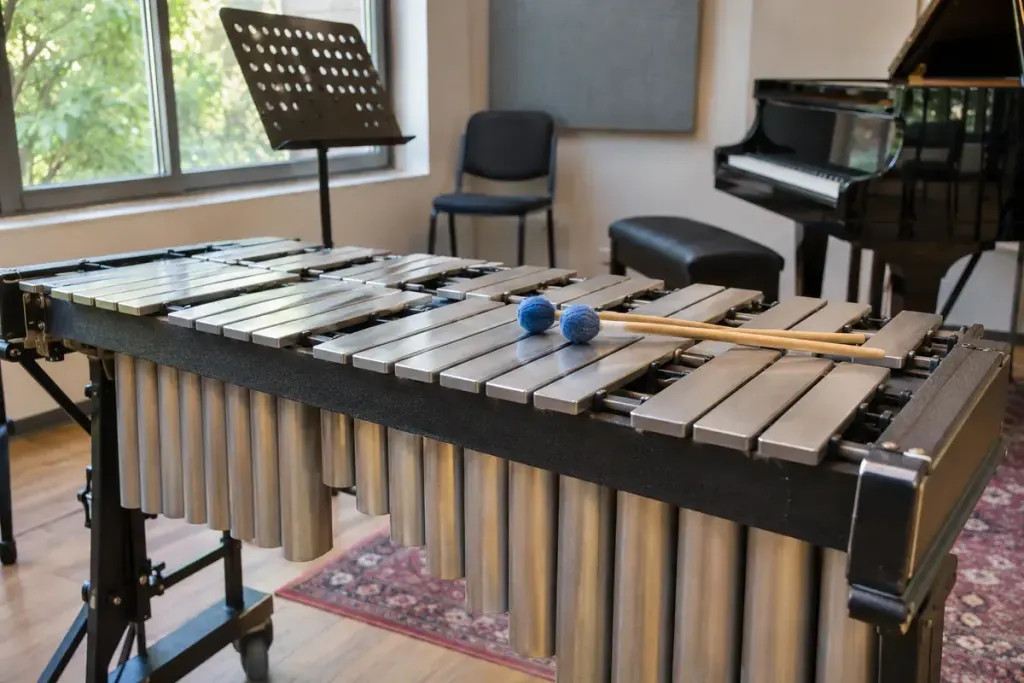
A vibraphone note begins with a mallet striking a metal bar. The wavering sound that follows can make it seem as though the player is repeatedly touching the note, but another mechanism may be at work underneath the bars: rotating discs in the resonators.
Yamaha’s anatomy of a vibraphone explains the motor-driven arrangement. As the discs rotate, they change the resonators’ openings and produce a pulsing effect. The motor does not strike the bars, and its speed is a separate choice from the rhythm of the mallet strokes.
Listen past the attack
On a sustained note, notice three stages: the initial contact, the ringing tone and the way that tone ends. The pulse is easiest to hear when there is enough space after the attack. A busy passage can conceal it even though the mechanism is running.
If a player demonstrates the instrument, compare a note with the motor stopped and a similar note with it running. Keep the striking force and damping as similar as possible. You are listening for a changing quality within the sustained sound, rather than simply whether one example seems louder.
Now listen for the damper. Stopping a ringing note is a different action from changing the speed of the rotating discs. A short, dry phrase does not necessarily mean that the motor has been switched off; the player may be controlling how long the bars are allowed to ring.
Bring the distinction to a concert
From a seat in the audience, the mechanism may be difficult to see. A useful listening exercise is to choose one exposed note at the end of a phrase and follow it until it disappears. Then compare that sound with a passage where several notes overlap.
There is no need to assign a technical setting from the recording alone. Microphones, the room and the ensemble all shape what reaches you. Recognising that the attack, pulse and damping are separate parts of the sound is already a richer way to hear the instrument.