
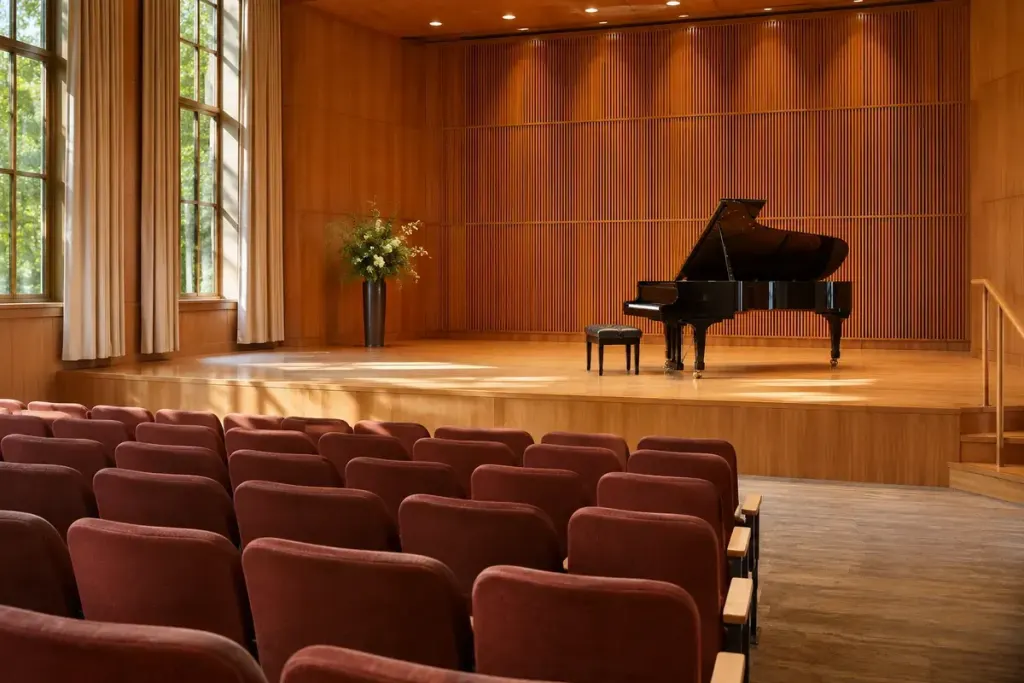
The singer stops, but the room seems to keep singing. That lingering sound is part of the character of a live venue. Reflections from surfaces reach listeners after the direct sound and combine into reverberation, shaping whether music feels intimate, spacious, blurred or unusually dry.
Reverberation is not simply another word for volume. A quiet note can leave a long trail, while a loud note in an absorbent room may stop sharply. Nor is every reflection heard as a distinct echo; many arrivals blend into a continuous decay.
Listen to the gaps
A useful listening exercise begins between phrases. After a short percussion hit or the end of a vocal line, notice how quickly the remaining sound fades. Then listen during a busy passage. Can you still distinguish the words and individual attacks, or does one sound blur into the next?
Neither result is automatically good or bad. A sustained choral passage and a rapid spoken introduction ask different things of a room. The point is to describe what you hear instead of deciding that more reverberation always means better acoustics.
Yamaha’s introduction to reverb explains how electronic effects can create a sense of space too. At an amplified concert, the sound reaching you may include the venue’s own response and deliberately added effects. A long vocal tail is therefore not enough to identify the room’s natural decay.
Your seat is part of the experience
When choosing between permitted seating positions, compare what happens near a wall, beneath a balcony and in a more open section. Do this during a soundcheck or before the event when possible, without moving into restricted areas or disturbing other listeners. Different positions can change the balance of direct and reflected sound.
If you write concert notes, describe the audible result: words were clear, a drum hit lingered, or a quiet passage seemed close. Avoid presenting a measured reverberation time unless it was actually measured with an appropriate method.
A phone recording can help recall the evening, but its automatic processing and microphone position make it a poor substitute for an acoustic survey. Use it as a personal reference. The more useful habit is learning to notice how the room supports the music—and when it gets in the way.