Why Does Malta Look Golden? The Limestone That Gives the Islands Their Distinctive Character
Sundown Malta >> Culture>> Why Does Malta Look Golden? The Limestone That Gives the Islands Their Distinctive Character
Why Does Malta Look Golden? The Limestone That Gives the Islands Their Distinctive Character
Walk through an old Maltese street in the early morning and the buildings can look almost cream-colored.
Return in the late afternoon and the same façades may appear warmer, deeper, and noticeably golden.
At sunset, entire streets can seem to glow.
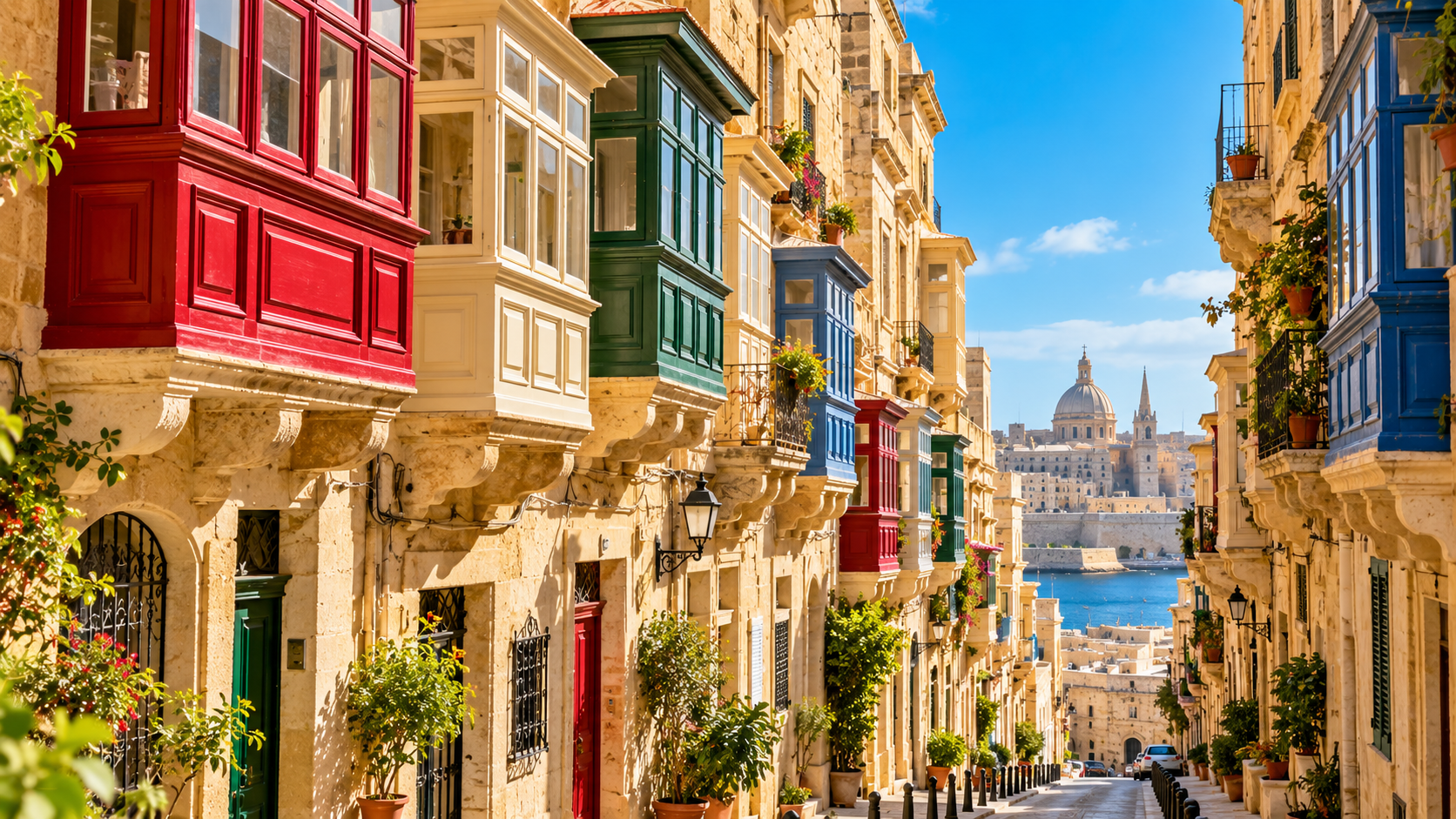
This visual character is one of the first things many travelers notice about Malta. Historic walls, churches, balconies, townhouses, fortifications, and narrow lanes often seem connected by a similar warm palette even when their architectural styles are very different.
The reason is closely tied to Maltese limestone architecture.
Stone is not simply a construction material visible on a few historic monuments. It forms a large part of the visual language of the islands, shaping how towns interact with Mediterranean sunlight, how streets photograph throughout the day, and even how colorful doors and enclosed balconies stand out against their surroundings.
Understanding the stone therefore adds another layer to exploring Malta.
Instead of seeing individual buildings in isolation, travelers begin noticing how material, light, weather, craftsmanship, and history work together to create the atmosphere of an entire place.
Malta’s Color Palette Begins With the Ground Beneath It
Architecture often reflects whatever materials were historically available nearby.
Before modern construction allowed materials to move easily across long distances, builders generally depended heavily on local resources.
For Malta, limestone became fundamental.
The islands themselves are largely formed from sedimentary limestone, making stone a natural building material across generations.
It appears in ordinary homes as well as monumental structures.
Walk through different parts of Malta and stone is almost impossible to ignore.
Walls.
Steps.
Church façades.
Courtyards.
Arches.
Fortifications.
Street corners.
Traditional houses.
Even relatively simple structures can visually connect with much older buildings because they share similar material tones.
This repetition creates a strong sense of place.
Not Every Limestone Surface Looks the Same
Calling Malta “golden” simplifies a much more varied palette.
Depending on the stone, age, weathering, cleanliness, moisture, surface finish, and lighting, limestone may appear:
pale cream,
warm beige,
soft yellow,
light honey,
dusty tan,
or deeper golden brown.
Older surfaces may also develop darker patches and irregular textures.
Recently restored stone can look noticeably brighter.
The result is not one uniform color but a family of related tones.
That subtle variation is part of what prevents Malta’s streets from feeling visually flat.
Mediterranean Light Changes the Architecture
Stone alone does not explain Malta’s appearance.
Light matters just as much.
Strong Mediterranean sunlight creates dramatic differences between illuminated walls and shaded streets.
At midday, direct sun can make pale limestone look extremely bright.
In narrow lanes, one side may be glowing while the opposite wall sits in deep shade.
This creates natural contrast without requiring dramatically different building colors.
As the sun moves lower, that contrast changes.
The stone begins reflecting warmer light.
Details that looked harsh at noon become softer.
Textures become easier to notice.
The same street can therefore feel surprisingly different depending on when you visit.
Morning Malta Has a Different Palette
Early morning light tends to be softer.
Streets that later become bright and busy may feel quieter and cooler.
Limestone façades can appear pale rather than intensely golden.
Shadows are longer.
Architectural details such as carved doorways, balconies, cornices, and stone edges can become particularly noticeable because the light arrives from a lower angle.
For travelers interested in architecture or photography, morning walks offer more than fewer crowds.
They reveal another version of the built environment.
Midday Makes the Stone Feel Almost White
Under strong overhead sunlight, some Maltese limestone can appear surprisingly light.
This is especially noticeable in open squares and exposed façades.
The visual difference between bright stone and dark window openings becomes stronger.
Colorful balconies, shutters, flags, plants, and doors may appear especially vivid against the neutral background.
However, midday light can also flatten certain details when viewed directly.
Moving into side streets where sunlight arrives at an angle can reveal much more texture.
Late Afternoon Creates the Famous Golden Effect
As sunlight becomes warmer, Malta’s limestone responds beautifully.
Walls begin reflecting yellow and orange tones.
Small surface imperfections become visible.
Weathered stone gains depth.
The edges of buildings catch light while recessed doors and windows fall into shadow.
This is when the description of Malta as “golden” makes the most sense.
The architecture has not changed.
The relationship between stone and light has.
Sunset Can Transform an Entire Street at Once
A sunset viewpoint does not always require an open sea horizon.
Sometimes the most interesting sunset experience happens inside a town.
Light enters a street from one end.
Upper floors turn gold.
Balconies cast long shadows.
A church dome or tower catches the final sunlight while the lower street has already moved into shade.
These transitions can happen quickly.
Travelers who slow down enough to notice them may discover that Maltese architecture itself becomes part of the sunset experience.
Limestone Helps Different Eras Feel Connected
Malta’s architecture reflects many historical periods and influences.
Yet buildings from different eras can still feel visually related.
Shared materials help create that continuity.
A monumental structure and a modest townhouse may have completely different purposes, proportions, and histories.
But when both are constructed from similarly colored stone, they participate in the same streetscape.
This is one reason walking through Malta can feel visually coherent even when architectural details change from block to block.
The Stone Makes Color Stand Out More
Malta is not actually a monochrome destination.
Quite the opposite.
Once you begin paying attention, color appears everywhere.
Painted doors.
Traditional enclosed balconies.
Shutters.
Religious decorations.
Flowers.
Shopfronts.
Ceramic signs.
Flags.
Because limestone provides a relatively neutral warm background, these colors become more noticeable.
A green balcony against a golden façade can become the dominant visual feature of an entire building.
A bright blue door may immediately attract attention from across the street.
Traditional Balconies Become Visual Anchors
One of the most recognizable features of Maltese streets is the enclosed wooden balcony, often associated with the Maltese gallarija.
These balconies project outward from façades and may be painted in strong colors.
Against limestone, their geometry becomes easy to see.
They create shadows.
They interrupt otherwise flat walls.
They add rhythm when several appear along the same street.
For travelers exploring historic neighborhoods, balconies can become almost like visual landmarks.
You begin noticing differences in shape, size, color, and condition.
Doors Tell Their Own Story
Look lower and another layer appears.
Maltese streets often feature entrances with distinctive proportions and decorative details.
Some are simple.
Others include elaborate surrounds, knockers, small windows, steps, or carved stonework.
Against a relatively consistent limestone façade, a doorway becomes an opportunity for individuality.
This is why seemingly ordinary residential streets can be surprisingly interesting to explore on foot.
There may be no major attraction on the map.
Yet every few buildings offer another small architectural detail.
Weathering Gives Old Stone Character
Freshly cut stone and stone exposed to decades of weather do not look identical.
Sun.
Rain.
Salt.
Humidity.
Pollution.
Biological growth.
Repairs.
All can influence how a surface changes.
Older façades may develop uneven coloration.
Some areas become darker.
Others erode.
Edges soften.
Repairs introduce slightly different tones.
These variations reveal that buildings are not static objects.
They continue changing after construction.
Coastal Environments Can Be Especially Demanding
Malta’s relationship with the sea is one of its greatest attractions.
But coastal conditions can also be demanding for buildings.
Salt carried through air and moisture can affect porous materials over time.
Weather exposure may be particularly visible on surfaces facing open environments.
This creates another reason why two limestone buildings of similar age can look very different.
Location matters.
Orientation matters.
Maintenance matters.
Restoration Can Change How a Street Feels
When an old limestone façade is cleaned or restored, its appearance can change dramatically.
Stone that previously looked dark or muted may reveal a much lighter underlying color.
Placed next to an unrestored building, the difference can be striking.
Neither necessarily represents the only “authentic” appearance of Malta.
One shows recently maintained stone.
The other may show decades of weathering.
Together they reveal different stages in the life of the material.
New Stone Can Look Almost Too Bright
Travelers sometimes imagine historic towns as permanently golden and weathered.
But new or recently cleaned limestone can be extremely pale.
At first, it may appear visually separate from surrounding older buildings.
Over time, exposure changes surfaces.
This gradual aging contributes to the layered appearance of Maltese streets.
Architecture is not only about when a building was constructed.
It is also about what has happened to its materials since then.
Stone Carving Rewards Closer Attention
Limestone is not merely stacked into walls.
It can also be shaped into decorative architectural elements.
Around churches and important buildings, travelers may notice elaborate carving.
But craftsmanship also appears in smaller residential details.
Door surrounds.
Cornices.
Balcony supports.
Window frames.
Decorative motifs.
Street-level details are easy to miss when travelers move quickly between famous landmarks.
Slowing down changes the experience.
Churches Show Limestone on a Monumental Scale
Malta’s churches are among the clearest places to appreciate what local stone can do architecturally.
Large façades transform the same basic material seen in ordinary homes into something monumental.
Columns.
Domes.
Sculptural details.
Bell towers.
Carved ornament.
Large stairways.
The scale changes, but the relationship with surrounding streets remains.
The church often feels integrated into the town rather than visually detached from it.
Fortifications Reveal Another Personality of the Stone
Residential Malta can make limestone feel warm and decorative.
Fortifications show a very different side.
Massive walls emphasize weight.
Thickness.
Geometry.
Defense.
From a distance, fortified landscapes can appear almost carved from the same material as the islands themselves.
That visual connection between geology and architecture is particularly powerful around Malta’s historic defensive structures.
Valletta Makes Light and Stone Especially Dramatic
Valletta offers a particularly interesting environment for observing limestone because of its dense street grid, elevation changes, balconies, monumental architecture, and relationship with the surrounding harbors.
A street may frame bright sky at one end.
Another drops steeply toward the water.
Tall façades create alternating bands of sunlight and shadow.
Walking only a few blocks can produce completely different lighting conditions.
Instead of visiting Valletta only as a checklist of attractions, try watching how the city changes as you move through its streets.
Mdina Uses the Same Palette Differently
Mdina provides another example of how similar materials can produce a completely different atmosphere.
Its enclosed historic environment, narrow streets, restrained traffic, walls, doorways, and architectural details create a quieter visual experience.
Limestone here can feel less like a bright Mediterranean backdrop and more like part of an enclosed historic setting.
The material is familiar.
The atmosphere is different.
This illustrates an important travel lesson:
materials contribute to character, but they do not create character alone.
Scale, street width, sound, movement, and human activity matter too.
Villages Reveal the Everyday Side of Limestone
Major historic destinations naturally receive attention.
But ordinary Maltese streets can be just as useful for understanding how limestone shapes daily environments.
Away from major attractions, stone appears in:
homes,
boundary walls,
small chapels,
older storefronts,
steps,
courtyards,
and side streets.
This everyday architecture connects Malta’s famous monuments with ordinary life.
The stone is not reserved for heritage sites.
It remains part of the broader visual identity of the islands.
Rural Walls Extend the Architecture Into the Landscape
Travel outside dense urban areas and stone continues appearing.
Low walls divide fields and define paths.
Their irregular texture feels very different from carefully finished urban façades.
Yet the material creates visual continuity between built settlements and countryside.
This can make the landscape feel unusually integrated.
Architecture does not suddenly stop at the edge of town.
Stone continues organizing space.
Why Dry-Stone Walls Matter Visually
Rural stone walls are often less polished than urban construction.
Their beauty comes from repetition, texture, and relationship with the land.
Against dry summer vegetation, stone may blend into the landscape.
After wetter periods, surrounding greenery can create much stronger contrast.
Season therefore changes how travelers perceive the same structures.
Malta Does Not Look Exactly the Same All Year
Travel photographs can create the impression that destinations have one permanent appearance.
They do not.
Season affects:
vegetation,
sky conditions,
sun angle,
humidity,
crowd levels,
and the intensity of light.
During dry periods, golden stone may visually blend with the surrounding landscape.
When vegetation is greener, limestone can stand out more strongly.
Cloud cover can also dramatically reduce the warm appearance associated with sunny Malta.
Cloudy Days Reveal Texture
Travelers often prefer perfect blue skies.
But overcast conditions can be excellent for observing architecture.
Without intense direct sunlight, contrast becomes softer.
Stone texture becomes easier to examine.
Carved details may photograph more evenly.
Colors appear differently.
A cloudy day therefore does not remove Malta’s architectural character.
It reveals another version of it.
Rain Changes Limestone Again
Wet stone often appears darker.
After rain, streets and façades may temporarily take on deeper tones.
Reflections on paving can alter the entire visual environment.
Travelers accustomed to images of dry, sunlit Malta may find this atmosphere unexpectedly dramatic.
The same architecture can suddenly feel heavier and more subdued.
Photography Becomes Easier When You Follow the Light
You do not need professional equipment to notice how dramatically light changes Malta.
A phone camera is enough.
Instead of photographing every building immediately, observe where the sun is coming from.
If a façade looks flat at noon, return later if convenient.
Move across the street.
Look down a side lane.
Wait for the sun to illuminate only part of the building.
Often the best image comes from changing position rather than changing camera settings.
Look for Side Light
Side lighting is particularly useful for textured stone.
When sunlight moves across rather than directly onto a wall, tiny variations create shadows.
Carvings gain depth.
Weathering becomes visible.
Edges become defined.
This can transform an ordinary wall into something visually interesting.
Shadows Are Part of Maltese Architecture
Travel photography often treats shadows as something to avoid.
In Malta, they can be part of the composition.
Balconies cast shadows onto walls.
Narrow streets create strong lines.
Window recesses appear almost black beside sunlit limestone.
Church details project patterns across façades.
The contrast between bright stone and deep shade contributes heavily to the Mediterranean atmosphere.
Narrow Streets Can Feel Cooler for a Reason
Historic street design also affects how travelers physically experience a place.
Tall buildings and narrow lanes create shade during parts of the day.
That difference becomes noticeable during warm weather.
Turning from a bright open square into a shaded street can produce an immediate change in comfort.
Architecture therefore shapes more than photographs.
It affects how people move through the city.
Stone Creates a Different Sense of Temperature
Visual perception matters too.
A bright exposed stone plaza under midday sun can feel intensely hot.
A shaded limestone alley may feel psychologically cooler even before the actual temperature difference is considered.
Travel is full of these interactions between environment and perception.
Material, light, shade, wind, and street geometry combine into a physical experience.
The Best Way to Notice Malta’s Architecture Is to Walk
Vehicles move too quickly past many of the details that make Maltese streets interesting.
Walking allows you to notice:
changes in stone color,
carved details,
balconies,
old repairs,
doorways,
small religious niches,
steps,
courtyards,
and unexpected views between buildings.
These features are rarely major attractions individually.
Together they create the identity of a place.
Walk Without a Destination Sometimes
Travel itineraries naturally revolve around destinations.
Museum.
Church.
Restaurant.
Viewpoint.
Hotel.
Beach.
But architecture often becomes more interesting in the spaces between those destinations.
Take one walk without optimizing every minute.
Choose a neighborhood.
Follow streets that look interesting.
Turn toward an unusual balcony.
Walk toward a church tower visible between buildings.
This kind of wandering makes visual patterns easier to recognize.
Look Up More Often
Street-level attention naturally focuses on:
traffic,
people,
shops,
menus,
and navigation.
But much of Malta’s architectural character sits above eye level.
Upper balconies.
Cornices.
Rooflines.
Domes.
Bell towers.
Weathered façades.
Decorative stonework.
Looking upward can make a familiar street feel completely different.
Then Look Down
The opposite is equally useful.
Stone steps.
Thresholds.
Paving.
Drainage details.
Changes in surface material.
Wear around entrances.
Architecture is experienced from ground level upward.
Small signs of repeated use often tell as much about a building as its grand façade.
Notice Repairs Instead of Hiding Them From Your Photos
Travel photography often seeks visually perfect scenes.
But repaired walls can be fascinating.
Different stone blocks.
New mortar.
Filled openings.
Altered windows.
Changed doorways.
These details reveal that buildings evolve.
A historic town is not a museum frozen at one date.
People continue living, repairing, adapting, and modifying it.
Architecture Can Help You Read a Neighborhood
After spending enough time walking, you may begin recognizing differences between areas.
Some streets feel more monumental.
Others more residential.
Some façades are carefully restored.
Others visibly weathered.
Balconies become more or less common.
Buildings change in height.
Street widths shift.
Commercial activity increases or disappears.
Material remains a connecting thread while neighborhood character changes around it.
Limestone Is Part of Malta’s Travel Memory
Ask travelers what they remember about a destination and the answers are often sensory.
The smell of food.
The sound of church bells.
Heat from the pavement.
Wind near the coast.
A particular color.
For Malta, warm limestone frequently becomes part of that memory.
It appears behind meals in outdoor cafés.
Around village squares.
Beside harbor views.
Along streets walked back to a hotel.
In photographs taken almost accidentally.
The stone becomes the background against which other travel memories are formed.
Do Not Reduce Malta to “Beige Buildings”
Once a visual pattern becomes familiar, it is easy to stop seeing it.
After several days, travelers may no longer notice the limestone.
That is when looking at details becomes useful.
Compare surfaces.
Notice how one wall reflects light differently from another.
Look at restoration.
Watch how colorful balconies interact with neutral façades.
Observe what happens after sunset when artificial lighting replaces sunlight.
A seemingly limited palette contains enormous variation.
Night Reveals Another Version of the Stone
After sunset, natural golden light disappears.
Artificial lighting takes over.
Warm lamps can exaggerate limestone’s honey tones.
Cooler lighting can make the same stone look pale or gray.
Shadows move to completely different positions.
Architectural details illuminated from below may become more dramatic than they appeared during the day.
This is one reason Maltese streets can feel transformed at night without anything physically changing.
Restaurants and Cafés Use Architecture as Atmosphere
Outdoor dining areas often benefit from their architectural surroundings.
A simple table placed beside an old limestone façade can feel immediately connected to the destination.
Courtyards, narrow streets, stone arches, and historic squares provide atmosphere that modern decoration would struggle to reproduce.
For travelers, the setting can become part of the meal.
Modern Malta Still Interacts With the Traditional Palette
Malta is not composed entirely of historic limestone buildings.
Contemporary development introduces:
glass,
concrete,
metal,
painted surfaces,
and modern structural forms.
The contrast can be significant.
Sometimes new architecture intentionally references traditional colors.
Elsewhere it deliberately separates itself from them.
Observing this relationship makes Malta more interesting than imagining the islands as a perfectly preserved historical scene.
Preservation and Everyday Life Must Coexist
Historic architecture is not merely something visitors photograph.
Many buildings remain part of functioning communities.
People live inside them.
Businesses operate from them.
Infrastructure must be updated.
Buildings require maintenance.
Accessibility and modern needs must be addressed.
This creates an ongoing balance between preserving architectural character and allowing places to remain useful.
Travelers see the final streetscape but not always the practical decisions behind it.
The Most Interesting Buildings Are Not Always Famous
A monumental cathedral is obviously worth attention.
But one of your favorite photographs from Malta may end up being:
an ordinary corner,
a weathered balcony,
a staircase between houses,
a small doorway,
or afternoon light hitting an otherwise unremarkable wall.
This happens because travel memories are not built exclusively from famous landmarks.
They are built from moments of noticing.
Architecture Encourages Slower Travel
Understanding Maltese limestone architecture changes the way you move through Malta.
A street stops being merely the route between two attractions.
It becomes something worth observing.
A wall becomes evidence of material and weather.
A balcony becomes part of a broader architectural pattern.
Changing sunlight becomes a reason to revisit a place.
This naturally slows travel down.
And Malta often rewards that slower pace.
You Do Not Need Architectural Knowledge to Enjoy It
Travelers sometimes assume architecture is interesting only if they understand historical styles or technical terminology.
That is unnecessary.
Start with simple questions.
Why does this building look different?
Why is that balcony shaped this way?
Why is one wall darker?
Why does this street feel cooler?
Why does the stone look golden now when it looked pale this morning?
Curiosity is enough.
Technical knowledge can come later.
Let Repetition Teach You
The first limestone building may simply look attractive.
After seeing hundreds, patterns emerge.
Then exceptions become interesting.
A brightly painted façade suddenly stands out.
A modern building feels dramatically different.
An unusually dark wall attracts attention.
A restored church appears almost luminous.
Repetition trains the eye.
That is one of the pleasures of spending more than a few rushed hours in a destination.
Malta’s Golden Appearance Is Really a Conversation Between Stone and Light
It is tempting to say Malta looks golden because its buildings are made from golden stone.
The reality is more interesting.
The effect comes from an interaction.
Local limestone provides the surface.
Sunlight changes its color.
Weather changes its texture.
Age changes its appearance.
Architecture determines how shadows fall.
Painted woodwork introduces contrast.
Streets determine how much light enters.
Human maintenance continually alters the material again.
What travelers perceive as one characteristic “Malta color” is actually the result of many processes happening together.
Conclusion
Maltese limestone architecture is one of the quiet elements that gives the islands such a recognizable visual identity.
Its warm tones connect ordinary houses with churches, fortifications, village streets, historic cities, and parts of the rural landscape.
But the stone itself is only part of the story.
Morning light can make it pale.
Midday sun can make it intensely bright.
Late afternoon can turn façades golden.
Rain can deepen its color.
Weathering adds texture.
Restoration reveals lighter surfaces.
Colorful balconies and doors become more striking because of the neutral stone behind them.
For travelers, noticing these changes offers a different way to experience Malta.
Instead of moving only from attraction to attraction, pay attention to the streets connecting them.
Watch the walls.
Look at the balconies.
Notice the repairs.
Follow the shadows.
Return to the same place under different light.
Malta’s architecture does not need to be understood through a textbook to become interesting.
Sometimes all it takes is realizing that the golden background appearing in so many travel photographs is not merely a background at all.
It is one of the defining features of the islands.
Related Post
Jangan Pulang Saat Matahari Terbenam: Malta Justru Mulai Terasa Berbeda Setelah Gelap
Matahari turun perlahan di balik bangunan batu kapur. Meja-meja restoran mulai terisi. Lampu di sepanjang…