
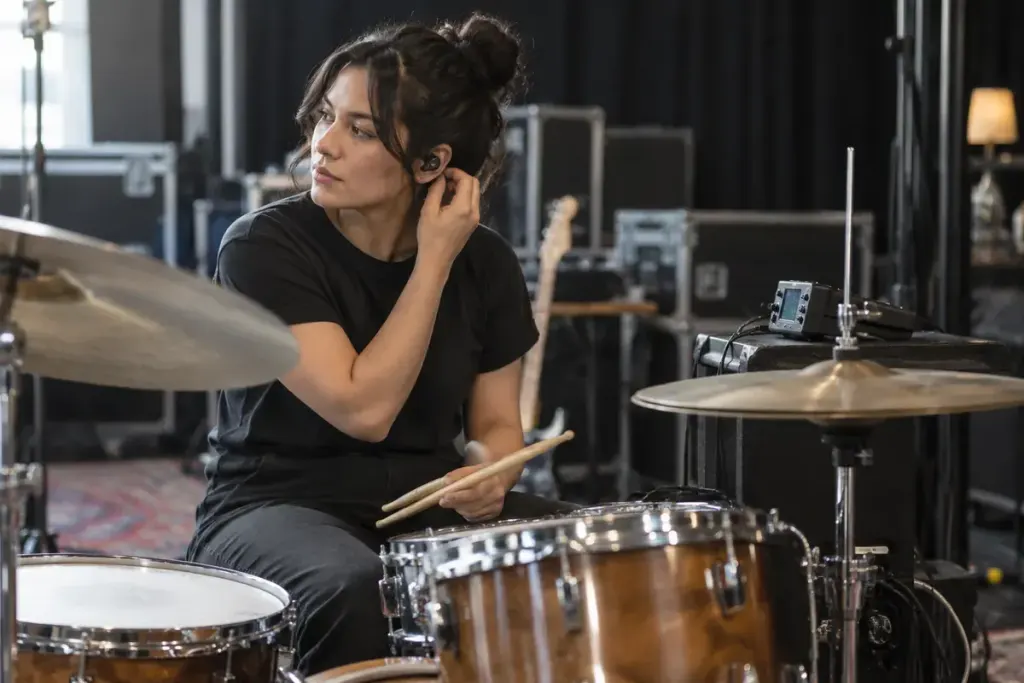
A band begins together after a count that the audience never hears. That count may come from a click track routed to the performers’ monitoring system. The private timing reference and the sound sent to the audience are separate parts of the setup.
Shure’s introduction to personal monitoring describes monitoring arrangements that can include a click alongside the musical mix. The exact routing depends on the equipment and show design. A click does not automatically belong in every musician’s mix at the same level.
Write down who needs to hear what
Before rehearsal, make a small routing note: click source, intended listeners, monitor destination, and audience destination. Explicitly stating that the click should not reach the audience is better than assuming that everyone remembers which output carries it.
Rehearse the start, a stop, and a restart. A track that begins correctly once may still cause confusion when a song is interrupted or a playback position changes. Agree on who starts playback and what the band will do if the reference disappears.
For a simple fictional rehearsal, the drummer hears a count-in and click while another performer hears only the musical monitor mix. That is one possible arrangement, not a universal prescription. The group should choose what supports the performance and test it with the actual system.
Keep monitor levels appropriate and seek qualified help with hearing protection and system setup. Turning the click up until it overpowers everything else is not a substitute for a usable mix.
From the audience, a tightly coordinated entrance does not prove that a click was used. But understanding the private reference helps explain how a stage can contain useful sounds that are intentionally absent from the public mix.