
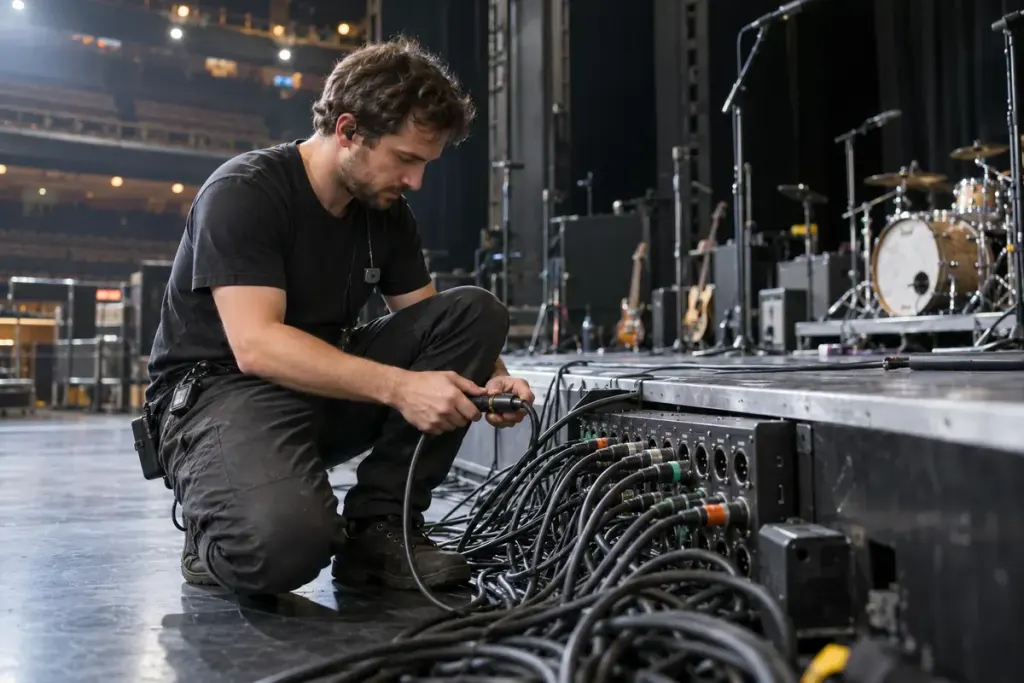
Hearing a microphone through the system is a useful milestone, but it does not mean the whole show is ready. A line check establishes that the intended signal paths work. A sound check then deals with the performers and the sound of the programme in context. Confusing the two can leave important work unfinished.
Yamaha’s soundcheck and rehearsal guide describes verifying input and output signal flow before the fuller check. A Shure interview about touring drum preparation also distinguishes line checking from a later band sound check. The exact routine depends on the production.
Give each check a question
For a line check, the question is concrete: does this source reach the intended console channel and required destinations? Work from an agreed input list and communicate one source at a time. A signal appearing somewhere on the desk is not enough if it is on the wrong channel or missing from a required output path.
For the sound check, the questions broaden. Can performers hear what they need? Does the balance work when several sources play together? Are changes needed for the room and the intended show? A brief tap or isolated instrument note cannot answer all of those questions.
Keep the stage and audio teams informed before connecting, disconnecting or changing a path. Follow the responsible engineer’s procedures for muting and level control, and avoid unexpected loud test sounds. Use the appropriate hearing protection and working practices for the venue.
Record changes on the input list rather than relying on a conversation that only two people heard. If a channel is repatched after the line check, verify the affected path again. A check describes the system as it was when tested; it is not permanent proof after the setup changes.
For performers, the practical benefit is knowing why the crew may ask for silence, one instrument or a specific passage. Each request can be answering a different technical question on the way to a coherent live mix.