
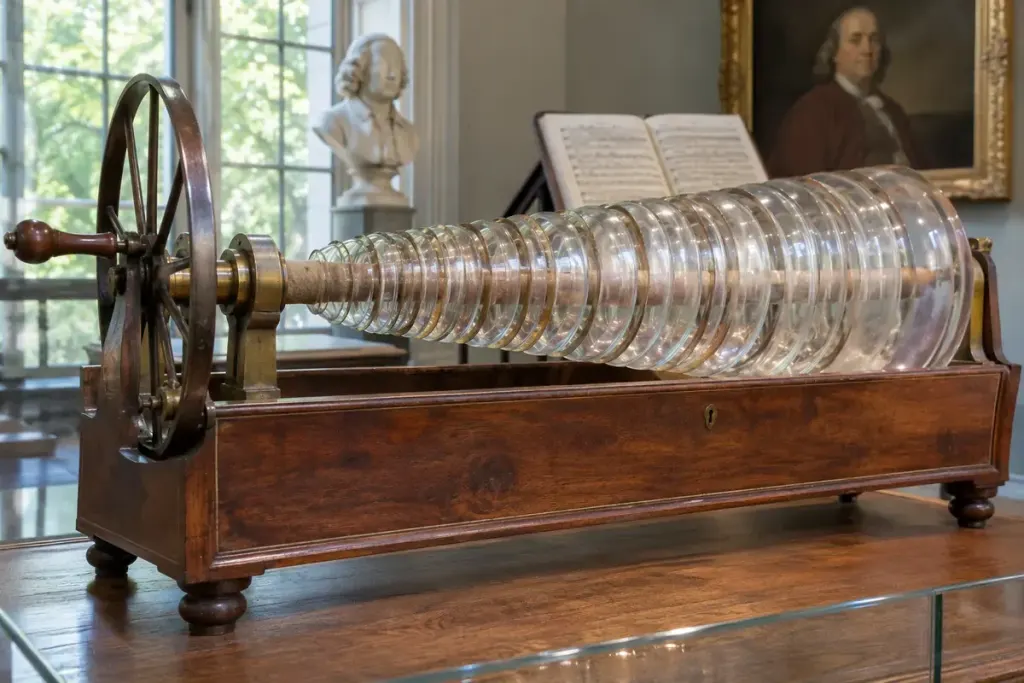
The glass harmonica is not a harmonica made transparent. Its sound comes from glass, and the performer’s gesture is closer to rubbing the rim of a drinking glass than blowing across reeds.
The Toledo Museum of Art’s instrument record describes a series of differently sized glass bowls, or bells, mounted horizontally on a rotating spindle. Benjamin Franklin developed this arrangement from earlier glass-playing practices.
As the bowls turn, the player touches their rims with moistened fingers. Different bowls provide different pitches. The rotation means the fingers can remain near their playing positions while the glass moves beneath them.
Watch one hand before listening to the whole texture
In a clear performance video, first follow a single finger approaching and leaving a rim. Notice whether the tone begins immediately or seems to emerge gradually. Then watch how the player overlaps notes.
The Franklin Institute’s account of the instrument also describes colour coding used to help identify notes. A modern example may differ in construction, so use the actual instrument in the recording rather than assuming every detail matches a museum object.
For a listening exercise, write three observations without trying to invent a dramatic history: the character of the attack, how long a note continues, and how clearly neighbouring pitches can be separated. Compare a solo passage with one accompanied by other instruments.
Keep the recording in the comparison
Microphone placement, room acoustics and processing affect what reaches you. A reverberant recording can make a note seem to linger longer than the dry sound near the instrument. If two performances sound different, do not attribute everything to the glass itself.
Also check the instrument name in the programme. Glass harp, musical glasses and glass harmonica can refer to related but different arrangements. A row of stationary wine glasses is not the same mechanism as bowls turning on a shared spindle.
Once the motion is visible, the sound becomes easier to follow. You can hear a sustained musical line while recognising the small, controlled contacts that keep it alive.