
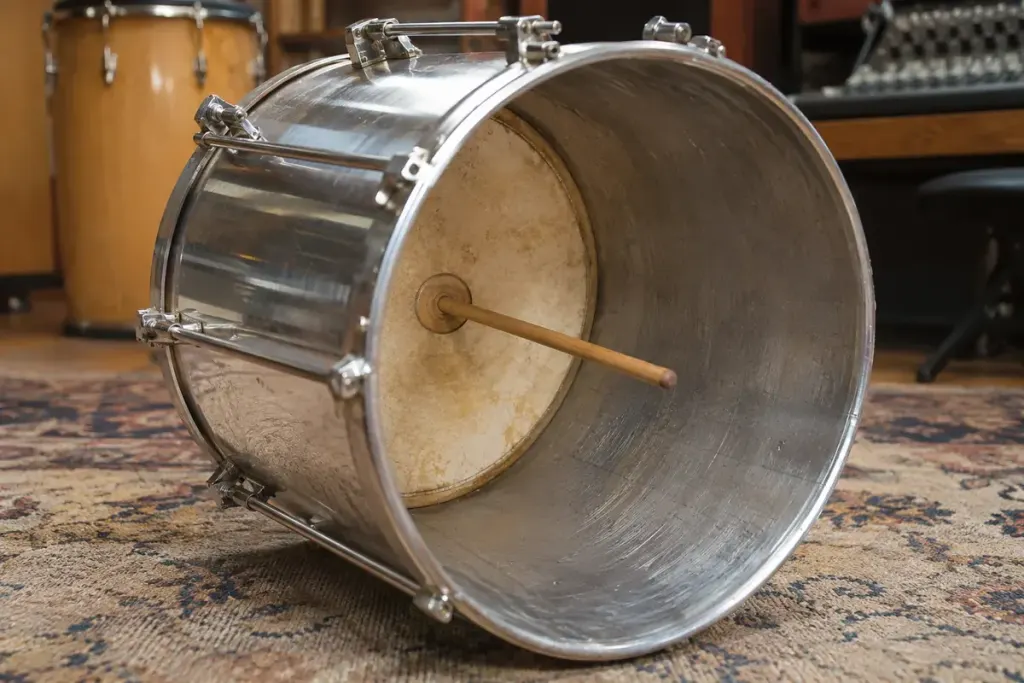
A sound in a samba ensemble can seem to laugh, grunt or bend between notes. It may be coming from a cuíca, a friction drum whose playing action is quite different from striking a drumhead with a stick.
The Smithsonian’s cuíca record describes a rod attached to the drumskin and extending inside the shell. Rubbing the rod makes the membrane vibrate, while pressure on the skin changes the pitch. The sounding surface is still a stretched membrane, even though the gesture that excites it is unusual.
Listen for a changing voice
Start with a recording or demonstration in which the instrument is easy to hear. Notice how a phrase can rise or fall while retaining its rough, vocal quality. Then listen again inside an ensemble and follow where that phrase sits against the other percussion.
Do not assume every squeaking or growling percussion sound is a cuíca. Recording effects, other instruments and the arrangement can produce similar impressions. A performance credit or a clear view of the player provides better evidence than a single sound adjective.
The instrument has a material history
The Smithsonian example uses wood, hide and metal, while the Metropolitan Museum’s cuíca is catalogued with metal and hide. These records show that an instrument’s body and construction can vary without changing its basic classification as a friction drum.
A museum object also has its own collecting history. Read the date, place and provenance rather than treating one example as a timeless model of every cuíca. That distinction keeps the music connected to people and contexts rather than reducing it to an exotic sound effect.
If you want to learn to play, begin with an instructor or maker’s guidance for handling and care. The membrane and internal attachment deserve more care than an attempt to imitate the sound by pulling harder.
For a first listening note, describe one phrase’s contour and where it answers another part. That small task can make the cuíca easier to recognise the next time the full ensemble comes in.