
12 Malta Food Staples to Try, From Pastizzi to Rabbit Stew
Sundown Malta >> My Blog>> 12 Malta Food Staples to Try, From Pastizzi to Rabbit Stew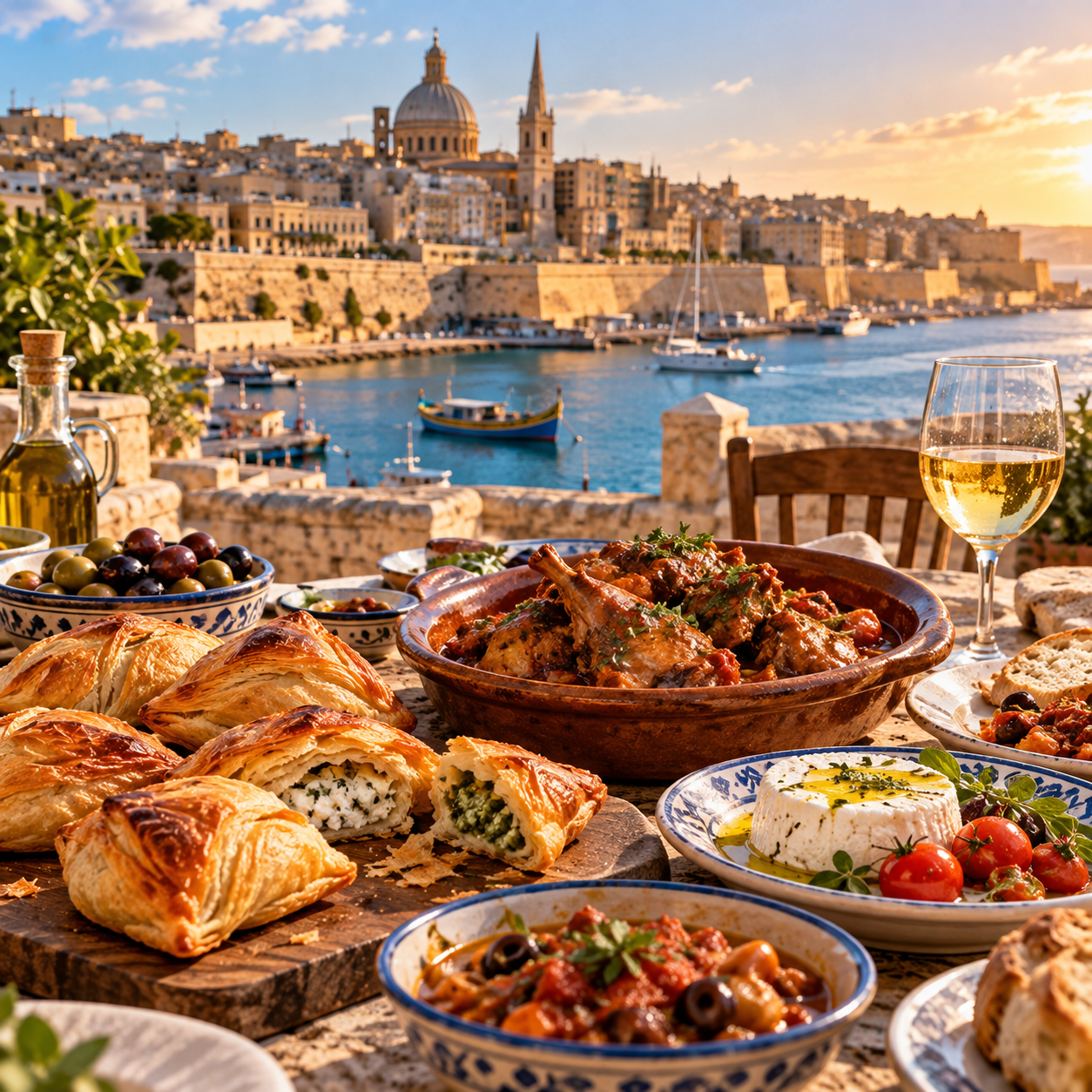
12 Malta Food Staples to Try, From Pastizzi to Rabbit Stew
Malta food is rustic Mediterranean cooking with a strong Sicilian accent and a North African undertone. Think flaky pastries, crusty sourdough rubbed with tomato, slow-braised rabbit, seasonal fish pies and sweet date-filled pastries.
If you only have a few days, the shortlist is simple: grab pastizzi from a bakery counter, order ħobż biż-żejt or a ftira for lunch, and book one dinner where stuffat tal-fenek (rabbit stew) is on the menu. Everything else on this list fills in the picture.
Below are 12 genuine Maltese staples, with the local name, what it actually is, and when or where you are most likely to find it. The tourism board’s own overview of traditional Maltese cuisine covers the same core dishes if you want a second reference before your trip.
Snacks and street food
1. Pastizzi
Pastizzi (singular pastizz) are diamond-shaped pastries made with a flaky, layered dough and filled with either ricotta or a mushy pea paste. They are the closest thing Malta has to a national snack, sold from small bakeries and hole-in-the-wall pastizzerias across both islands, often from early morning until late.
Order one of each filling the first time. Eat them hot, standing up, and expect crumbs everywhere.
2. Ħobż biż-żejt
The name means “bread with oil,” and that is the base: thick slices of Maltese sourdough rubbed with ripe tomato or spread with kunserva (a sweet, concentrated tomato paste), drizzled with olive oil, then topped with some combination of tuna, capers, olives, onion, mint or basil.
The quality depends almost entirely on the bread, so it is at its best from a bakery or a village café rather than a hotel buffet.
3. Ftira
Ftira is a flattened, ring-shaped sourdough loaf with a thick crust and an open, airy crumb. It is baked hotter than regular Maltese bread and is usually split and filled much like ħobż biż-żejt, with tomato, olive oil, tuna, capers and olives. In Gozo, you will also find a different, pizza-like ftira topped with potato, onion or cheese.
Ftira carries real cultural weight. In December 2020, UNESCO inscribed Il-Ftira, the culinary art and culture of flattened sourdough bread in Malta on its Representative List of the Intangible Cultural Heritage of Humanity, the first Maltese element to make that list.
4. Bigilla
Bigilla is a coarse dip or pâté made from dried broad beans (ful) cooked until soft and mashed with garlic, olive oil, herbs and often a little chilli. It is traditionally scooped up with water biscuits (galletti) or bread. It is one of the easiest vegetarian options on the island.
5. Ġbejniet
Ġbejniet (singular ġbejna) are small, round cheeselets made from sheep’s or goat’s milk, salt and rennet. They come in several styles: fresh and soft, sun-dried and firmer, peppered, or preserved in oil or vinegar. Gozo is especially associated with them.
Fresh ġbejniet are mild and creamy; the dried, peppered ones are sharp and salty and go well with a glass of local wine. They often turn up on the same platter as bigilla, olives and sun-dried tomatoes.
Mains and family dishes
6. Stuffat tal-fenek
Stuffat tal-fenek is rabbit stew, and it is the dish most Maltese people would name if asked for one thing a visitor should eat. The rabbit is jointed, browned and slow-cooked with garlic, red wine, tomato, bay leaf and often peas or potatoes until the meat falls off the bone.
It is also the centrepiece of a fenkata, a communal rabbit meal where the sauce is usually served first over spaghetti and the meat follows as a second course. Many traditional restaurants list fenkata as a set menu; rabbit fried with garlic and wine (fenek moqli) is the other common preparation.
7. Aljotta
Aljotta is a light fish soup built on a garlicky tomato broth, often with rice, fresh herbs such as mint or marjoram, and a squeeze of lemon. It was traditionally a way to use small fish and leftover pieces from the day’s catch.
8. Torta tal-lampuki
Lampuki is the Maltese name for the dolphinfish (also called mahi-mahi), and its arrival marks the end of summer. The season opens in mid-August and runs into late autumn, with fishermen using traditional floating devices known as kannizzati to attract the fish.
Torta tal-lampuki is a savoury pie in which the fish is baked in pastry with ingredients such as spinach, tomato, onion, olives and sometimes capers. Outside the season, you are more likely to see lampuki pan-fried or in a tomato and caper sauce, if at all.
9. Bragioli
Bragioli are Malta’s take on beef olives: thin slices of beef wrapped around a filling of breadcrumbs, minced meat or bacon, hard-boiled egg and herbs, then tied and braised slowly in a tomato and wine sauce. The sauce is often served with pasta first, in the same two-course style as a fenkata.
10. Timpana
Timpana is baked macaroni mixed with a rich meat and tomato sauce, egg and cheese, then fully enclosed in pastry and baked until golden. It is filling, celebratory and very Maltese in the way it layers carbs on carbs.
A pastry-free version, imqarrun il-forn, is the everyday sibling. Both turn up at Sunday lunches and family gatherings, and some bakeries and takeaway shops sell timpana by the slice.
11. Kapunata
Kapunata is a Maltese vegetable stew of aubergine, peppers, tomatoes, onions, garlic and capers, often finished with olives and herbs. It is closely related to Sicilian caponata, though the Maltese version tends to be less sweet and sour.
It works as a side for grilled fish, a topping for bread, or a full meal for vegetarians. It is at its best in summer, when the vegetables are in season.
Something sweet
12. Imqaret
Imqaret are deep-fried pastries filled with a spiced date paste, often flavoured with aniseed, orange or lemon zest, and sometimes bay leaf. They are cut into diamond or rectangular shapes and fried until crisp.
You will smell them before you see them at village festas, where street vendors fry them to order, and in Valletta near the old city gate. Eat them hot. If you are visiting around Easter, look out for figolli, almond-filled pastry figures that are a seasonal tradition.
How to eat your way through the list
| Dish | Best for | Vegetarian? |
|---|---|---|
| Pastizzi | Breakfast or a quick snack | Yes |
| Ħobż biż-żejt / Ftira | Lunch, beach picnic | Without tuna, yes |
| Bigilla, Ġbejniet | Sharing platter with wine | Yes |
| Stuffat tal-fenek | A sit-down dinner | No |
| Aljotta | Light seafood dinner | No |
| Torta tal-lampuki | Autumn visits (lampuki season) | No |
| Bragioli, Timpana | Family-style lunch | No |
| Kapunata | Side or summer main | Yes |
| Imqaret | Festa or street snack | Yes |
A few practical notes:
- Bakeries and pastizzerias cover pastizzi, ftira and often timpana, and they are the cheapest way to eat well.
- Traditional restaurants are where you will find stuffat tal-fenek, bragioli and aljotta. Rabbit dishes often take time to prepare, so some places ask you to order fenkata in advance.
- Seasonality matters. Lampuki is an autumn dish, figolli are tied to Easter, and imqaret are most common during the summer festa season.
- Ask for the Maltese platter. Many wine bars serve a board with bigilla, ġbejniet, galletti, olives and sun-dried tomatoes, which lets you try several staples at once.
Most of these dishes are easy to find in Valletta, Sliema and the larger towns, but village restaurants and Gozo tend to serve the more home-style versions.
Related Post
