
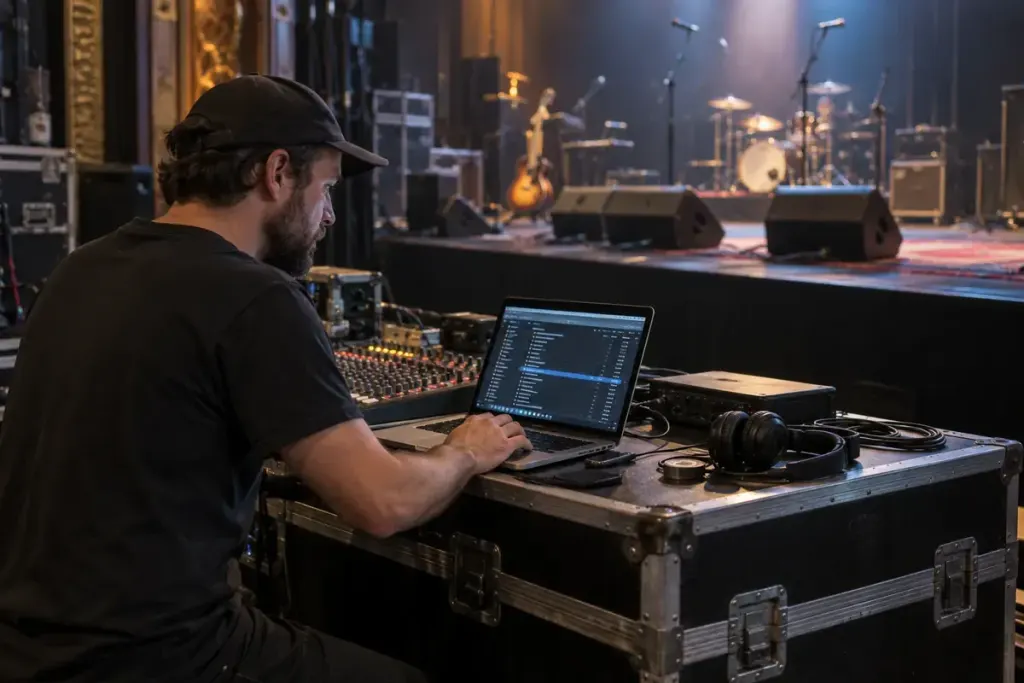
The band finishes, the room applauds, and the next sound is an unexpectedly loud playlist from an unattended laptop. Music between sets is part of the audience experience, but it is often left until the soundcheck is already over.
Agree with the venue who owns playback during the break. That person needs a clear source, a suitable connection and a handover cue. Do not assume the band’s device should be plugged into an available socket without the sound team’s approval.
Plan the transition
Choose material appropriate to the event and confirm any licensing or permission requirements through the venue’s normal process. Check the playlist’s length, content and availability on the actual playback system. A list saved in an app is not proof that it will play without a network connection or interruption.
Test a sensible level during soundcheck with the engineer. Keep operating-system notifications and unrelated applications from interrupting playback using the device’s supported settings. Avoid changing shared venue equipment without agreement.
A useful cue might be a specific confirmation from the stage manager after the final applause, rather than guessing that the last chord means the set is over. Plan the return too: who fades playback, who confirms the stage is ready and how the next performer begins.
Give failure a simple route
Agree what happens if the device stops or the connection fails. A short quiet gap may be preferable to frantic cable swapping during the audience break. Keep any backup method within the venue’s approved setup.
Write the playback responsibility into the running order alongside the live performances. Include the contact name and the cue, not a lengthy explanation buried in a message thread.
The best break music supports the room without drawing attention to its administration. That usually comes from a clear handover and a tested source, rather than an increasingly elaborate playlist.